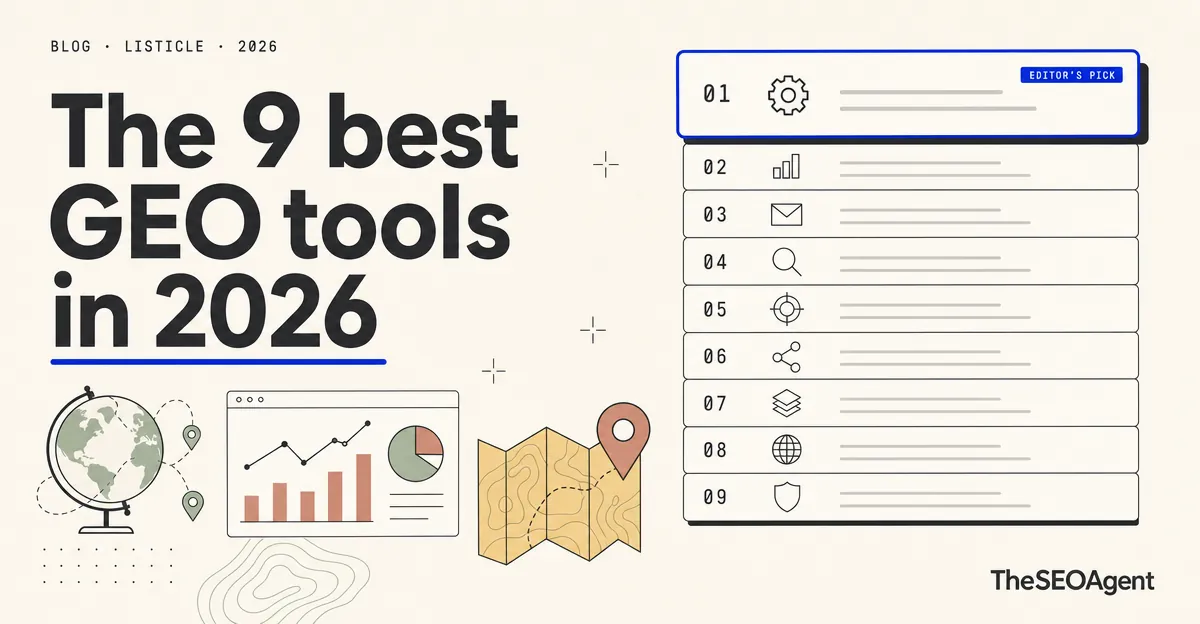
The 9 best GEO tools in 2026.
Generative engine optimization tooling splits into two jobs: generative engine monitoring, which measures how often AI engines cite your brand, and producing the content that earns those citations. The nine below cover both, ranked by the team they fit, with real entry prices, one honest flaw each, and the production half that most GEO roundups skip.
Which GEO tool should you pick?
Pick by job. To produce citable content: TheSEOAgent ($99/mo flat, writes and publishes a fact-checked article daily). To monitor AI visibility: Otterly.AI from $29/mo for small teams, Peec AI from about 90 euros for marketing teams, Profound or Conductor for enterprise. Widest engine coverage on a budget: Rankscale from about $22/mo across 17+ engines. Best free generative engine monitoring tool: HubSpot AEO Grader. Production moves the number; monitoring reports it.
Visibility trackers report where AI answers leave you out. The SEO Agent publishes the pages that get cited: a direct answer up top, a source for every statistic, one new article a day. Enter your site to start.
Free trial · Cancel in one clickThe shortlist, scannable in ten seconds.
- 01The SEO AgentBest for moving the number
- 02ProfoundBest enterprise tracker
- 03Peec AIBest for marketing teams
- 04Otterly.AIBest budget tracker
- 05Ahrefs Brand RadarBest suite add-on (Ahrefs)
- 06Semrush AI VisibilityBest suite add-on (Semrush)
- 07RankscaleBest engine coverage on a budget
- 08ConductorBest enterprise suite
- 09HubSpot AEO GraderBest free starting point
How we picked these nine.
Two rules shaped the list. First, cover the whole budget range honestly: free grader, $22 to $29 entry tiers, mid-market self-serve, enterprise contracts. The category's pricing spans two orders of magnitude and most roundups hide that. Second, name the split the vendors blur: eight of these nine tools measure AI visibility, one produces the content that changes it. We build the production one, we say so in plain text, and we ranked it first because measurement without production is a scoreboard for a game you are not playing. If Google is the only engine you need a scoreboard for, the single-surface field is ranked separately in our AI Overviews tracker comparison.
The ranking logic follows the research rather than vibes: the Princeton GEO benchmark measured quotations, statistics, and cited sources as the strongest visibility levers, and a 768,000-citation study found comparison-shaped content earning up to 70% of AI citations. Both point the same direction: what you publish decides what gets cited. Every fact line below was checked against the vendor's live product page in July 2026; prices that hide behind demo calls are labelled as such. No affiliate links, no sponsored placements, and per our policy the screenshots are the proof instead of outbound links.
The SEO Agent
Producing the content AI engines cite, not just measuring it.
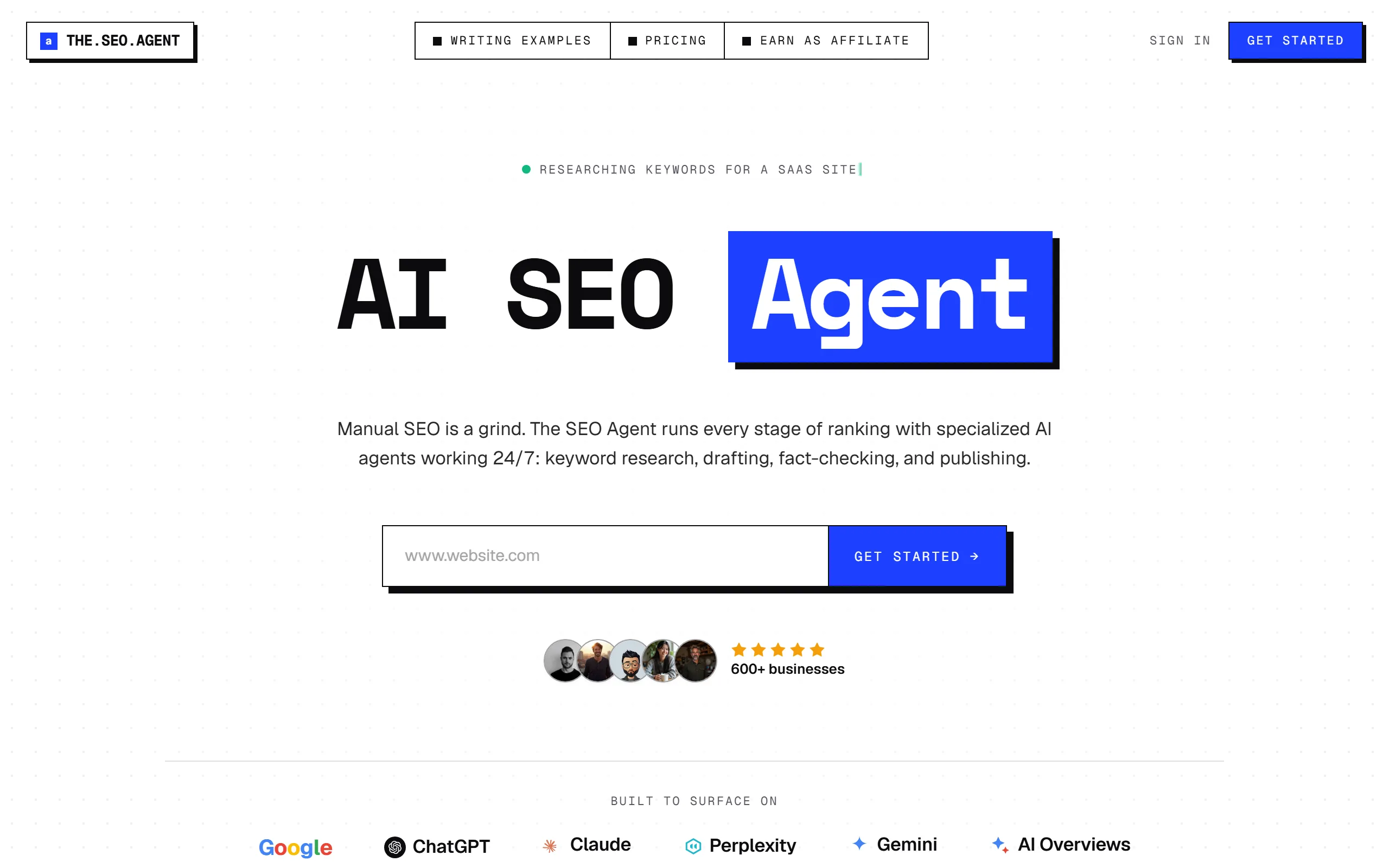
$99/mo flat. Writes one fact-checked article a day with quotable answer blocks, cited statistics, FAQ schema, and native CMS publish. Free trial, one-click cancel.
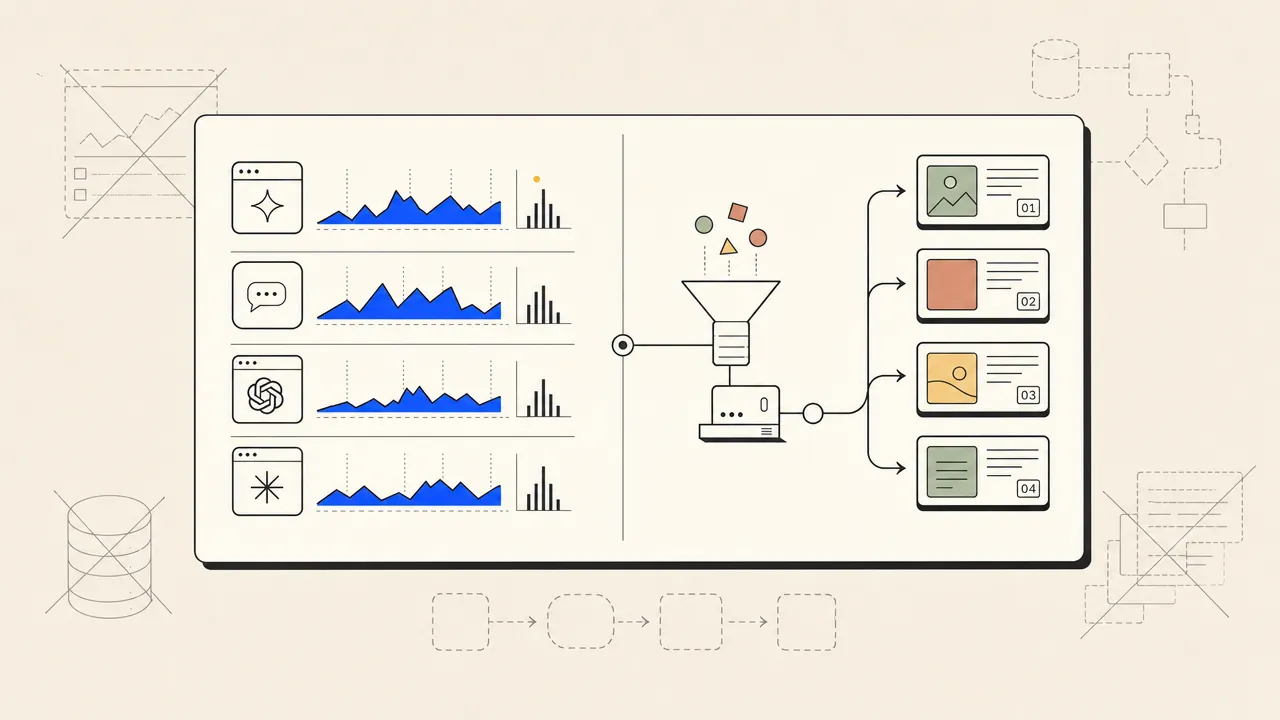
Every other tool on this list measures your AI visibility. This one changes it. GEO has two halves: knowing how often ChatGPT, Perplexity, and AI Overviews mention you, and publishing the content that makes them mention you more. The second half is the expensive one, and it is the half most GEO roundups quietly skip because their sponsors do not sell it.
The GEO agent runs the production loop end to end: researches the questions buyers ask against live keyword data, drafts an article that opens with a quotable answer, forces citations onto every defensible claim, applies FAQ and article schema, and publishes natively to WordPress, Webflow, Shopify, or Ghost. Those are exactly the levers the Princeton GEO benchmark measured as the strongest, and the full pattern is documented in our answer engine optimization guide alongside the GEO vs SEO comparison and the full generative engine optimization guide. One subscription replaces the content half of a GEO consultant at $99 a month flat.
No visibility-tracking dashboard. Pair it with a tracker below once you have coverage worth measuring.
Profound
Enterprise teams that need the deepest answer-engine dataset.
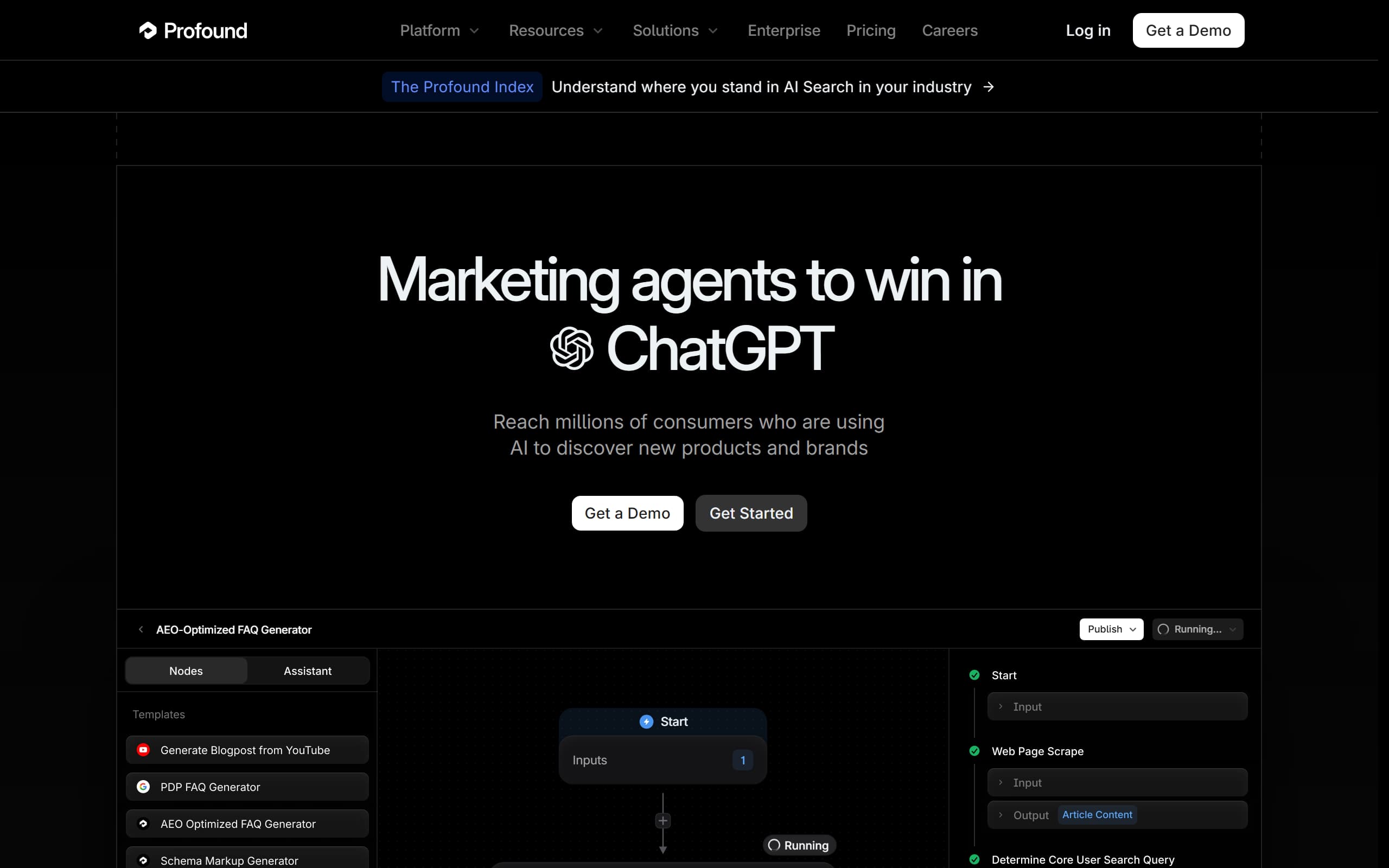
Demo-gated enterprise pricing. Tracks brand presence across ChatGPT, Perplexity, AI Overviews and more, with agent analytics and shopping-visibility modules.
Profound is the reference name in AI visibility monitoring and the tool most enterprise shortlists start with. It runs large prompt panels against the major assistants, trends your share of voice against competitors, breaks out which pages earn the citations, and has pushed earliest into adjacent surfaces like shopping answers and AI agent traffic.
The trade-off is the enterprise posture: pricing sits behind a demo, and reviewers consistently place it at the top of the market's price range. For a team publishing a few articles a month, the dashboard will mostly report a flat line; the budget usually does more in citable coverage first.
Enterprise pricing, demo-gated. Overkill below a few thousand indexed pages.
Peec AI
Marketing teams that want clean daily tracking without enterprise sales calls.
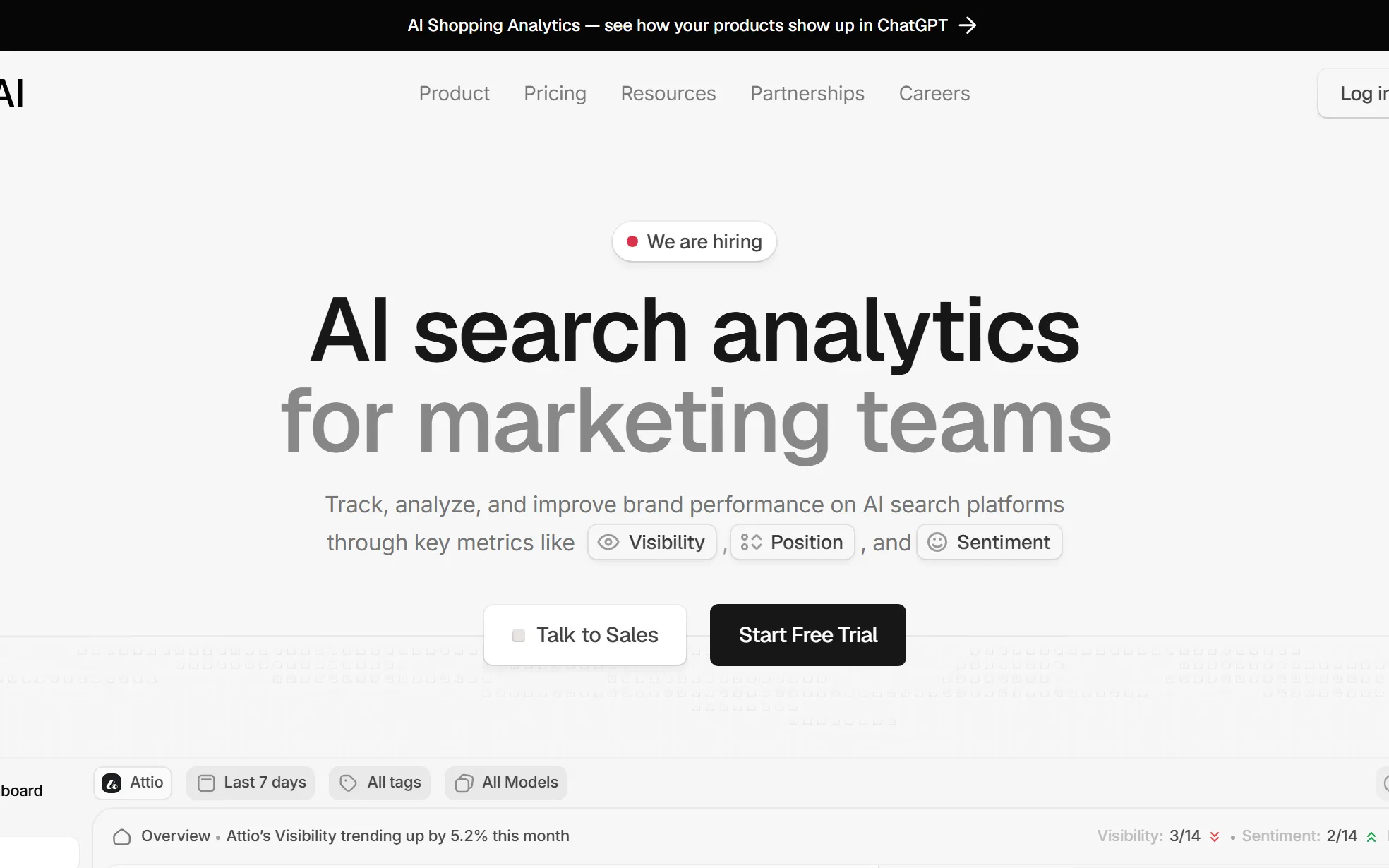
Self-serve, from around 90 euros a month. Visibility, position, and sentiment tracking across the major AI search platforms, with competitor benchmarks.
Peec AI has become the default mid-market pick: a self-serve tracker with the three metrics that matter (visibility, position, sentiment), clean competitor benchmarking, and source analysis that shows which domains the engines keep citing in your category. The dashboard is genuinely pleasant, which matters when the job is a weekly check-in rather than a research project.
Like every tracker, it reports the scoreboard and leaves the scoring to you. Teams that pair it with a steady stream of question-answering pages (the kind an automated SEO pipeline ships daily) see the visibility line respond; teams that just watch it do not.
Monitoring only, and prompt quotas scale with price. No content or action layer.
Otterly.AI
Solo founders and small teams starting to track AI mentions.
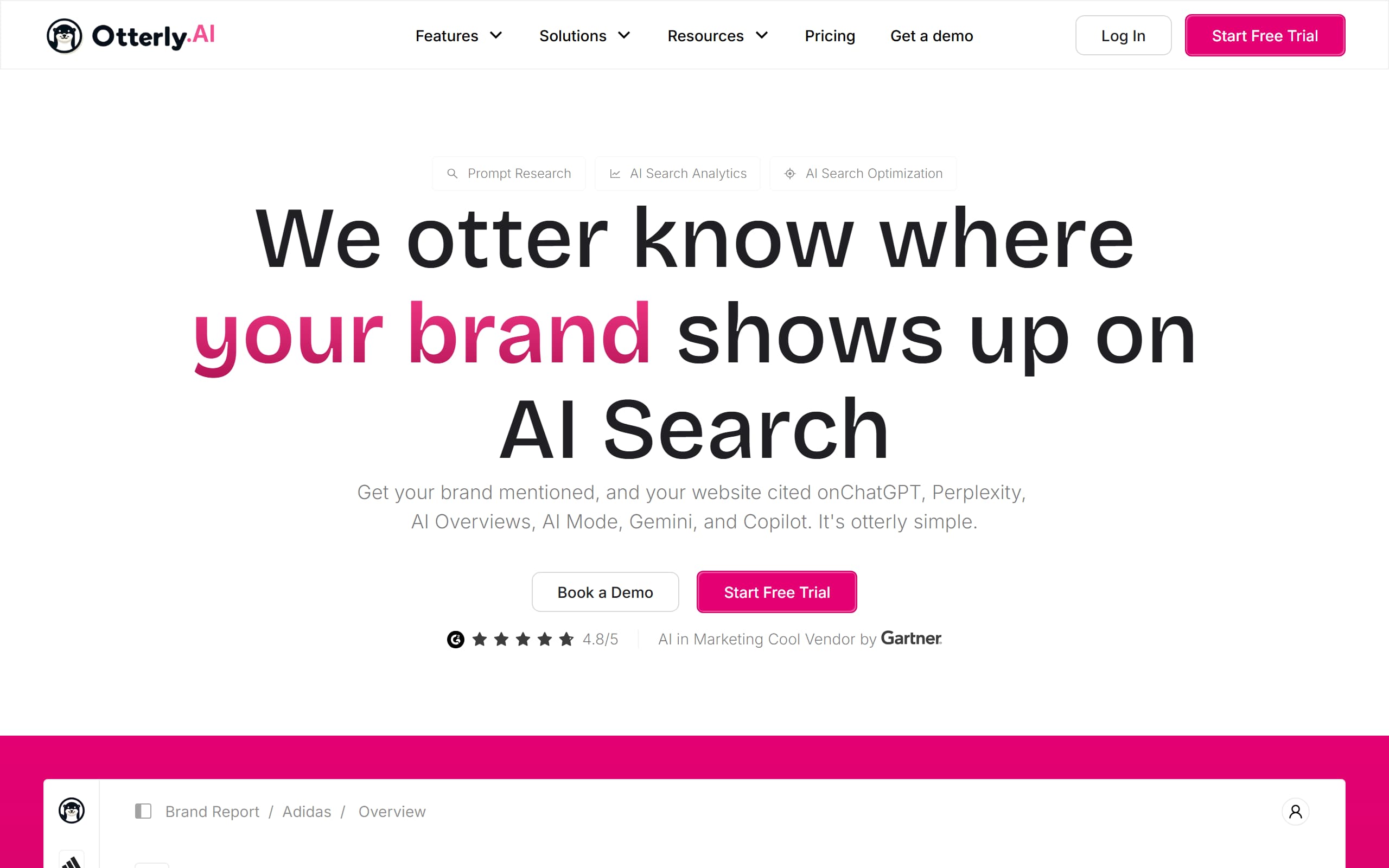
From $29/mo. Monitors brand mentions and link citations across ChatGPT, Perplexity, AI Overviews, AI Mode, Gemini, and Copilot. Gartner Cool Vendor 2025.
Otterly.AI is the cheapest credible entry into AI visibility monitoring. You register the search prompts you care about, and it tracks how often your brand and links appear in the answers, across a wider engine list than most tools at triple the price. For a founder who wants a monthly pulse check rather than a war room, the $29 tier covers it.
The prompt-based model is also its ceiling: you track the prompts you thought to register, not the whole question space around your category. That makes it a good companion to a coverage strategy: map the question space first (our AEO guide shows how), publish against it, then point Otterly at the prompts that carry revenue.
Small prompt quotas on entry tiers; insights stop at reporting.
Ahrefs Brand Radar
Teams already paying for Ahrefs that want AI answers in the same login.
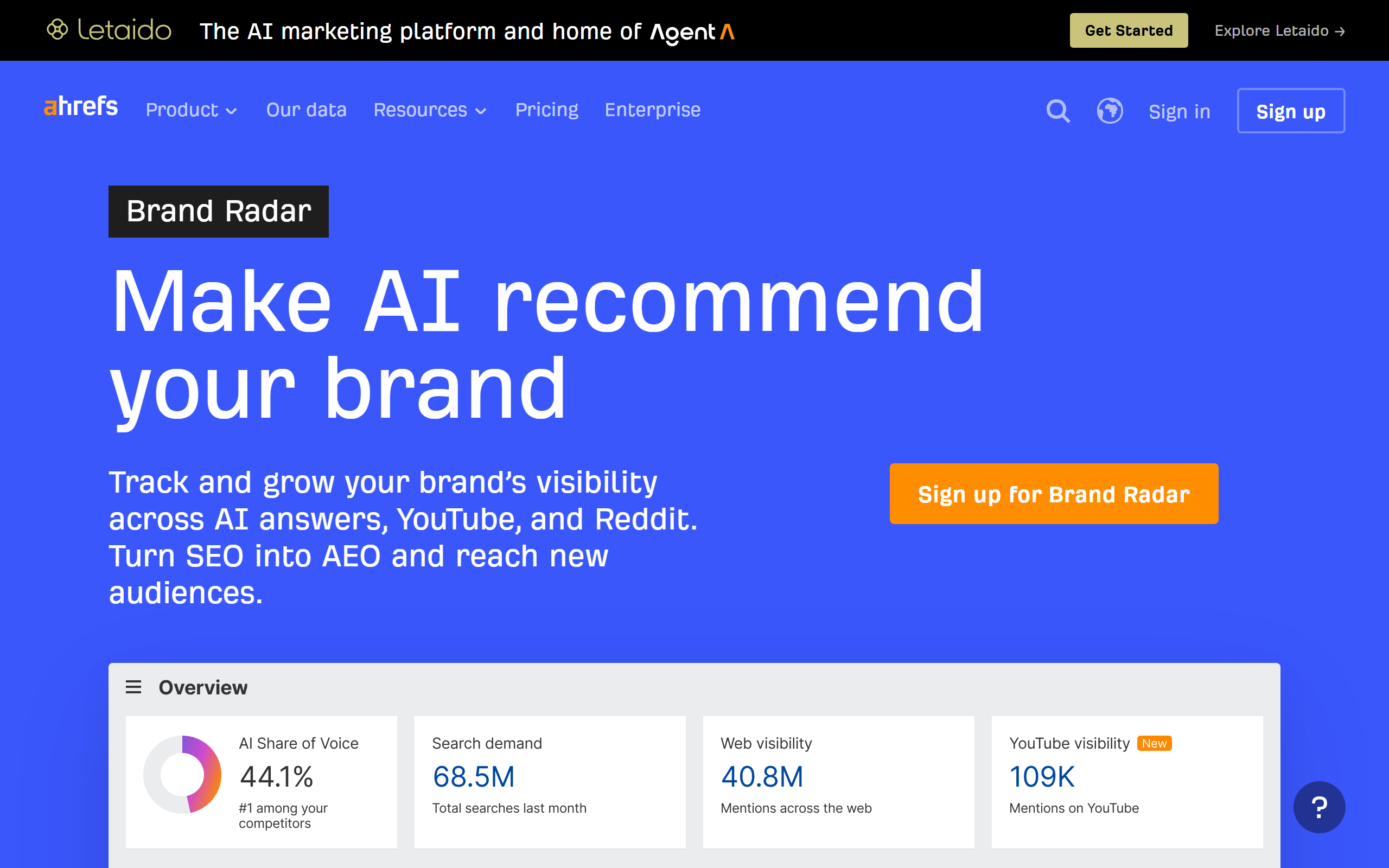
Add-on from $398/mo per AI engine index, on top of a base Ahrefs plan. Tracks AI answers plus YouTube, TikTok, and Reddit mentions.
Brand Radar bolts AI-answer tracking onto the crawler infrastructure Ahrefs already runs, with the largest indexed-prompt claim in the category and a 2026 expansion into YouTube, TikTok, and Reddit citation tracking. If your team lives in Ahrefs, the integration story is real: the same workspace that tracks rankings now trends your AI share of voice.
Two honest cautions. Full engine coverage requires paying per index, which independent reviews price at roughly double the category average once assembled, and one published accuracy test found it undercounting mentions badly against manual checks. Verify against your own spot checks before you let it steer strategy.
Costs stack per engine index on top of the base plan; no Claude tracking; third-party tests have flagged undercounting.
Semrush AI Visibility
Semrush shops adding AI tracking to an existing workflow.
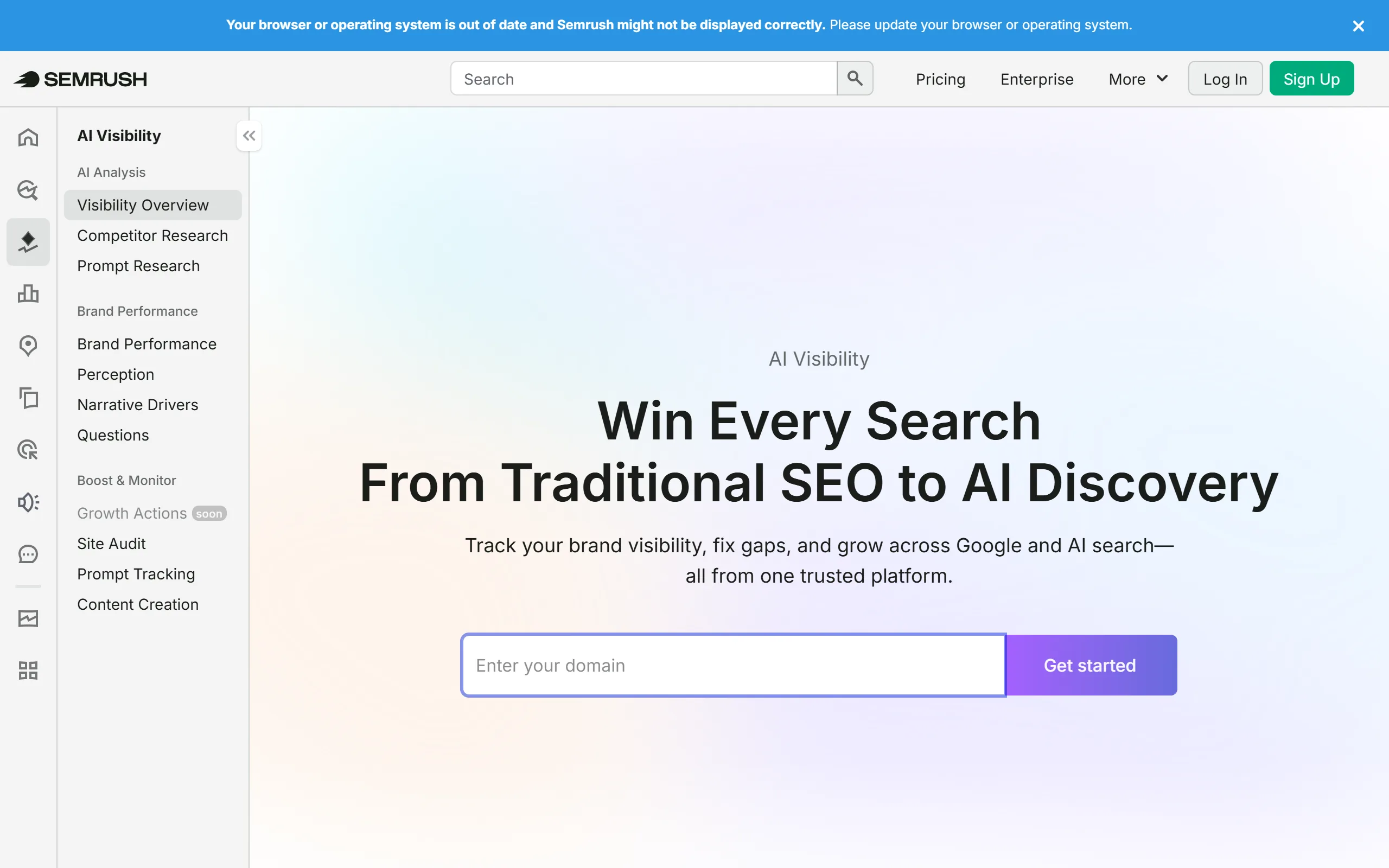
Add-on toolkit on a Semrush subscription. Visibility overview, competitor research, prompt research, perception tracking, and AI-focused site audit.
Semrush folded its AI toolkit into a full AI Visibility product: prompt research shows what people ask assistants in your category, visibility overview trends how often you appear in the responses, and perception reports summarize how the models describe your brand. For the thousands of teams already running Semrush, it is the lowest-friction way to get a baseline.
The depth per engine trails the specialists above, and the recommendations lean generic. Treat it the way we treat every suite add-on in our AI SEO tools roundup: a convenient thermometer, not a strategy.
Shallower per-engine data than specialists; useful mainly if you already pay for Semrush.
Rankscale
Startups and agencies that want the widest engine list per dollar.
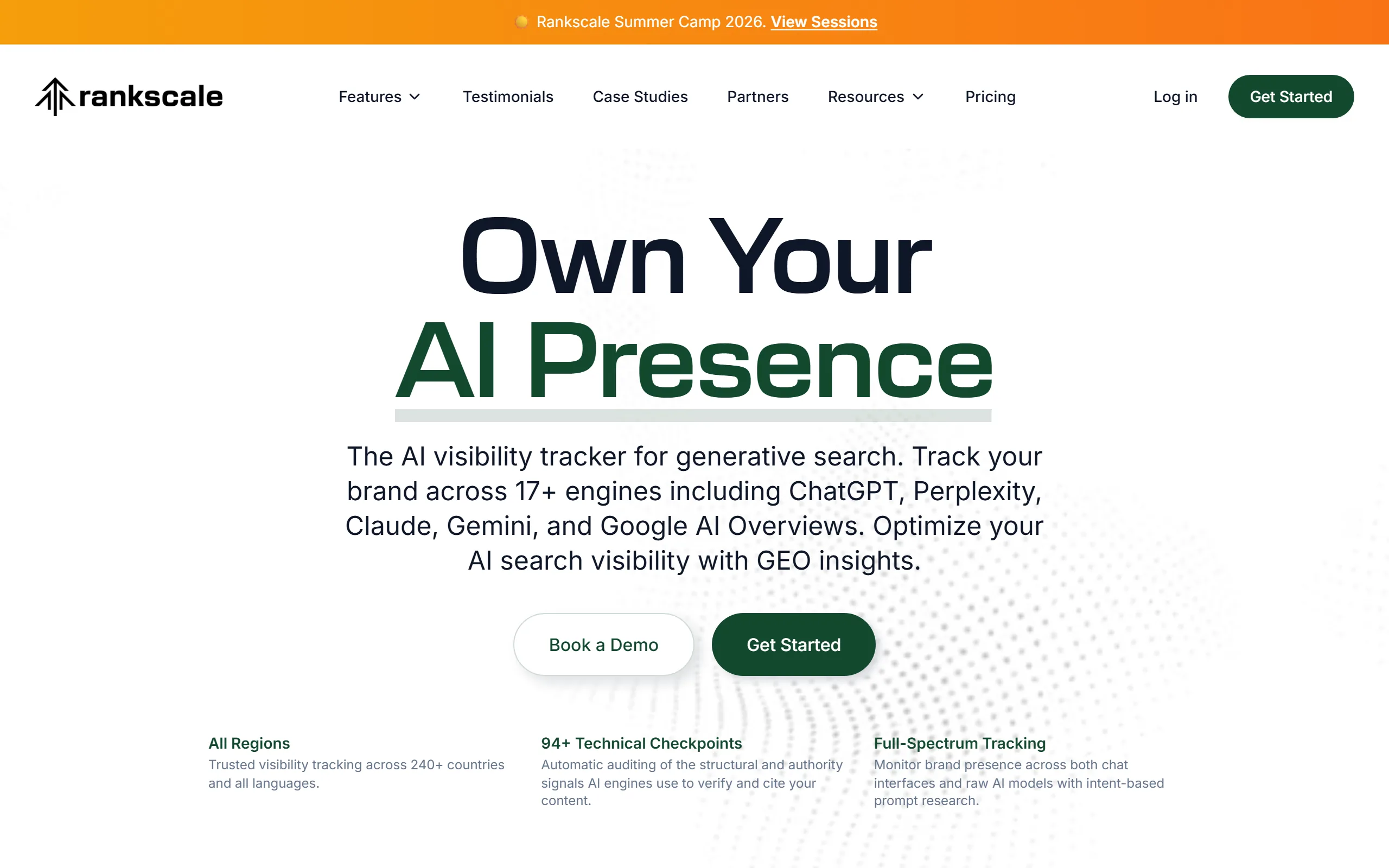
From about $22/mo (20 euros), credit-based. Tracks 17+ engines including ChatGPT, Perplexity, Claude, Gemini, Grok, and DeepSeek, plus GEO site audits.
Rankscale's pitch is coverage: seventeen-plus engines, including the ones most trackers skip (Claude, Grok, DeepSeek, Mistral), at a price that starts near a Netflix subscription. It also runs a technical GEO audit that scores whether your pages carry the structural signals engines use to verify and cite content, which overlaps nicely with the on-page levers we automate on every article.
It is a young product and reviews show the seams: audit scores can wobble between runs, and agencies note the missing PDF exports. But for a small team that wants to know "where do we show up, everywhere?" it is the strongest dollar-for-dollar answer on this list.
Audit scores vary run to run; credit-based pricing needs watching at scale.
Conductor
Enterprises that want AEO and SEO governance in one contract.
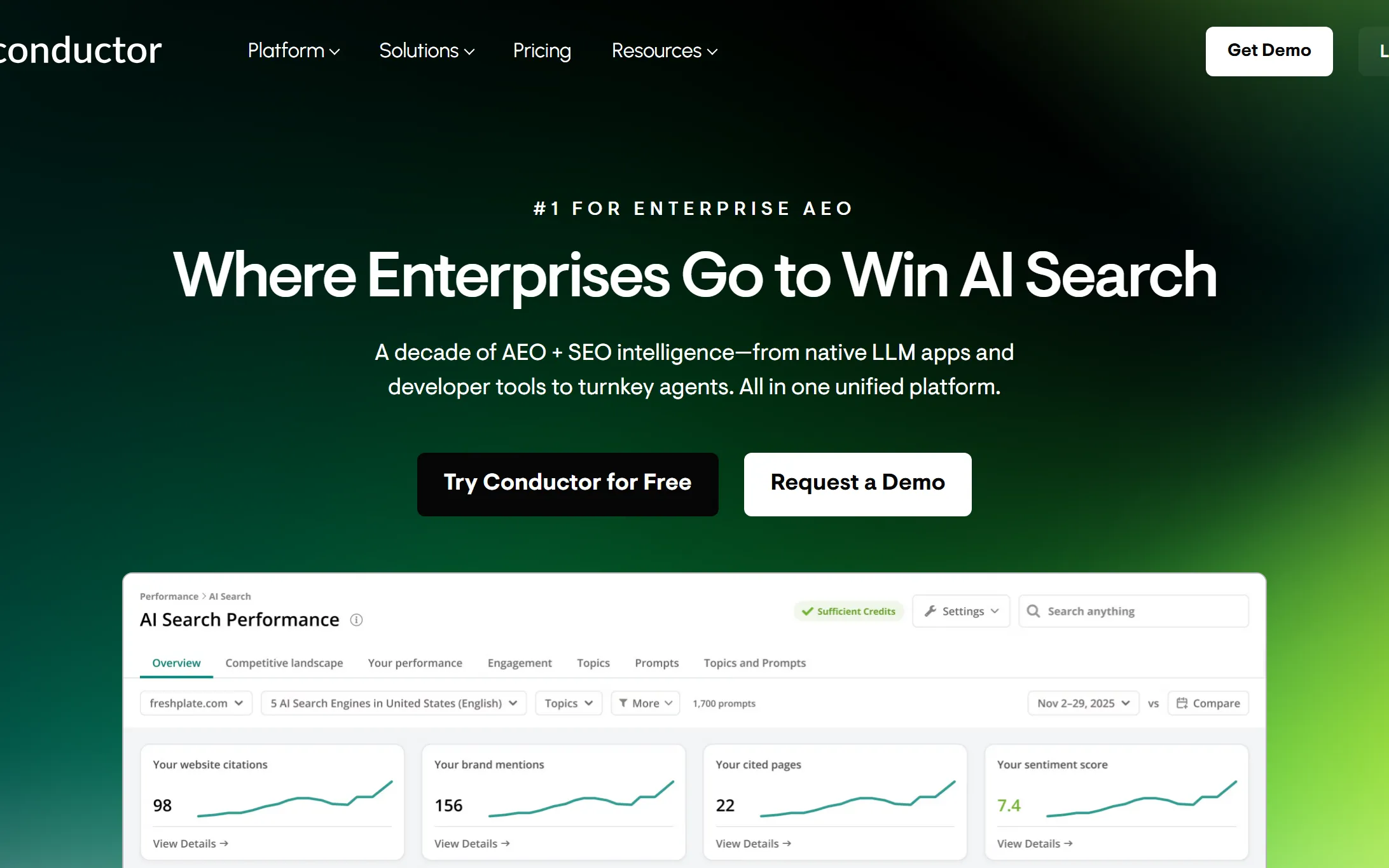
From $250/mo, scaling to custom enterprise contracts. AI search performance, citation tracking, content guidance, and classic enterprise SEO in one platform.
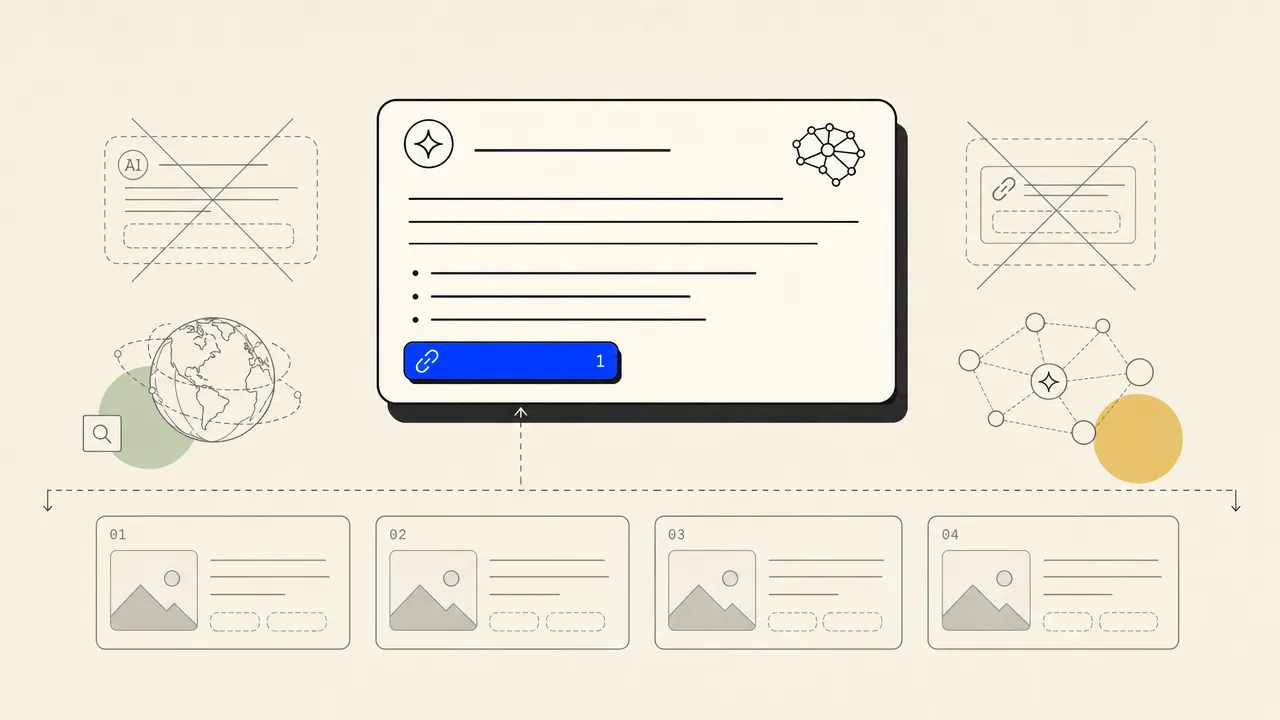
Conductor comes at GEO from the opposite direction of the startups: a decade-old enterprise SEO platform (Microsoft, FedEx, Adidas on the logo wall) that extended into AI search. Its differentiator is connecting the citation data to the content operation: which pages earn AI citations, and what to change on the ones that do not. It was named a Leader in the 2025 Forrester Wave for AI-integrated SEO platforms.
The realistic cost of running it is an enterprise contract plus onboarding measured in weeks, which is the structural opposite of a flat-fee service that starts publishing the same week. Right tool, big-company shape.
Enterprise pricing and onboarding; inaccessible below mid-market budgets.
HubSpot AEO Grader
A free first look at how AI models describe your brand.
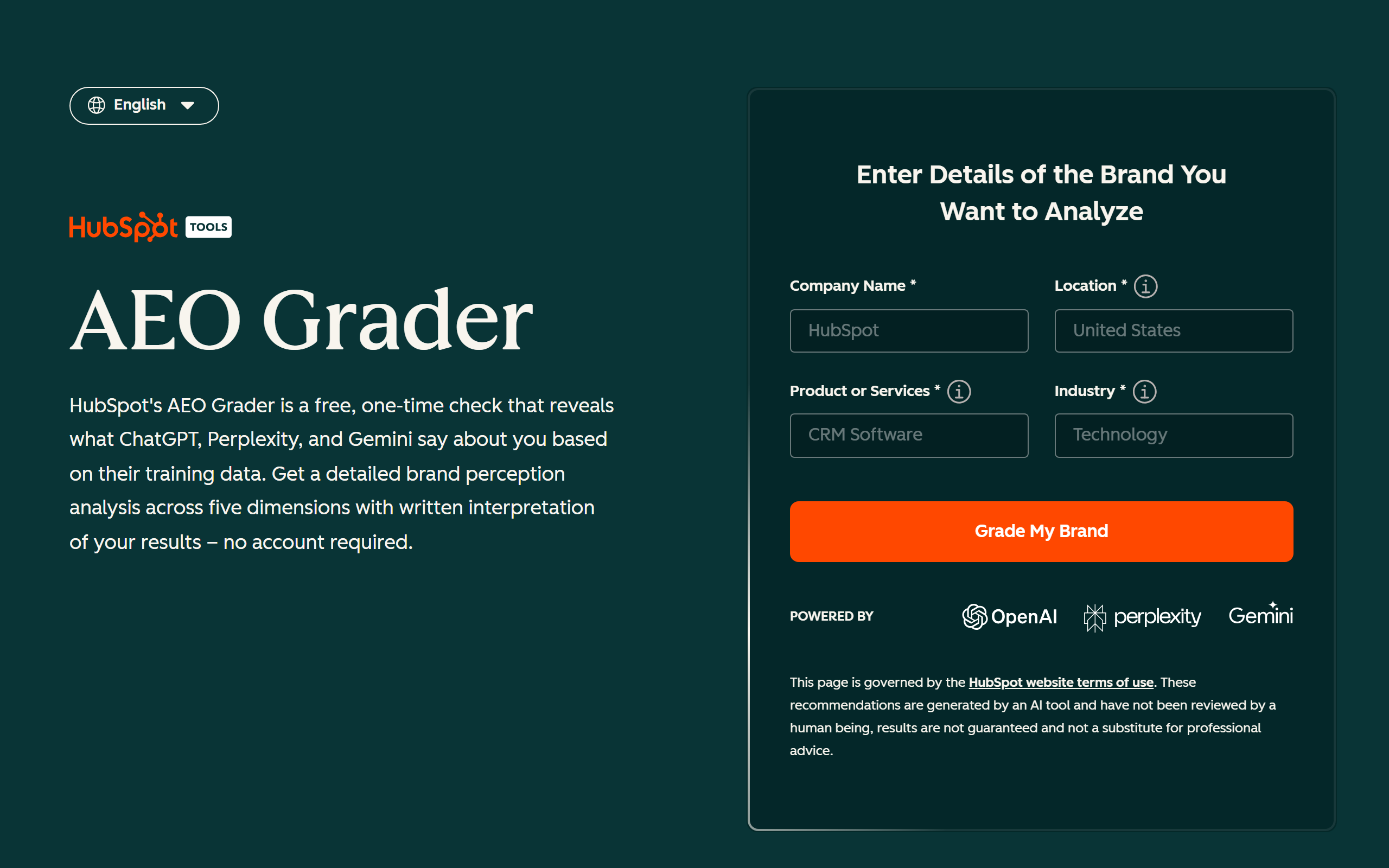
Free, no account required. One-time brand-perception check across ChatGPT, Perplexity, and Gemini, scored on five dimensions.
The honest free tier of the category. Enter your brand, product, and industry, and the grader reports how the major models perceive you, with a written interpretation across five dimensions. As a diagnostic snapshot before you spend anything, it is genuinely useful, and the no-signup posture is rare in a category built on demo calls.
Know what it is not: the check runs against the models' training data rather than live retrieval, and it is a one-time grade, not tracking. Use it to get the baseline conversation started, then decide whether the gap it shows is a measurement problem or, more often, a missing-content problem.
Training-data snapshot, not live tracking; one grade, no trend line.
The order of operations most teams get backwards.
The typical GEO journey starts with a tracker subscription, three months of flat dashboards, and a conclusion that "AI search does not work for us." The causality runs the other way. Engines cite sources that exist: pages that answer a question directly, carry statistics with named sources, and stay fresh. Build that coverage first, whether by hand with the checklist in our step-by-step AEO playbook or on autopilot with our AI SEO agent. If you write those pages yourself in Gemini, our guide to choosing a Gemini model for writing covers the pick by plan and for SEO content. Then add a tracker from this list and watch a line that can actually move. The same sequencing logic applies across the broader stack in our SEO automation tools roundup: instrumentation earns its cost only after production exists. We publish our own sourced numbers on the shift on the AI SEO statistics page, with linked sources. The production half of that sequence is what a generative engine optimization agent automates: one citable page a day, no editorial team. If you are shopping the measurement half specifically, we rank the monitoring field on its own in our AI visibility tools roundup. Two adjacent cuts of the same market, ranked on different criteria: the AEO tools list sorts by answer-shape workflow, and the LLM SEO tools list sorts by what each one does to get a page retrieved by a language model.
What is a GEO tool?
A GEO (generative engine optimization) tool helps your brand show up in AI-generated answers from ChatGPT, Perplexity, Gemini, and Google AI Overviews. The category splits in two: visibility trackers that measure how often AI engines mention or cite you (Profound, Peec AI, Otterly, Rankscale), and production tools that create the citable content those engines quote (TheSEOAgent). Most roundups only cover the first half.
How did you rank these nine?
By the job they do and the team they fit, with one editorial position: producing citable content moves your AI visibility, monitoring only measures it, so the production side ranks first. Trackers are then ordered by fit: enterprise (Profound, Conductor), mid-market (Peec AI, suite add-ons), budget (Otterly, Rankscale), free (HubSpot AEO Grader). We sell the number one entry and say so plainly; every fact line was verified against live product pages in July 2026.
Are GEO tools and AEO tools the same thing?
Yes, the category answers to both names. GEO comes from the 2023 academic paper on generative engine optimization; AEO (answer engine optimization) is the older label from featured-snippet days. Vendors use them interchangeably, and this list covers tools marketed under either.
What are the best free generative engine monitoring tools?
Truly free generative engine monitoring means one-time graders, not continuous tracking. The HubSpot AEO Grader is the best free option: no account required, and it scores how ChatGPT, Perplexity, and Gemini perceive your brand across five dimensions. Below that, free tiers dry up fast; continuous monitoring starts at about $22 a month with Rankscale or $29 with Otterly.AI. If the budget is zero, re-run the free grader monthly for a trend line and put your effort into publishing quotable, cited answer content, which is what actually moves the score.
Do I actually need a GEO tool?
You need the outcome, not necessarily a subscription. If your site has thin coverage, a tracker will just confirm you are invisible; the first dollar belongs in citable content. Once you publish consistently, a tracker earns its keep by showing which questions you win, where competitors beat you, and whether the trend responds to what you ship. Free options like the HubSpot AEO Grader answer the "where do we stand" question at zero cost.
What about Scrunch AI, Knowatoa, AthenaHQ, Goodie, or Evertune?
All real tools in the same space. Evertune is strong but starts around $3,000 a month, enterprise only. Goodie pairs monitoring with content production at a reported $399 and up. Scrunch, Knowatoa, and AthenaHQ are credible trackers that overlap heavily with the picks above; we kept the list to nine tools that cover every budget tier without duplicates.
What happened to xfunnel?
HubSpot acquired xfunnel in late 2025, and standalone accounts have been folding into the HubSpot ecosystem since. If you want the xfunnel thesis (experiments that move citation rates, not just dashboards), the free AEO Grader is the entry point HubSpot kept public.
Can a GEO tool guarantee my brand appears in ChatGPT?
No. Nobody sells placement in organic AI answers; the engines pick sources by retrieval and trust. What the research supports: content with quotations, statistics, and cited sources measurably lifts generative-engine visibility (the Princeton GEO benchmark measured up to 40 percent), and comparison-shaped content earns the largest share of AI citations. Tools help you execute and verify; they cannot buy the citation.
What does TheSEOAgent do that the trackers here do not?
It produces the content that gets cited: one article a day with a quotable answer block, statistics with named sources, consistent entity naming, FAQ schema, and native publishing to your CMS, at $99 a month flat. Trackers tell you the score. The agent plays the game. Most serious teams end up with one of each, and the production half is the one that compounds.
Related guides + features.
AI search optimization
Quotable answers, cited statistics, entity naming, and schema baked into every article the agent writes, so AI engines have a source to cite.
/features/ai-search-optimization →GUIDE · AEOAnswer engine optimization
How ChatGPT, Perplexity, and AI Overviews pick their sources, the on-page levers with measured effect sizes, and a worked example.
/blog/answer-engine-optimization →DATA · AI SEOAI SEO statistics
The numbers behind AI search: adoption, citation rates, and how AI Overviews reshape clicks, sourced and updated for reference.
/stats/ai-seo →Produce the content the engines cite.
Connect your CMS and the agent ships a fact-checked, citation-ready article every day: quotable answers, sourced statistics, schema in place. Free trial first, $99 a month after, cancel in one click.
FREE TRIAL · CANCEL IN ONE CLICK