The 9 best AEO tools in 2026.
Answer engine optimization is four jobs, not one: find the questions people ask assistants, shape a page that answers one directly, publish it, then check who gets quoted. The nine tools below are ranked along that path rather than in a straight best to worst line, with real August 2026 prices and one honest flaw each.
Which AEO tool should you pick?
Pick by stage. Question research: AlsoAsked, free credits then $12/mo. Answer structuring: Frase from $49/mo. Producing and publishing the answers: TheSEOAgent at $99/mo flat, one fact-checked article a day. Verification: Otterly.AI from $29/mo for founders, Peec AI for marketing teams, Profound for enterprise, Rankscale from about 20 euros for the widest engine list. Free baseline: HubSpot AEO Grader plus the Scrunch audit. Publishing changes the citation rate; the dashboards report it.
Getting quoted in AI answers takes pages written to be quoted. The SEO Agent writes them for your site daily, each with a direct answer and a cited source for every claim. Enter your site to start.
Free trial · Cancel in one clickThe shortlist, scannable in ten seconds.
- 01The SEO AgentBest for shipping answers
- 02AlsoAskedBest question research
- 03FraseBest answer brief builder
- 04ProfoundBest enterprise tracker
- 05Peec AIBest for marketing teams
- 06Otterly.AIBest budget tracker
- 07RankscaleBest engine coverage on a budget
- 08Scrunch AIBest for agent readiness
- 09HubSpot AEO GraderBest free starting point
How we picked these nine.
Most AEO roundups are tracker roundups with a new label on the front. They list eight dashboards, all of which answer the same question (are we being mentioned), and none of which change the answer. So we ranked this list along the actual workflow instead: one tool for finding the questions, one for structuring the answer, one for producing and publishing it, and six for verifying what happened. Read the stage tag above each entry as the real ordering key. Inside a stage, the order is team fit and price.
The editorial position, stated plainly because we have a stake in it: we build the tool at number one, and we put it there because publishing is the only stage that moves the number. The research backs the emphasis rather than the ranking. The Princeton GEO benchmark measured quotations, statistics, and cited sources as the strongest visibility levers, and a 768,000-citation study found comparison-shaped content taking up to 70% of AI citations. Both say the same thing: what you publish decides what gets quoted. Every price on this page was read off the vendor's own pricing page in August 2026, and the two vendors that hide pricing behind a call are labelled as such. No affiliate links, no sponsored slots, and no outbound links to the tools listed: the screenshots are the proof. For a different cut of the same market, ranked on the monitor-versus-produce split rather than the workflow, see our best GEO tools, ranked.

The SEO Agent
Publishing the answers, not just planning them.
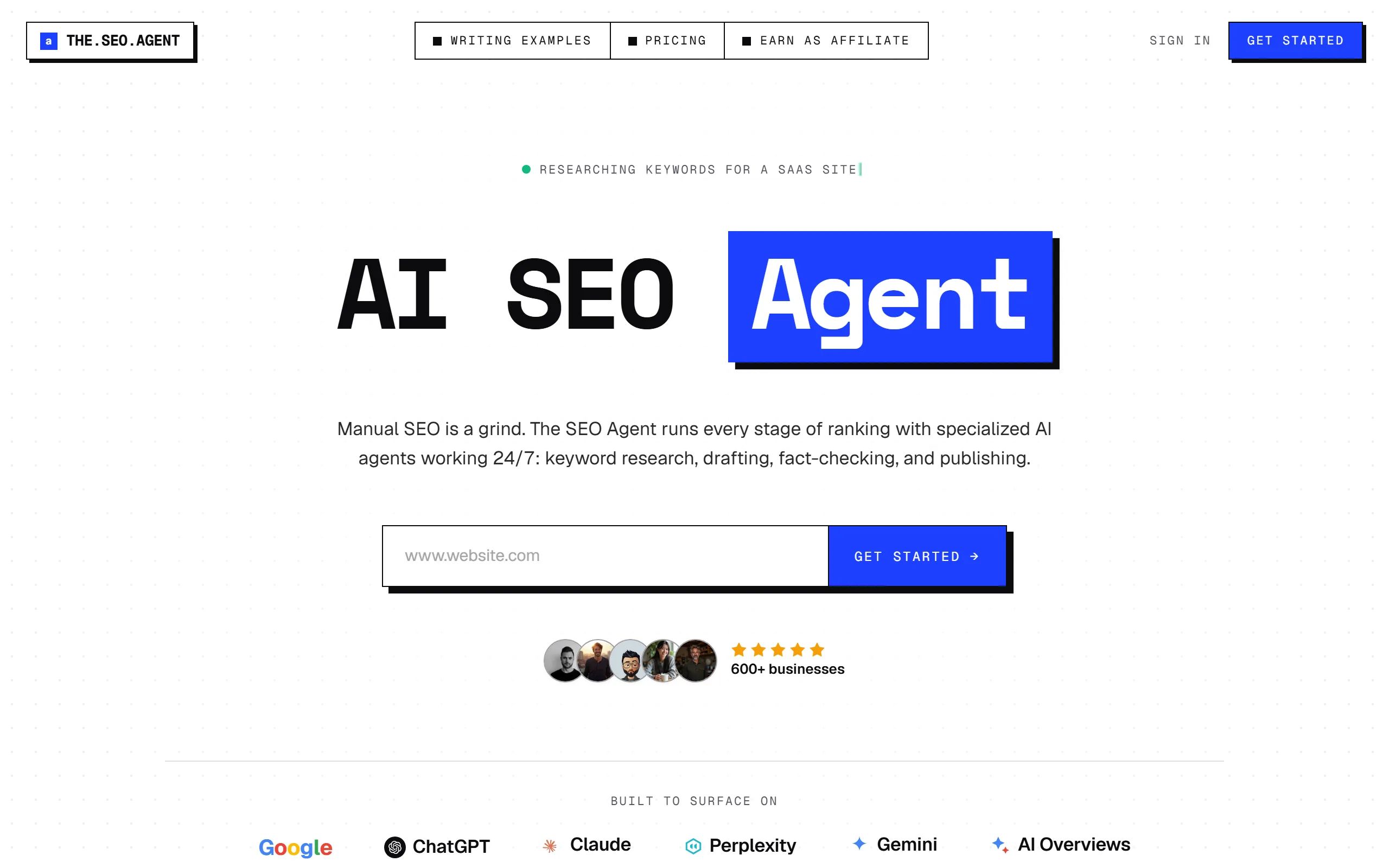
$99/mo flat, one site. Writes one fact-checked article a day that opens with a direct answer, carries cited statistics and FAQ schema, and publishes natively to WordPress, Webflow, Shopify, Wix, or Ghost. Free trial, one-click cancel.
Answer engine optimization has four stages: find the questions buyers ask, shape a page that answers one of them directly, publish it, then check whether the engines quote you. Eight of the nine tools here cover one stage. This one covers the two in the middle, which are the two that cost money when a human does them.
The AEO agent researches a question against live keyword data, drafts an article whose first paragraph is a standalone answer an engine can lift verbatim, forces a source onto every statistic it states, applies FAQ and article schema, and pushes the finished page into your CMS. Those are the levers the Princeton benchmark measured, and the manual version of the same checklist is in our answer engine optimization guide alongside the generative engine optimization playbook for the chat-assistant side. The whole thing runs at $99 a month flat, which is less than a single freelance article.
No citation dashboard of its own. Pair it with a tracker further down this list once you have pages worth measuring.
AlsoAsked
Mapping the real question tree before you write anything.
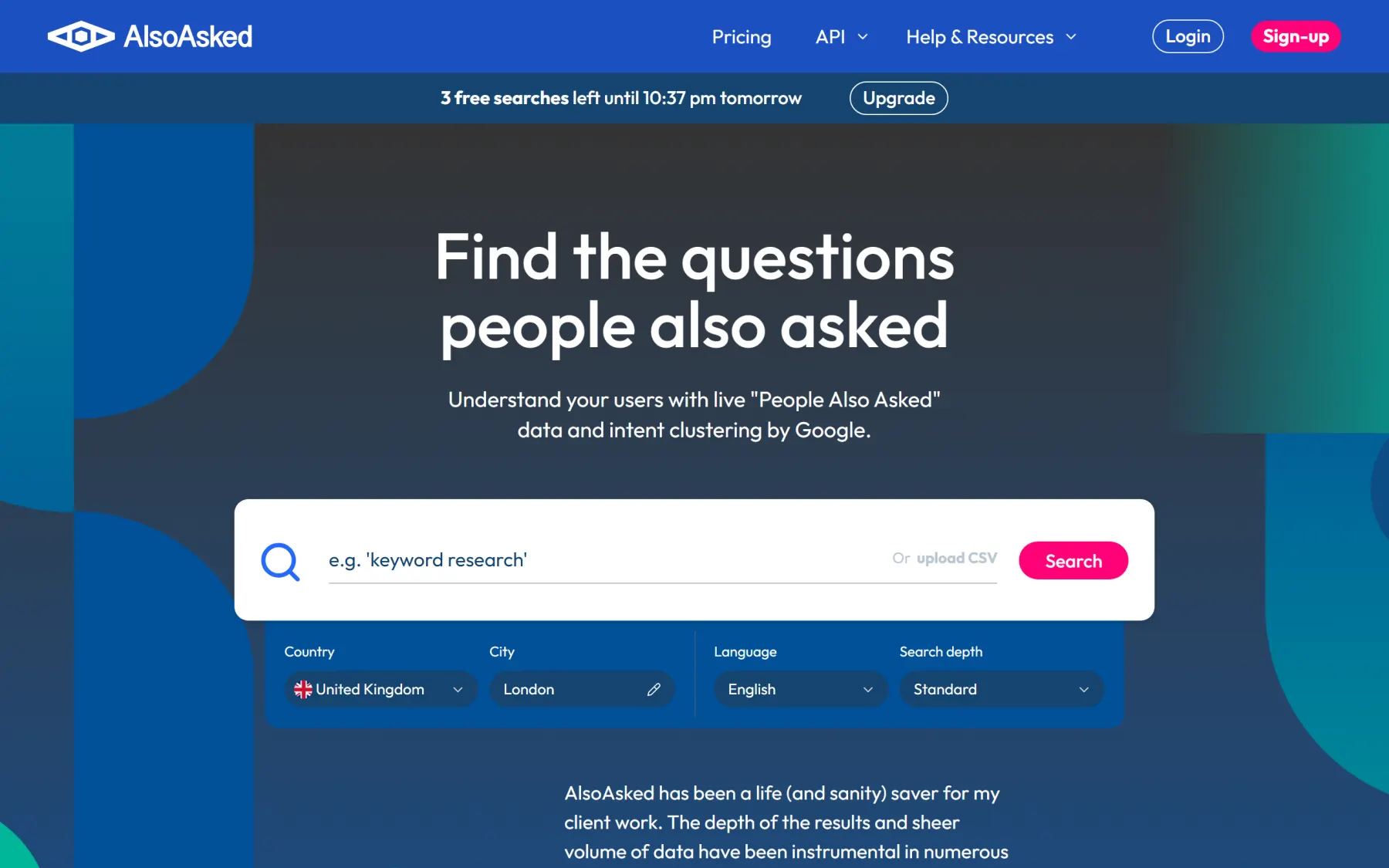
Free credits without an account. Paid from $12/mo (100 credits), $23/mo (300), $47/mo (1,000). Pulls live People Also Ask trees by country, city, and language, with intent clustering and CSV export.
AEO starts with the question, and AlsoAsked is still the cleanest way to see the actual shape of one. Enter a seed term and it renders the People Also Ask tree several levels deep: the question people ask, the follow-ups Google shows once they ask it, and the follow-ups after that. It is the difference between guessing at an FAQ block and writing against the questions engines already treat as related.
It is deliberately narrow. There is no scoring, no content editor, no tracking, and the credit model means a serious research session costs real credits. Treat the export as the input to a publishing plan rather than a deliverable: the tree tells you which twelve questions deserve a page, and something has to write those twelve pages. That handoff is what an automated content pipeline exists to absorb.
Research only, and credits burn fast on broad seeds. No answer scoring, no tracking, no output.
Frase
Editors who want a question-first brief and will do the writing.
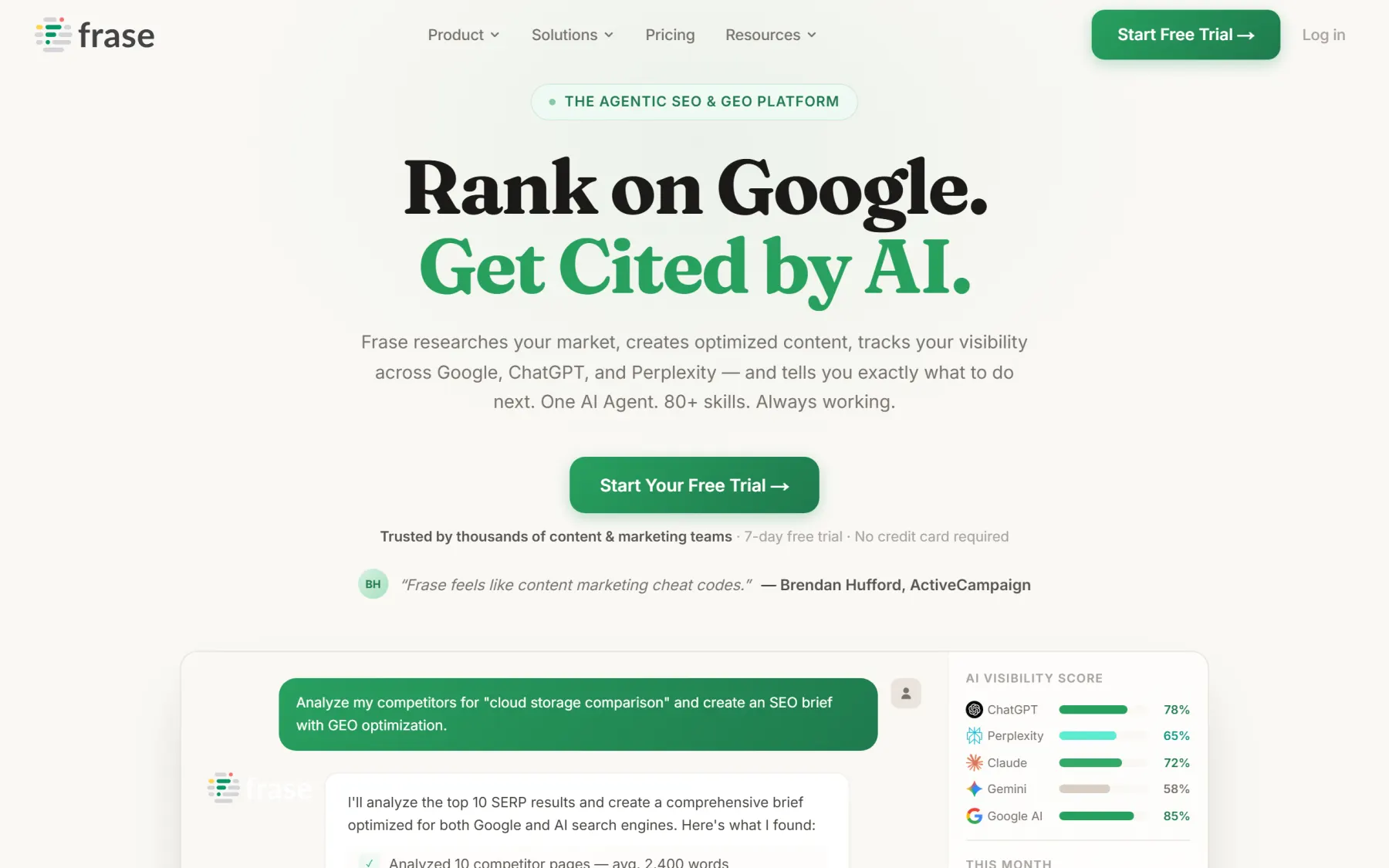
From $49/mo month-to-month ($39 billed yearly): 1 seat, 1 site, 10 articles and 50 audit pages a month. Professional is $129/mo month-to-month. Builds briefs from SERP questions and headings, with WordPress, Webflow, Wix, and Sanity publishing.
Frase pulls the questions and headings out of the pages already ranking and turns them into a brief with the answer structure pre-wired: the questions to answer, the order to answer them in, and the entities to name. For an editorial team with writers on staff, that brief is the highest-leverage artifact in the AEO workflow, because a page that answers the right question in the wrong structure still does not get quoted.
Two honest limits. The brief is derived from what already ranks, so it is a good map of the consensus answer and a poor map of the gap nobody has filled. And the article quotas are real: ten articles a month on the entry tier is a weekly cadence at best. Teams that need daily coverage usually end up comparing it against the shipped-article tools in our AI SEO tools roundup.
Briefs mirror the existing consensus. Entry tier caps at 10 articles a month, one seat, one site.

Profound
Enterprise teams that need the deepest answer-engine dataset.
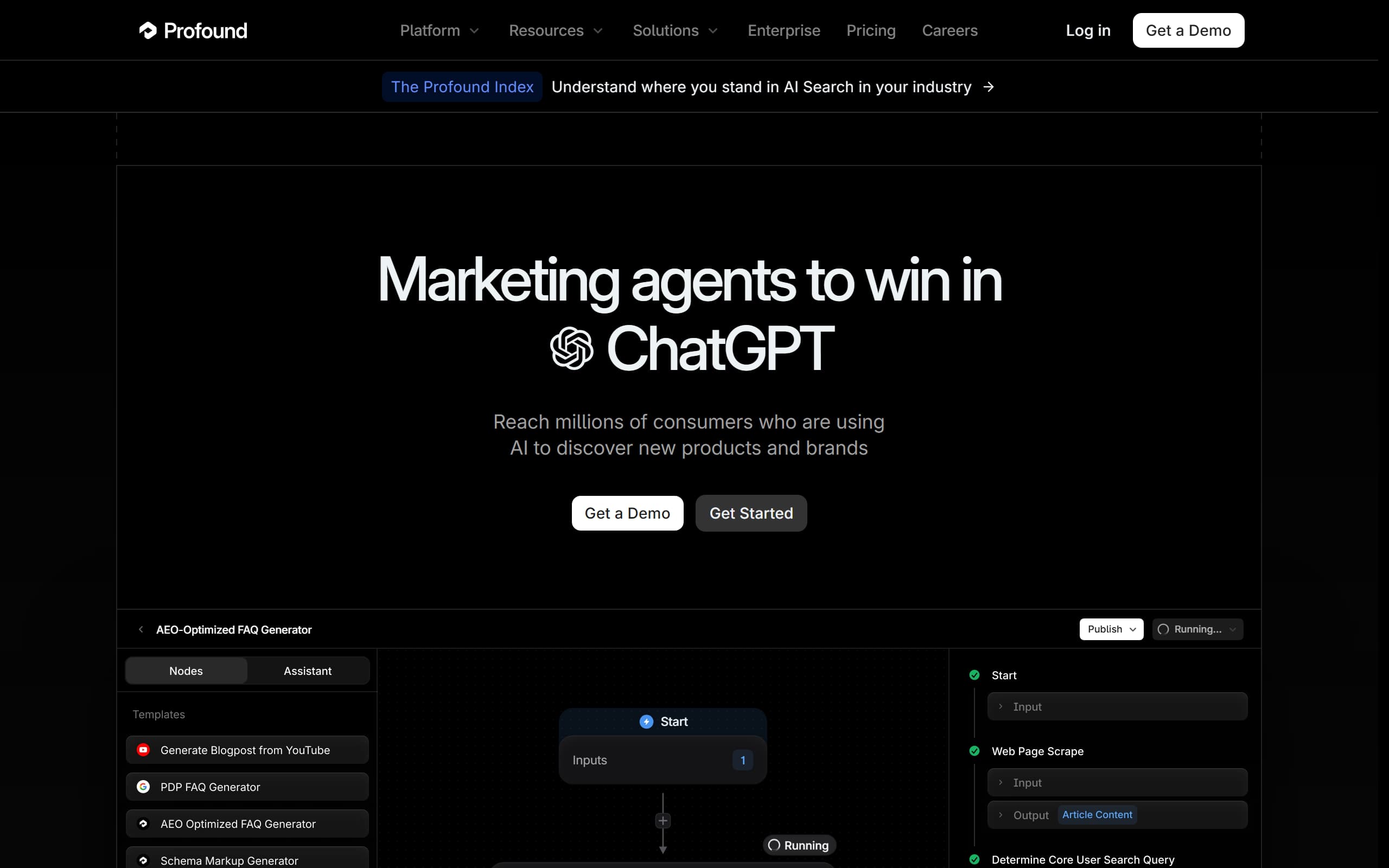
Demo-gated enterprise pricing. Runs large prompt panels across ChatGPT, Perplexity, and AI Overviews, with share-of-voice trends, per-page citation attribution, and AI agent analytics.
Profound is the name most enterprise shortlists open with, and the depth is real: broad prompt panels, competitor share of voice over time, and attribution down to which page earned the citation. It has also pushed earliest into the surfaces that come next, like shopping answers and traffic from AI agents rather than humans.
The posture is the trade-off. Pricing sits behind a demo call and reviewers place it at the top of the category range. For a site with thin coverage the dashboard will report a flat line accurately and expensively, which is why we rank verification tools below the ones that create something to verify. The sequencing argument is laid out in full on our AI search optimization page.
Demo-gated enterprise pricing. Overkill until you publish at volume.
Peec AI
Marketing teams that want daily tracking without a sales call.
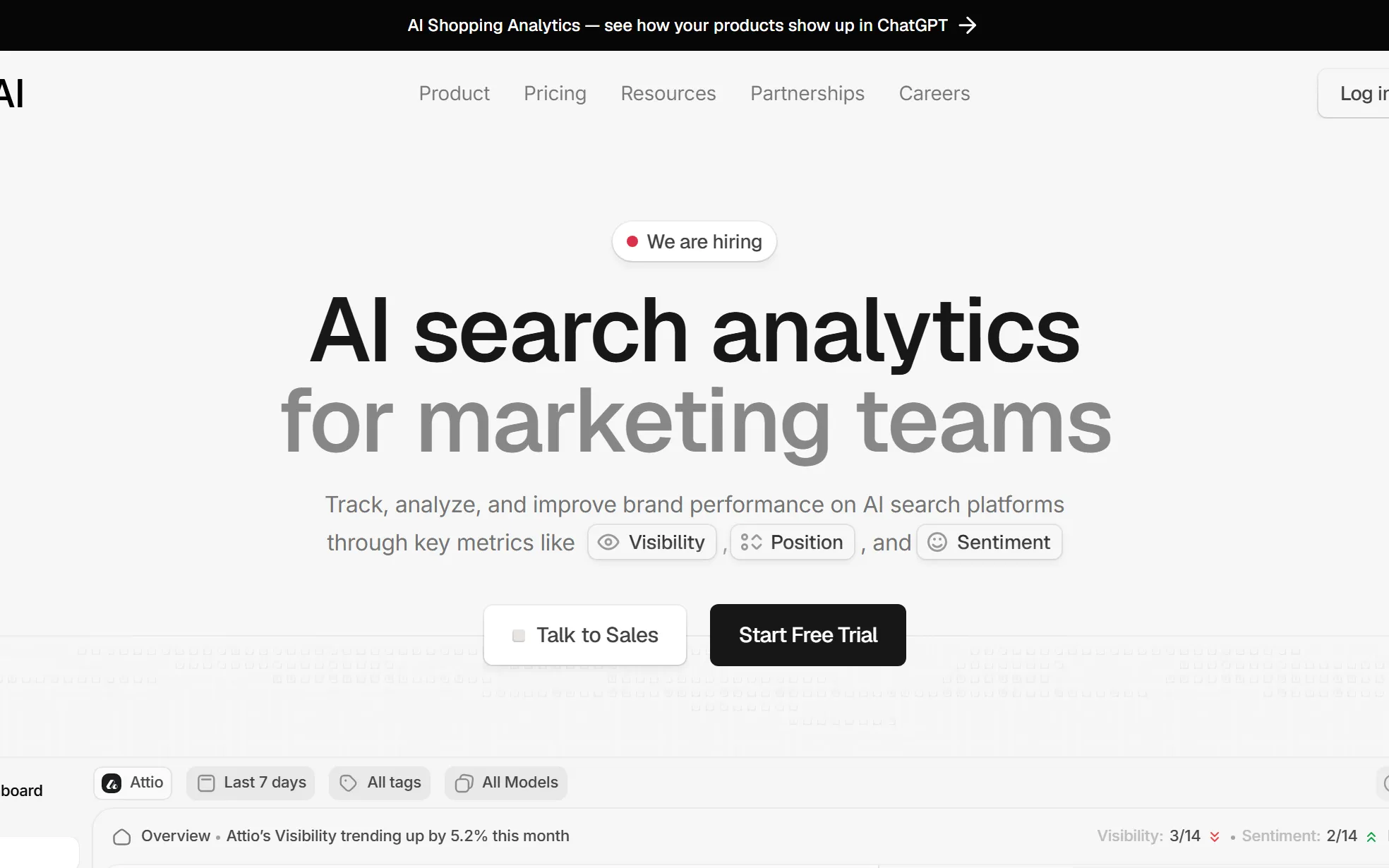
Self-serve signup, four tiers from Starter to Enterprise (numbers surface once you are in the app). Tracks visibility, position, and sentiment across the major answer engines, plus the source domains the engines keep citing in your category.
Peec has become the default mid-market pick because it answers the three questions a marketing lead actually asks in a weekly review: are we appearing, where in the answer, and in what tone. The source analysis is the underrated part. Seeing which domains the engines lean on in your category tells you what shape of page wins before you write one.
Like every tracker, it reports and does not act. It is at its best pointed at a site that publishes on a cadence, so the line has something to respond to. Pointed at a static site, it will faithfully draw a flat line for a quarter. If you want the measurement field compared on its own terms, we rank it separately in our AI visibility tools roundup.
Pricing is not published on the marketing site. Monitoring only, no content layer.
Otterly.AI
Founders who want a monthly pulse check for the price of a lunch.
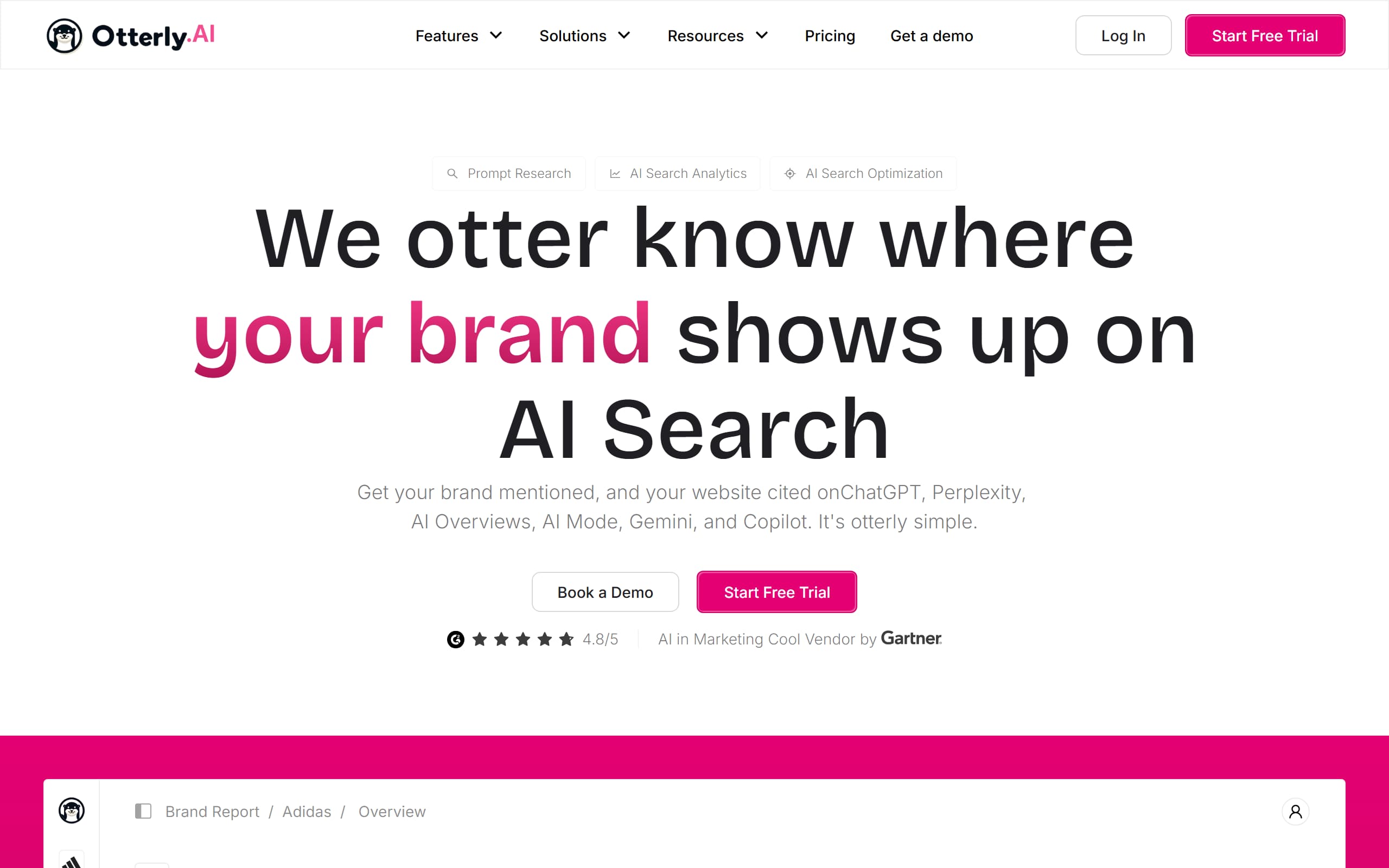
Lite $29/mo for 15 tracked prompts, Standard $189/mo for 100, Premium $489/mo for 400. Seven-day trial with no card. Gemini and Google AI Mode are paid add-ons on top.
Otterly is the cheapest credible way into answer tracking. You register the prompts you care about and it reports how often your brand and your links show up in the answers, across a wider engine list than several tools at five times the price. For a founder who wants a number once a month rather than a war room, the $29 tier genuinely covers it.
The prompt model is also the ceiling: fifteen prompts on the entry tier means you track the questions you thought of, not the question space. That makes it a good second purchase rather than a first one. Map the tree first, publish against it, then point Otterly at the prompts that carry revenue. Our AEO playbook walks the mapping step.
Fifteen prompts on the entry tier, and two major engines are paid add-ons. Reporting only.
Rankscale
Small teams and agencies that want every engine covered per dollar.
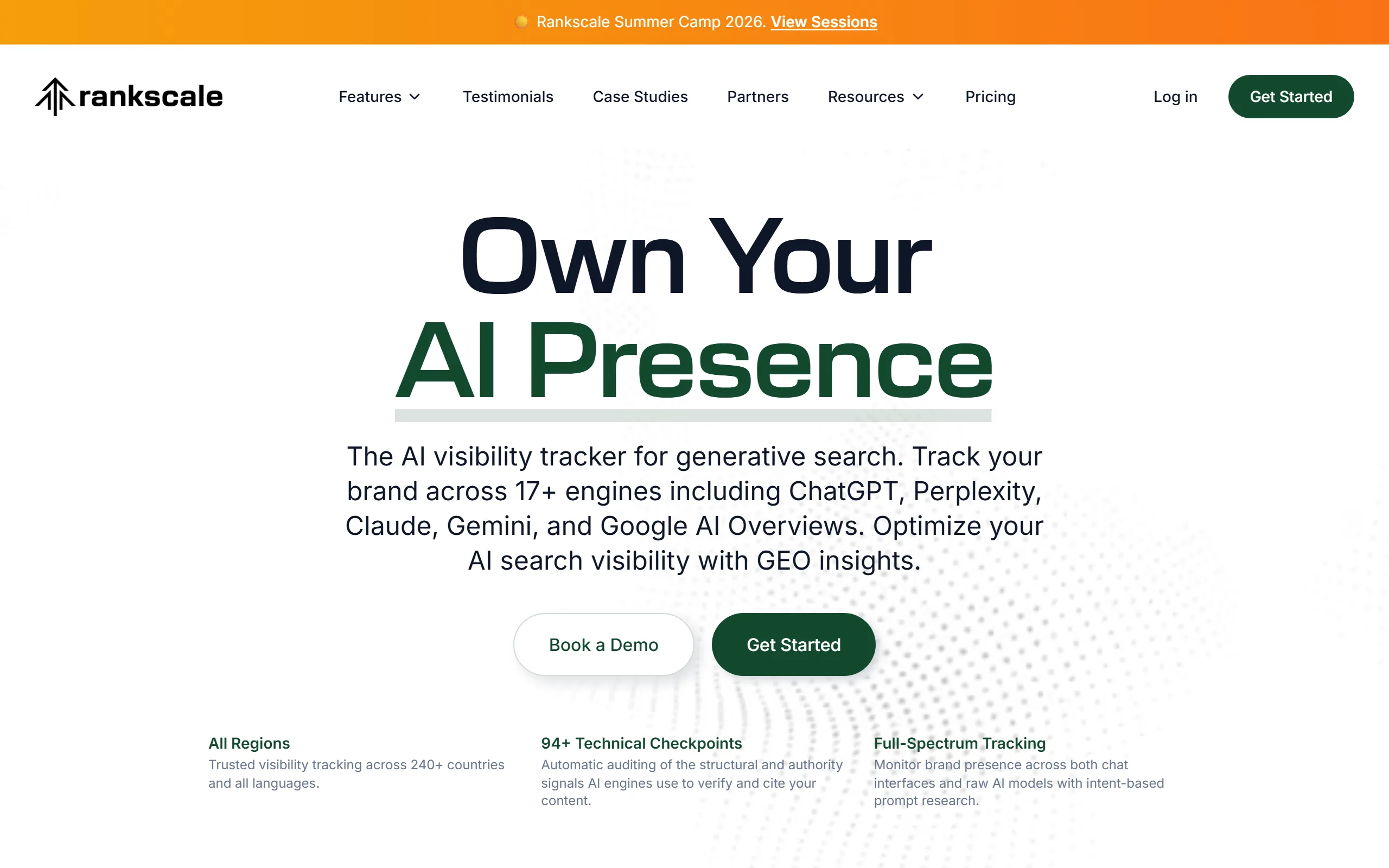
From about 20 euros a month, credit based, with 15% off annual and credits that roll over. Names ten engines on every plan including ChatGPT, Perplexity, Gemini, Claude, Copilot, Grok, DeepSeek, and Mistral. Pro is about 99 euros. Includes an AEO site audit.
Rankscale sells coverage: ten named engines on the cheapest plan, including the ones most trackers quietly skip, at a price that starts below a streaming subscription. The site audit is the part that matters for AEO specifically, because it scores whether your pages carry the structural signals engines use to lift an answer: heading shape, schema, direct answers near the top.
It is a young product and the seams show. Audit scores can move between runs on an unchanged page, and agencies note gaps in the export tooling. Read the audit as a checklist rather than a metric, and fix what it flags on the templates rather than page by page, the same way you would treat sitewide structure work like internal linking.
Audit scores wobble between runs. Credit pricing needs watching at agency volume.

Scrunch AI
Teams who want to know what AI crawlers actually see on their site.
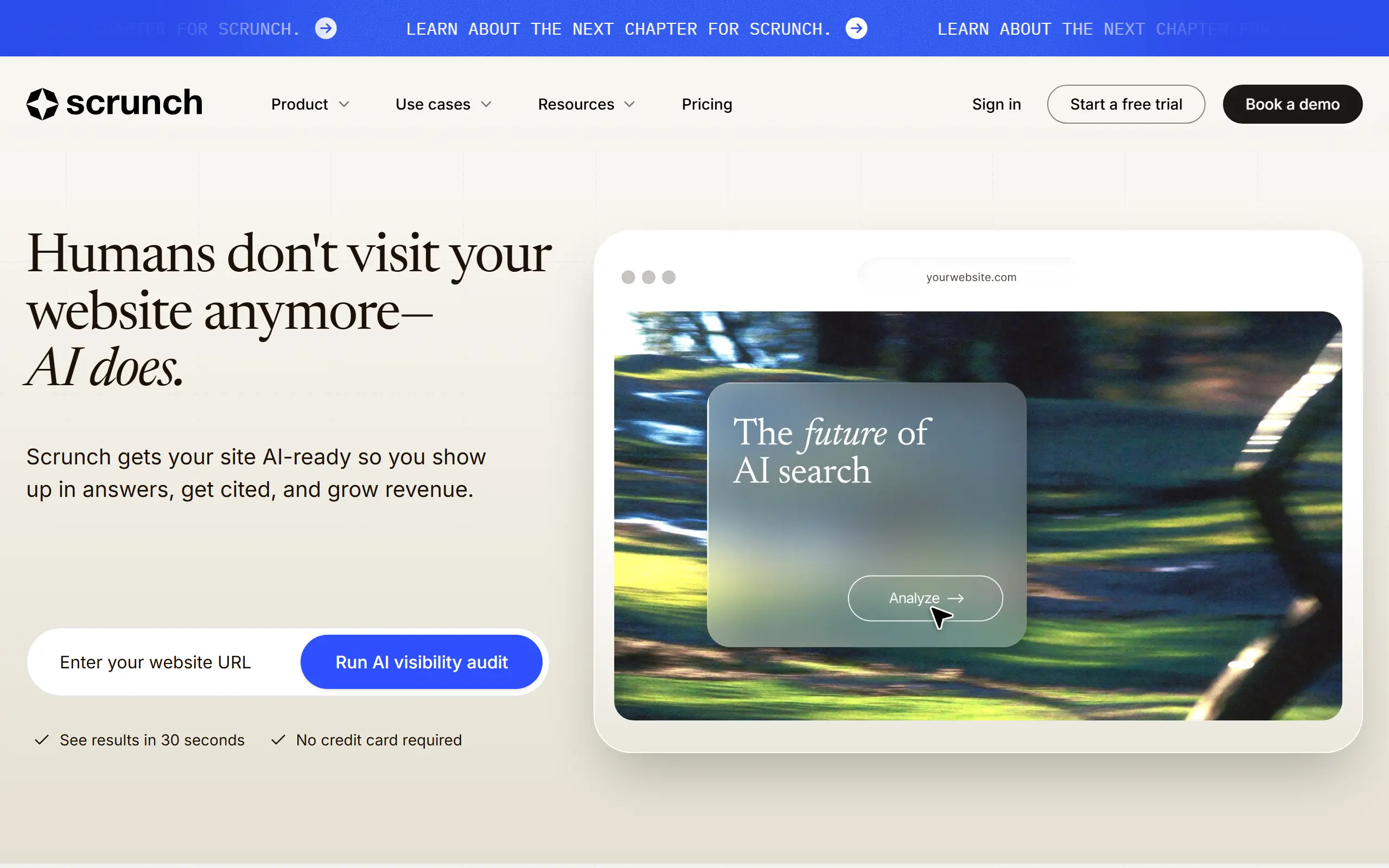
Starter $300/mo month-to-month ($250 annual), Growth $500/mo ($417 annual), Enterprise on quote. Runs a free AI visibility audit from the homepage, then monitors how assistants read, describe, and cite your pages.
Scrunch works the angle most trackers ignore: not just whether you appear in answers, but what an AI crawler retrieves when it fetches your pages. That covers the unglamorous failure modes, like a page that renders its answer only after client-side JavaScript, or a product description the models consistently get wrong. The free audit on the homepage is a genuinely useful ten-minute diagnostic before you spend anything.
The paid tiers are priced for companies with a brand to defend rather than a blog to grow. At $300 a month entry, it is three times the cost of publishing a daily article, so the order of operations matters: fix what the free audit surfaces, publish coverage, and buy the platform when there is a brand narrative worth monitoring.
Entry tier starts at $300/mo. The diagnostic value front-loads into the free audit.
HubSpot AEO Grader
A zero-cost baseline before you buy anything on this list.
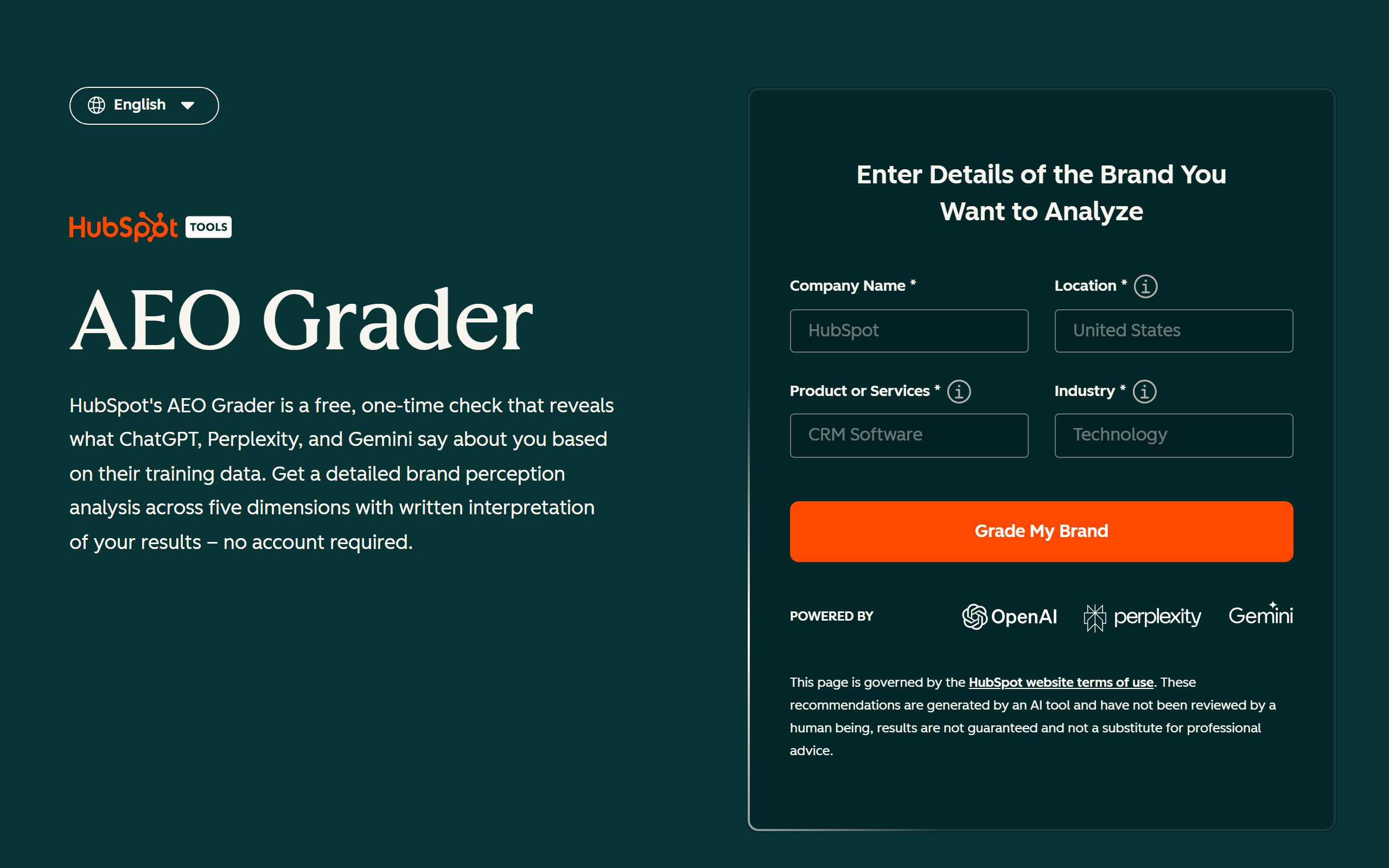
Free, no account required. One-time brand perception check across ChatGPT, Perplexity, and Gemini, scored on five dimensions with a written interpretation.
The honest free tier of the category. Enter your brand, product, and industry, and it reports how the major models currently describe you, scored across five dimensions. In a category built on demo calls, a tool that returns something useful without a signup form is worth naming.
Know its shape: the check reads the models' trained knowledge rather than live retrieval, and it is a single grade, not a trend line. Use it to find out whether your problem is measurement or coverage. In our experience it is nearly always coverage, which is a publishing problem wearing a measurement costume.
Training-data snapshot, not live tracking. One grade, no trend, no alerting.
Buy the stages in order, not all at once.
The expensive mistake in this category is buying stage four first. A team signs up for a tracker, watches a flat line for a quarter, and concludes that AI search does not work for them. The line was flat because there was nothing to cite. Engines quote pages that exist: pages that answer one question directly near the top, name their sources, and stay current. Build that layer first, either by hand with the checklist in our step-by-step AEO playbook or on a cadence with our AI SEO agent. Then add one tracker and watch a line that can move.
The same ordering holds across the wider stack, which we argue at length in the SEO automation tools roundup: instrumentation only earns its cost once production exists. If you are still deciding which questions deserve a page at all, the topic idea generator is a free place to start, and the numbers behind the shift to answer engines sit on our AI SEO stats collection, with linked sources.
Nine tools, four stages, one gap.
| FEATURE | THE SEO AGENT | ALSOASKED | FRASE | PROFOUND | PEEC AI | OTTERLY.AI | RANKSCALE | SCRUNCH AI | HUBSPOT AEO GRADER |
|---|---|---|---|---|---|---|---|---|---|
| Workflow stage | Shape plus publish | Find the questions | Shape the answer | Verify | Verify | Verify | Verify plus audit | Verify | Verify |
| Entry price | $99/mo flat | Free, then $12/mo | $49/mo | Demo-gated | Self-serve, in-app | $29/mo | ~20 euros/mo | $300/mo | Free |
| Self-serve signup | |||||||||
| Writes the page | |||||||||
| Publishes to your CMS | |||||||||
| Tracks citations | One-off grade | ||||||||
| Free tier | Free trial | 7-day trial | Free audit |
What is an AEO tool?
An AEO (answer engine optimization) tool helps your pages become the answer that ChatGPT, Perplexity, Gemini, and Google AI Overviews return. The category covers four jobs: question research (AlsoAsked), answer structuring (Frase), answer production and publishing (TheSEOAgent), and citation verification (Profound, Peec AI, Otterly, Rankscale, Scrunch, HubSpot AEO Grader). Most roundups only cover the last one.
How did you rank these nine?
Not best to worst, but along the AEO workflow: find the questions, shape the answer, publish it, verify who gets cited. Within each stage we ordered by team fit and price. One editorial position shapes the top: production changes your citation rate, verification only measures it, so the tool that publishes ranks first. We build that tool and we say so plainly. Every price was checked against the vendor pricing page in August 2026.
Are AEO tools and GEO tools the same thing?
Broadly yes, and vendors use the labels interchangeably. AEO (answer engine optimization) is the older term from the featured-snippet era; GEO (generative engine optimization) comes from a 2023 academic paper and leans toward generated answers rather than extracted ones. This page ranks the category along the question-to-answer workflow. Our best GEO tools roundup ranks a partly different set along the monitor-versus-produce split, so the two are worth reading together.
What is the cheapest way to start with AEO?
Zero dollars gets you further than most people expect. Run the HubSpot AEO Grader for a baseline, run the free Scrunch audit to see what crawlers retrieve, and use AlsoAsked free credits to map the question tree for your top three topics. That is a real diagnosis for nothing. The first dollar after that belongs in publishing answers, not in a second dashboard.
Do I need an AEO tool if I already run SEO?
You need the on-page behaviour, which you can do by hand: answer the question in the first 60 words, cite statistics to a named source, use consistent entity names, add FAQ schema, and keep pages fresh. Tools make that repeatable at volume and tell you whether it worked. If you publish two pages a month, a checklist is enough. Past roughly one page a week, the manual version stops being the cheap option.
What about Conductor, Ahrefs Brand Radar, Semrush AI Visibility, AthenaHQ, or Evertune?
All real tools in the same market. Ahrefs Brand Radar and Semrush AI Visibility are suite add-ons that make sense only if you already pay for the suite. Conductor and Evertune are enterprise platforms, with Evertune starting around $3,000 a month. AthenaHQ overlaps heavily with the trackers listed here. We covered the suite add-ons and the enterprise tier in our best GEO tools roundup and kept this list to nine tools that each own a distinct stage of the workflow.
Is this list sponsored?
No. No affiliate links, no paid placements, and no outbound links to the tools listed: the screenshots are the proof instead. We rank our own product first and label it plainly, which is a bias you should weigh. Everything else on the page is checkable, and the prices are dated so you can tell when they go stale.
Can any AEO tool guarantee ChatGPT mentions my brand?
No. Nobody sells placement in organic AI answers; engines pick sources by retrieval and trust. What research supports is narrower and more useful: content carrying quotations, statistics, and cited sources measurably lifts generative-engine visibility, and comparison-shaped pages earn an outsized share of AI citations. Tools help you execute and verify. They cannot buy the citation.
Related guides + features.
Answer engine optimization
How ChatGPT, Perplexity, and AI Overviews pick their sources, the on-page levers with measured effect sizes, and a worked example.
/blog/answer-engine-optimization →LISTICLEBest GEO tools
The GEO field ranked honestly: which trackers are worth paying for, which tier fits which team, and the one tool that produces citable content instead of measuring it.
/blog/best-geo-tools →PILLAR · AI SEARCHAI search optimization
Quotable answers, cited statistics, entity naming, and schema baked into every article the agent writes, so AI engines have a source to cite.
/features/ai-search-optimization →Publish the answers the engines quote.
Connect your CMS and the agent ships a fact-checked article every day: a direct answer up top, statistics with named sources, FAQ schema in place. Free trial first, $99 a month after, cancel in one click.
FREE TRIAL · CANCEL IN ONE CLICK