Generate SEO title tags that fit Google's SERP cutoff.
Type your target keyword. Llama 3.3 70B drafts 10 title candidates across 5 shapes, every keyword in the first 30 chars, every char count tagged SHORT, SERP-SAFE, or TRUNCATES. Sign-in required, 2 generations per day.
10 SEO title candidates will appear here, 2 each across year-led, listicle-count, question-led, how-to-led, and brand-led shapes.
What does this SEO title generator do differently?
Most free SEO title generators give you a string of characters and a length count. This one forces the target keyword into the first 30 chars of every candidate (so it survives SERP truncation), classifies each output into SHORT, SERP-SAFE, or TRUNCATES bands, and emits 2 each across 5 named shapes (year-led, listicle-count, question-led, how-to-led, brand-led) so you compare across formats. Pairs well with our headline generator and meta description generator. The same title stage runs inside our paid pipeline at SEO Automation. Built by The SEO Agent.
A target keyword and (optionally) the search intent. Sign-in required, no card.
Llama 3.3 70B drafts 10 titles across 5 shapes (2 each). About 2 seconds via Groq.
Title + char count + shape + SHORT/SERP-SAFE/TRUNCATES pill. Copy any to clipboard.
Four things that make this different from the average title generator.
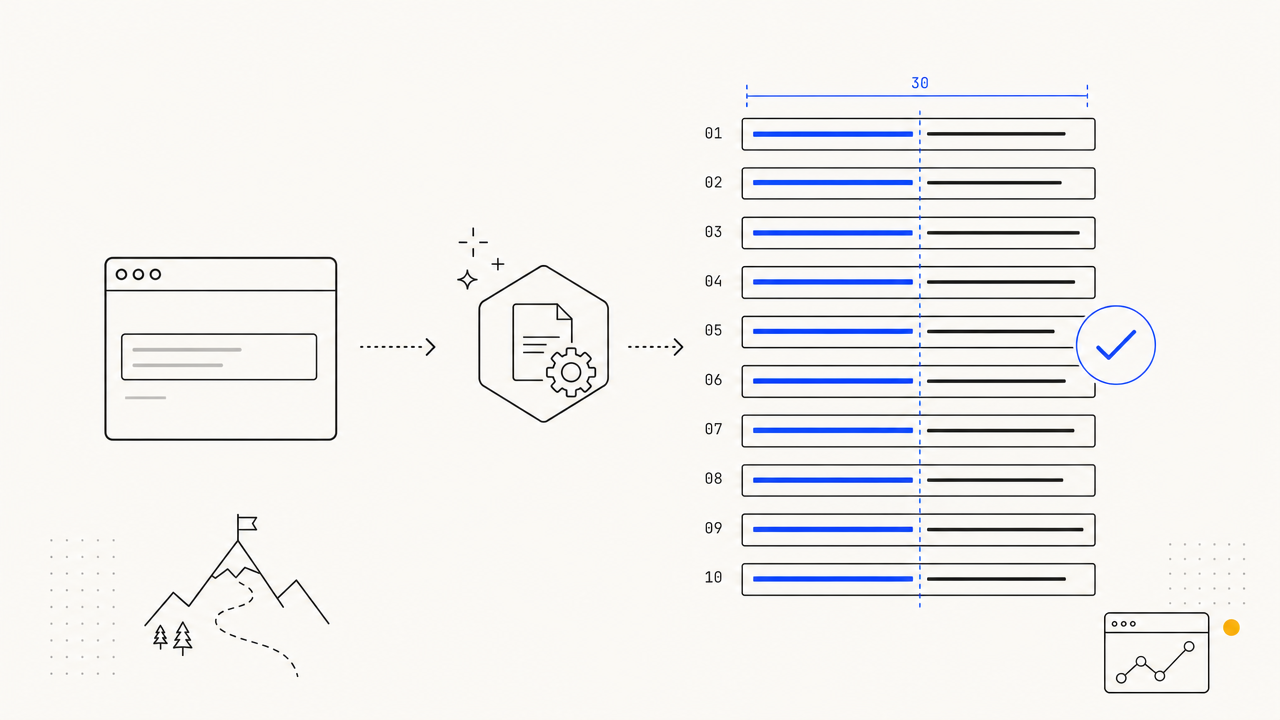
Always visible, even when the SERP truncates.
Google truncates at ~580px on desktop SERP, which usually lands around 60 chars. We force the keyword into the first 30 chars of every candidate so it stays visible in every truncation scenario, including mobile (which truncates earlier).
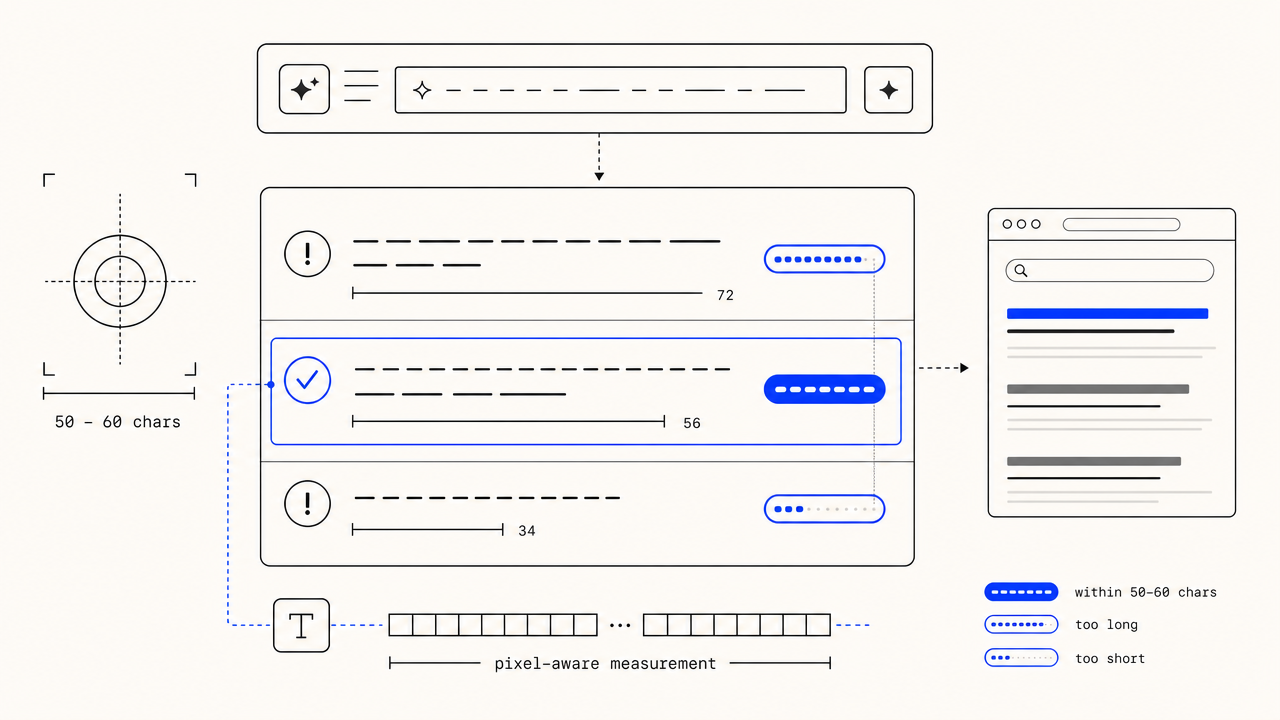
SHORT, SERP-SAFE, TRUNCATES. Pick any candidate at a glance.
Most SEO title tools show a char count and stop. We classify every output into SHORT (<50), SERP-SAFE (50-60), TRUNCATES (61+) so you can scan for the right one without counting characters yourself. Same pattern as our keyword density checker: show the math, not just the verdict.
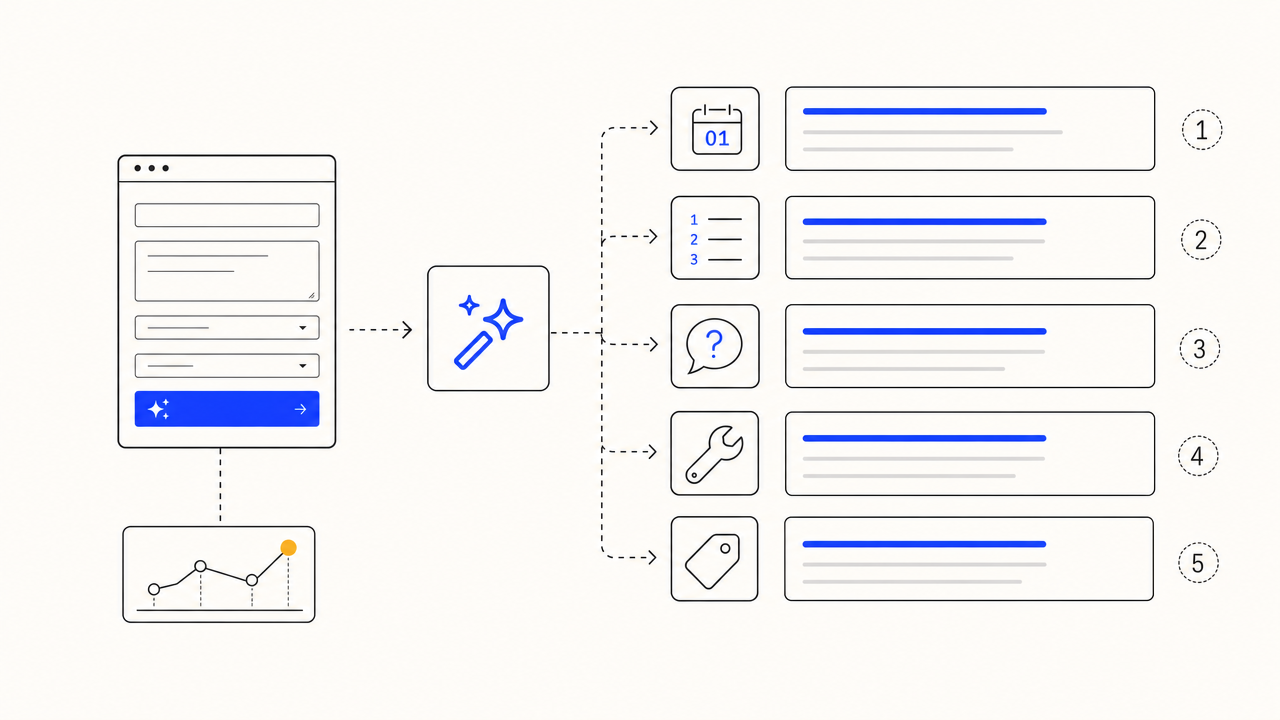
Year-led, listicle-count, question-led, how-to-led, brand-led.
Most title generators emit minor variations of one shape. The structured prompt forces 5 named shapes with 2 titles each, so you compare across formats instead of within one. The winning shape is rarely the one you would have picked yourself. Once the meta tag is set, write the body H1 in our blog headline generator, then turn the winning title into a clean URL with the URL slug generator.
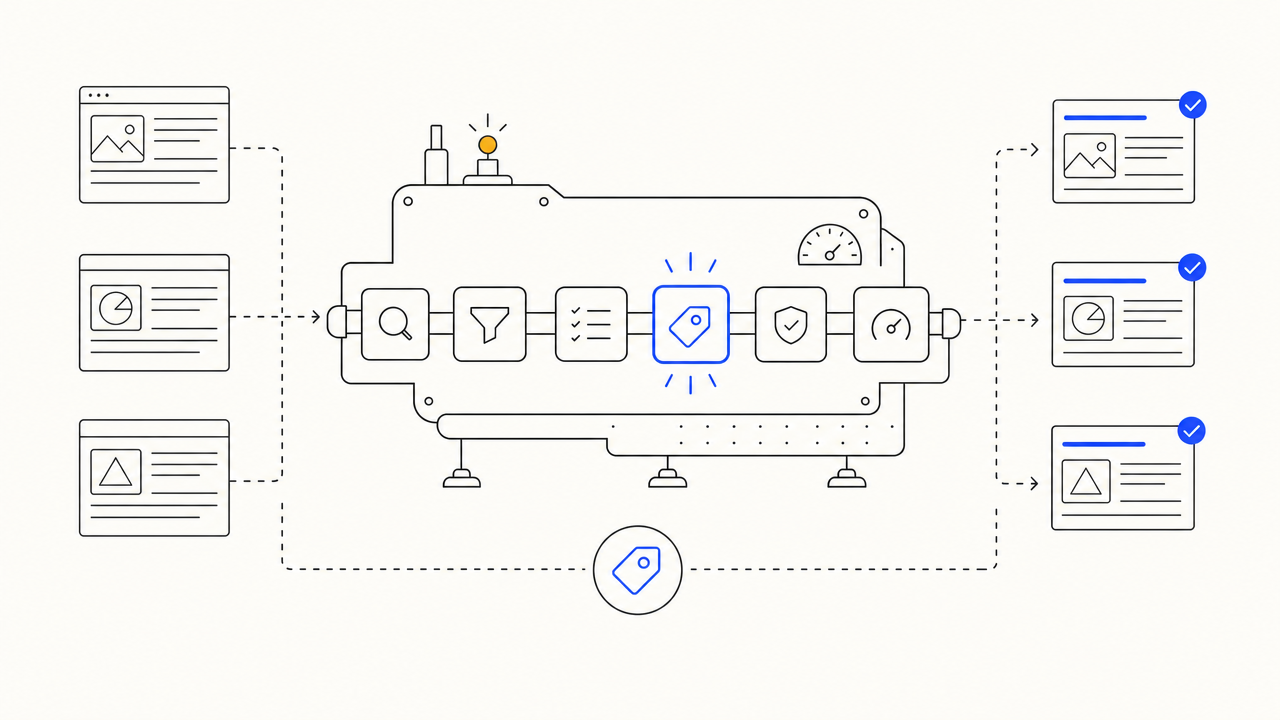
The agent writes SEO title tags on every article it publishes.
This widget gives you the title-generation step. The paid pipeline runs the same prompt + char-count gate inside its quality gate, alongside meta description writing, slug generation, internal-link resolution, image generation, and CMS publishing, on a daily cadence. Pricing is $99 a month flat.
Three steps, two seconds.
Keyword is required (3+ chars). Intent is informational (default), commercial, or navigational.
Structured output: 5 shapes (year-led, listicle-count, question-led, how-to-led, brand-led), 2 each.
Each title has a shape tag, char count, length pill, and a one-click copy button.
Meta description generator
LIVEFive descriptions, each pixel-measured against Google’s 920px cutoff.
Headline generator
LIVE12 body-headline candidates across 6 patterns. Different layer of the title stack.
Slug generator
LIVEThree URL slug variants from any title. Computed in your browser.
Q.01How is an SEO title different from a headline?+
The SEO title is the <title> tag Google shows in the SERP listing. It must be 50-60 chars, keyword in the first 30, and optimized for click-through from search. The headline is the H1 you see on the article body. They can be different. The SEO title rewards keyword precision; the body headline rewards engagement.
Q.02Why does the keyword have to be in the first 30 chars?+
Google truncates at ~580px desktop SERP and ~78% of that on mobile. The truncation cuts from the right. If your keyword is at position 45, it disappears in mobile SERP and looks irrelevant in desktop SERP. Keyword in the first 30 chars is always visible.
Q.03What are the 5 shapes?+
Year-led ("Keyword in 2026: hook"), listicle-count ("12 Keyword that descriptor"), question-led ("What Is Keyword? answer fragment"), how-to-led ("How to do something with keyword in window"), and brand-led ("Keyword Built for audience | Brand"). The 5 shapes that consistently rank across most SERPs.
Q.04Why 50-60 chars and not 60-70?+
Google rendered titles in pixels (~580px), not chars. The conservative band is 50-60 because wide letters (M, W) eat more pixels than narrow ones (i, l). 50-60 chars stays inside the pixel cutoff for most letter combinations. 61+ risks truncation. 49 and below reads short and underuses available real estate.
Q.05Why is sign-in required?+
Each generation costs us a Groq API call. Without sign-in we have no way to fairly rate-limit. Sign-in is free, no card.
Q.06What is the difference between informational, commercial, and navigational intent?+
Informational queries are educational ("what is X", "how does X work"). Commercial queries are buyer-aware ("best X", "X reviews", "X pricing"). Navigational queries target a specific brand ("X documentation", "X login"). The intent setting tells the model which tone to write.
Q.07How accurate is the char count?+
The char count is exact (JavaScript .length). The SERP truncation is approximate because Google measures pixels, not chars. We use 50-60 chars as a conservative pixel-equivalent band. For pixel-exact measurement of meta descriptions, see our meta description generator (which uses the Canvas API).
Q.08What does the paid pipeline add over this widget?+
This widget generates 10 title candidates. The paid pipeline at SEO Automation runs SEO title + meta description + slug + draft + fact-check + image + quality-gate + publish on every article. Daily cadence. The widget is one stage; the pipeline is 30.
The agent writes SEO title tags on every article it publishes.
Plus meta descriptions, slugs, internal links, images, quality gating, CMS publishing. Daily cadence. Try it free.