Byword AI review: who should use it in 2026.
Byword AI is a serious SEO article writer built for scale. It is not trying to be a lightweight prompt wrapper. The buyer question is sharper: do you need a scale content generator, or do you need a publishing system that validates the keyword, checks the draft, adds internal links, and blocks weak pages before they reach the CMS?
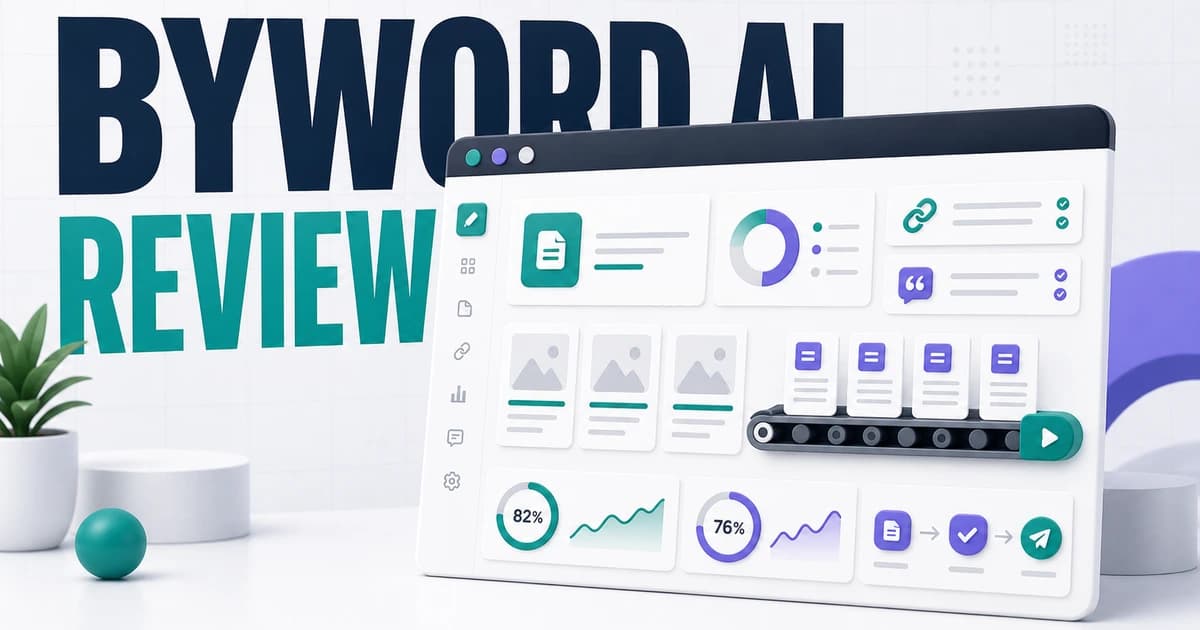
Is Byword AI worth using in 2026?
Byword AI is worth using if your team already has keyword strategy and editorial review covered, and the bottleneck is generating SEO articles at scale. TheSEOAgent is the better fit if you want the software to own more of the publishing loop: keyword validation, citations, internal links, a claim check, and CMS publish.
Need volume without thin pages? The SEO Agent publishes one researched article a day and edits or cuts any claim it cannot back up first. Enter your site to start.
Free trial · Cancel in one click1. What Byword AI is.

Byword AI is best understood as a scale article writer for teams that already know they want SEO content volume. TheSEOAgent is better understood as an AI SEO tool that wraps the writer with keyword validation, citations, internal links, a claim check, and publishing control.
Byword positions itself as an AI article writer for SEO at scale. The product is built around researching what ranks, generating articles, optimizing them, and publishing from one platform. Its pricing also reflects a volume buyer: the entry plan starts around a fixed monthly article allowance, then climbs for larger content operations.
That makes Byword more serious than a casual AI writer. It is aimed at teams trying to create a content engine. The open question is whether the engine should optimize for batches of articles or for safer daily publishing. Our SEO automation software page covers that broader platform tradeoff.
2. Where Byword AI wins.
Byword has a clear buyer: a team that wants to produce SEO articles at scale without stitching together a general writing assistant and a separate optimization process. The strongest parts are:
- Scale orientation. The workflow and pricing are designed around creating many articles, not the occasional one off draft.
- SEO-specific framing. Byword is not a generic copywriting tool wearing an SEO label. It is explicitly built for SEO article production.
- Research-to-publish promise. The public product story covers research, writing, optimization, and publishing in one workflow.
- Good fit for operators. Teams with strategy and editorial review already in place can use a generator like this to remove drafting bottlenecks.

If your team already has an editorial system, Byword is a credible shortlist product. If the missing piece is the system itself, compare it against a stricter SEO automation pipeline.
3. Where the workflow breaks down.
Scale is useful only when the inputs are strong. A system that can generate many articles can also generate many pages that should never exist. That is why our SEO automation tools list weighs pre-publish checks heavily.

- Batch risk. Volume tools invite batch publishing. That is dangerous when keyword quality varies across the list.
- Review debt. If every draft needs manual source checks, internal links, and formatting cleanup, generation speed can move the bottleneck downstream.
- Domain risk. Publishing many average pages can hurt the same domain the tool is supposed to grow.
4. Byword AI vs TheSEOAgent.
The clean split: Byword is a scale article writer. TheSEOAgent is a publishing system that treats the article writer as one part of the loop.
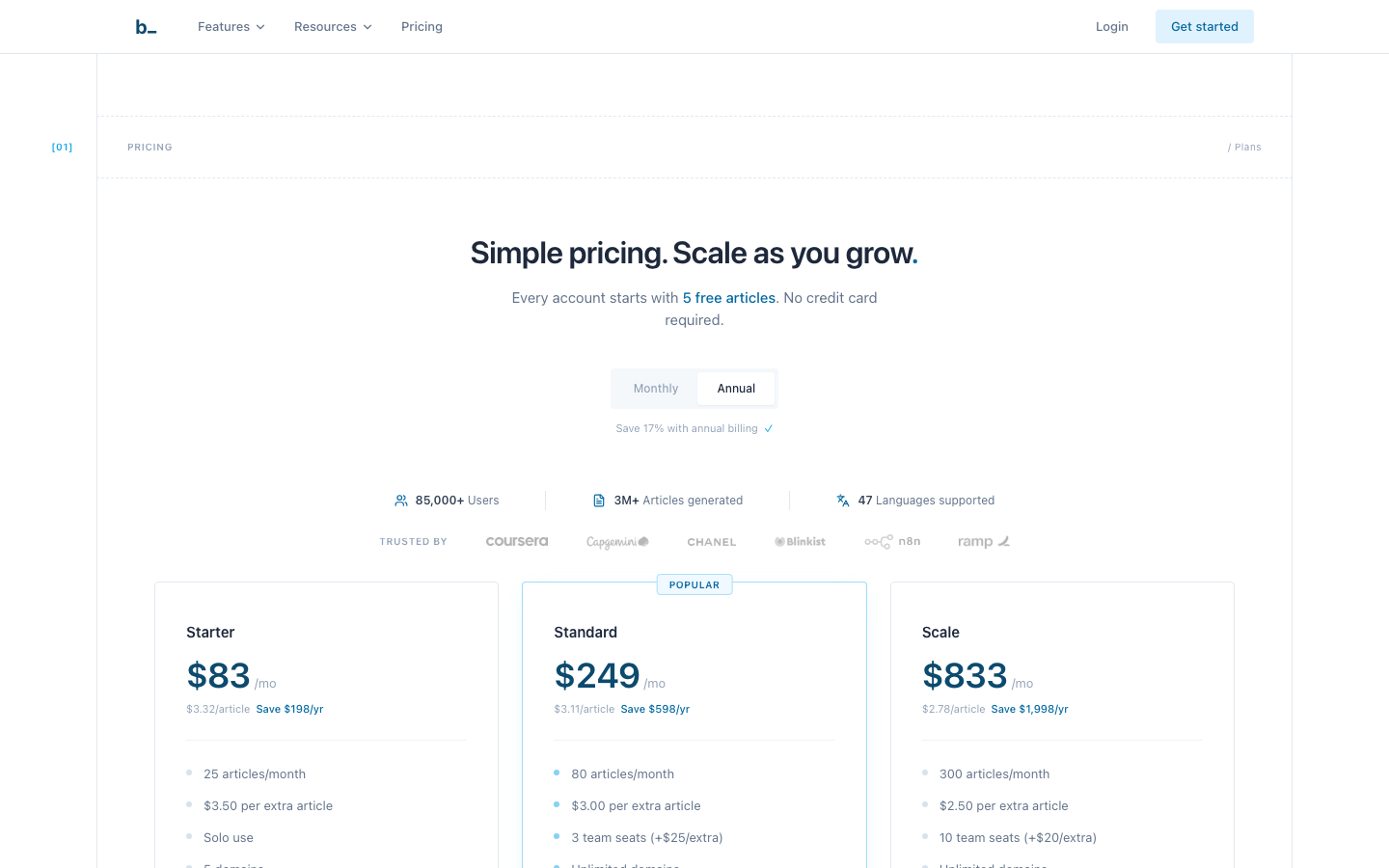
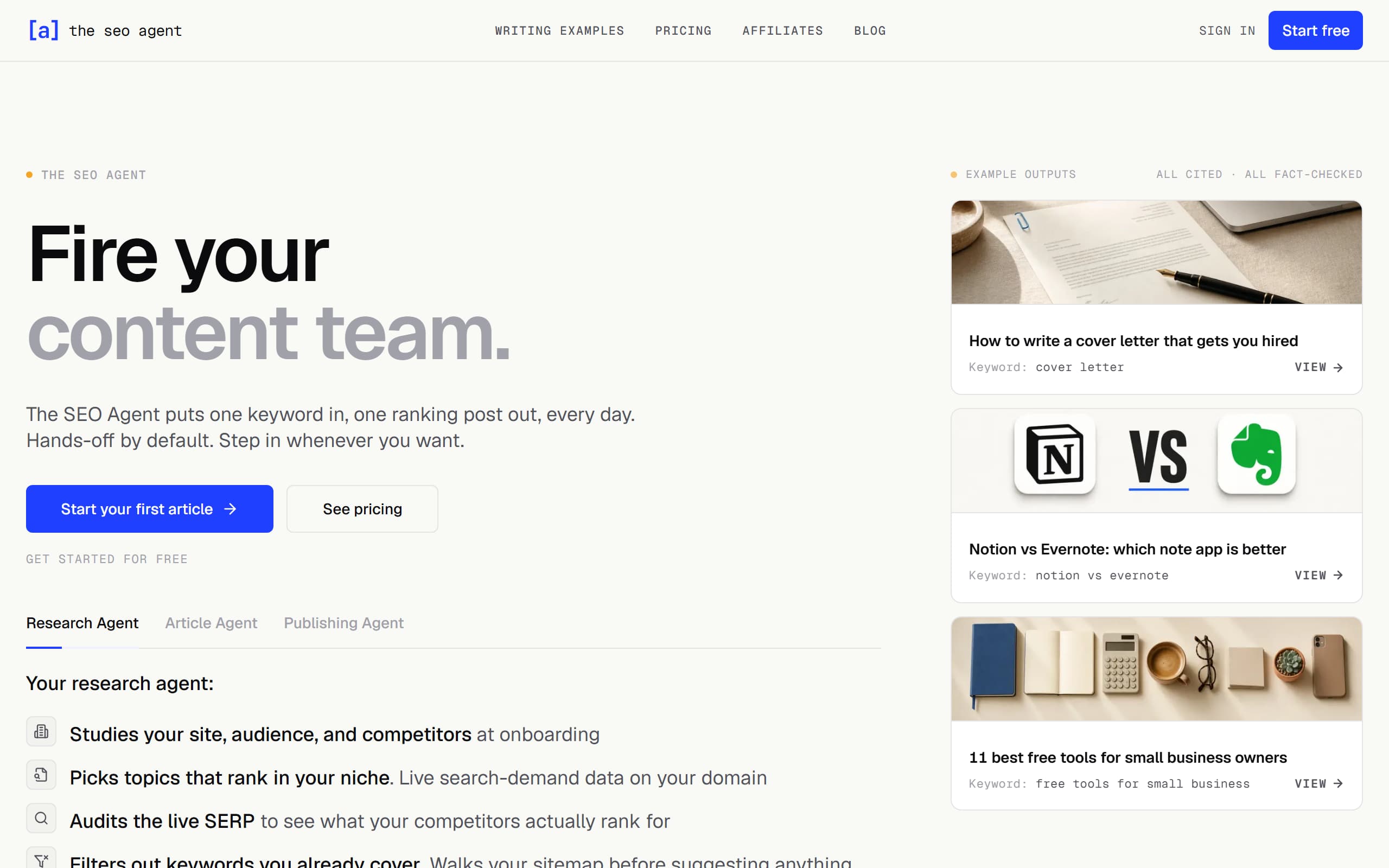
| FEATURE | BYWORD AI | THESEOAGENT |
|---|---|---|
| Best fit | Teams that want to generate SEO articles at scale | Founders and content teams that want controlled daily publishing |
| Product shape | AI article writer for research, generation, optimization, and publishing | SEO publishing pipeline with checks around the writer |
| Keyword selection | Strong when the user already knows the opportunity set | Live keyword validation before article planning |
| Scale | Pricing and workflow are built around batches of articles | Built around steady daily publishing and domain safety |
| Fact checking | Depends on workflow settings and review discipline | Citation-backed pass before publish |
| Claim check | Generation-first workflow | Every claim checked against its sources, unbacked ones cut |
| Best buying reason | You want a scale article writer | You want the whole SEO content job handled |
5. The decision matrix.
Use this split if Byword, RightBlogger, Autoblogging.ai, and TheSEOAgent are all in your shortlist.
- You already have a keyword strategy.
- You want to generate SEO articles in batches.
- You have editors checking every draft.
- You care most about scale content production.
- You need keyword discovery before drafting.
- You want citations and internal links built in.
- You want unbacked claims cut before publishing.
- You care most about publish-ready SEO output.
If you are still comparing the category, read our RightBlogger review and the broader best AI SEO tools list next.
6. Who should use which tool.
Pick Byword if the editorial system already exists and the only missing piece is faster article production. That means you trust the keywords, you have a reviewer, and you want a tool focused on AI SEO software scale.
Pick TheSEOAgent if you want the system to make more of the decisions around the article. The platform is built for teams that want keyword choice, outline, citations, internal links, score, and publish handled in one path. If that is the buying job, the autoblogging feature page explains the hands-off version.

7. How to test before switching.
Do not judge either tool from the homepage. Run this test:
- Pick three keywords from the same cluster.
- Generate one article for each keyword in both products.
- Check whether the brief catches search intent.
- Count unsupported claims, weak sources, and missing internal links.
- Estimate cleanup time before the article is publishable.
The better tool is the one that creates less review debt for your team. If you want to test the stricter path, start the free trial and run your own keywords through TheSEOAgent.
- RightBlogger review for the broader blogging-suite comparison
- Autoblogging.ai review for the article-generator comparison
- Abun review for the broader AI SEO toolkit comparison
- Blaze AI pricing and verdict for the multi-channel platform comparison
- SEO automation with keyword and quality checks
- TheSEOAgent vs Outrank for the closest autopilot comparison
Is Byword AI good for SEO?
Byword AI can be good for SEO when the buyer wants a scale-oriented article writer with research, generation, optimization, and publishing in the same workflow. The important caveat is that SEO results depend on keyword choice, source quality, internal links, and the decision not to publish weak pages.
What is Byword AI best for?
Byword is best for teams that already know they need many SEO articles and want a cleaner generation workflow than a general writing assistant. Its strongest positioning is scale: turn a domain or keyword set into researched, optimized articles faster than a manual content desk.
What is the main weakness of Byword AI?
The main weakness is the same risk every scale-content platform has: it can make publishing feel too easy. If a team pushes volume before it has a strong keyword-selection and quality-review process, the tool can help create pages faster than the site can absorb them.
How is TheSEOAgent different from Byword AI?
TheSEOAgent is built around a controlled daily publishing loop. It validates the keyword, drafts with citations, checks every claim against its sources, adds internal links, and publishes to the CMS. Byword is more directly framed around AI article writing at scale.
Should I switch from Byword AI to TheSEOAgent?
Switch if your bottleneck is not generation speed but publish readiness: citations, source handling, internal links, claim checking, and CMS discipline. Stay with Byword if your content operation already has strategy and review covered and simply needs scalable article generation.
Can I use both tools together?
Yes, but most teams should pick one system for the main article workflow. Running the same keyword through both tools is the clean test. Compare the brief, citations, structure, internal links, and cleanup time before publishing anything.
Does Byword AI replace keyword research?
Not completely. Byword helps research and generate content, but the buyer still needs to decide which opportunities deserve pages. Keyword selection is the leverage point. A weak target can waste a strong draft.
Is Byword AI better than Autoblogging.ai?
Byword reads more like a scale SEO content platform. Autoblogging.ai reads more like a direct autoblogging and article-generation product. The better fit depends on whether the buyer wants a structured content operation or faster article output from known topics.
Is Byword AI good for SaaS companies?
It can be, especially when the SaaS team already has a clear content strategy and wants to scale pages. SaaS teams that need the system to choose keywords, enforce citations, add internal links, and block weak drafts should test the workflow carefully.
What should I check in a Byword AI trial?
Check keyword quality, article structure, citation handling, internal links, CMS formatting, and how many edits are required before publishing. Do not judge only by article count. A cheaper or faster draft is not cheaper if it creates review debt.
Related guides + features.
Autoblogging
Hands-off publishing on a cadence you set, with every claim checked and anything unsupported cut before it reaches your site.
/features/autoblogging →LISTICLEBest AI SEO tools
The AI SEO field ranked for teams that want shipped articles, not another dashboard.
/blog/best-ai-seo-tools →COMPARISONBabyLoveGrowth vs Outrank
Two $99 autobloggers compared on pricing, backlinks, AI citation tracking, and refunds, so you can see where each one stops.
/blog/babylovegrowth-vs-outrank →Ship the article only after its claims are checked.
Start the trial, connect your CMS, and run three keywords through the full pipeline. If the drafts are not cleaner than your current workflow, cancel in one click.
FREE TRIAL · SOURCE-CHECKED DRAFTS · CANCEL IN ONE CLICK