SEO software for agencies, built by one.
We run client SEO on this exact pipeline for real $5k/mo retainers. It validates keywords, drafts with cited sources, checks every claim against them, and publishes to each client CMS. One operator owns the strategy while the software carries production.
FREE TRIAL · CANCEL IN ONE CLICK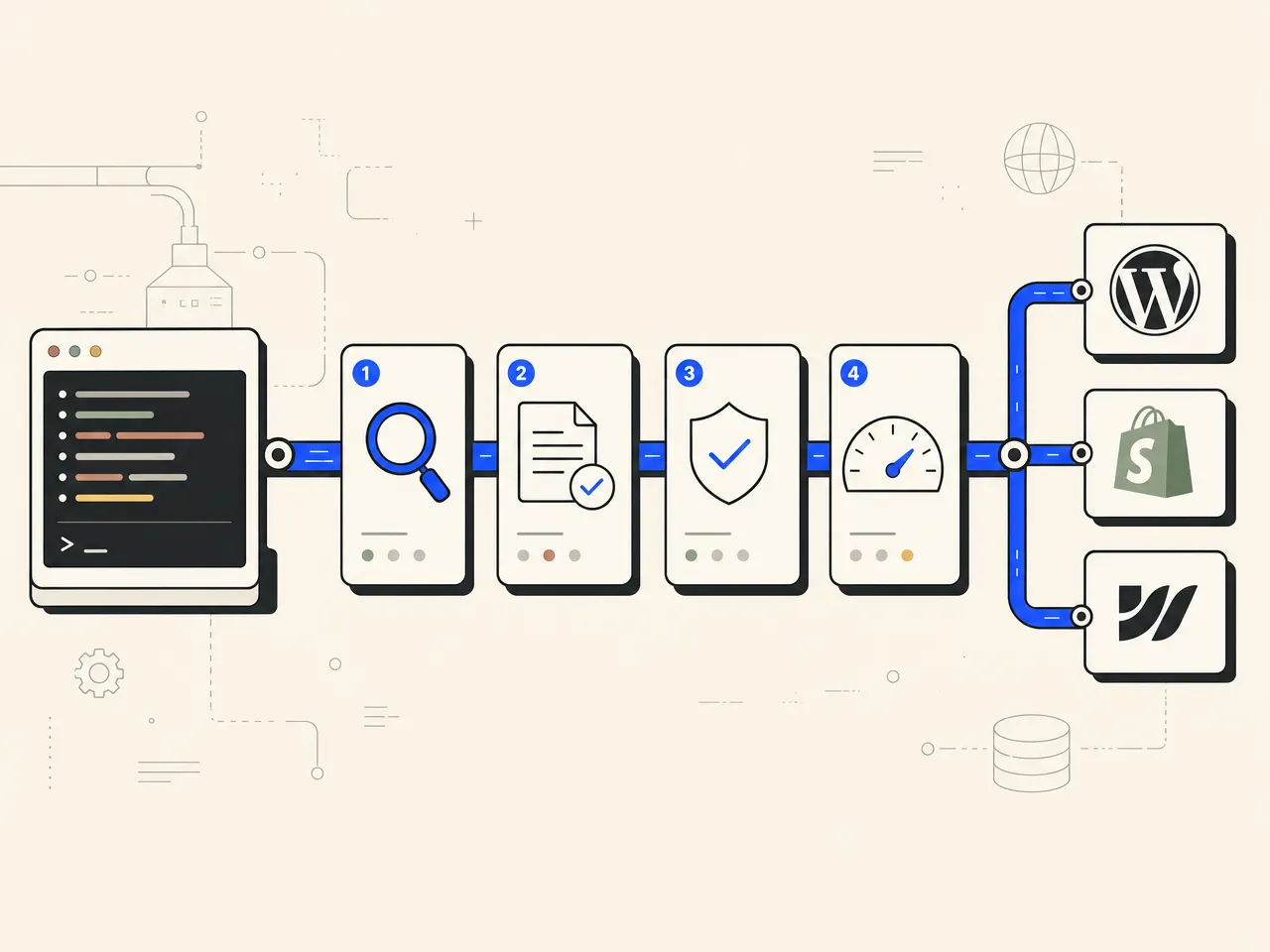
What is SEO software for agencies?
SEO software for agencies is a system that runs repeatable search production across client sites: keyword validation, briefing, cited drafting, QA, CMS publishing, and delivery tracking. We built this one around the pipeline we use for real $5k/mo retainers, so an operator can keep strategy and client judgment while the software carries the queue. It costs $99/mo flat, with live keyword data on every brief, every claim checked against its sources, and native CMS publishing.
The draft is cheap. Managing it is not.
The writer invoice is visible. The hidden cost is assigning briefs, chasing drafts, checking claims, repairing structure, and moving approved work into four different CMSs. That coordination multiplies with every retainer.
- One writer queue per client, each with a different deadline
- Manual keyword spreadsheets go stale before the brief is approved
- Editors repeat the same fact, citation, structure, and link checks
- Copy-paste publishing turns CMS access into an operations bottleneck
- Variable writer and QA costs eat the margin on fixed retainers
One pipeline owns production from target to publish.
We run client SEO on this exact pipeline. It validates targets against live keyword data, drafts with cited sources, checks every claim against them, and publishes approved articles to each connected client CMS.
- One project per client site, with its own keyword queue and CMS connection
- Live volume, difficulty, and search results checked before production
- Cited drafts pass a separate verification step before publish
- Unbacked claims are cut instead of handed to an editor
- Native publishing to WordPress, Webflow, Shopify, and Ghost
Four production layers that protect the retainer margin.
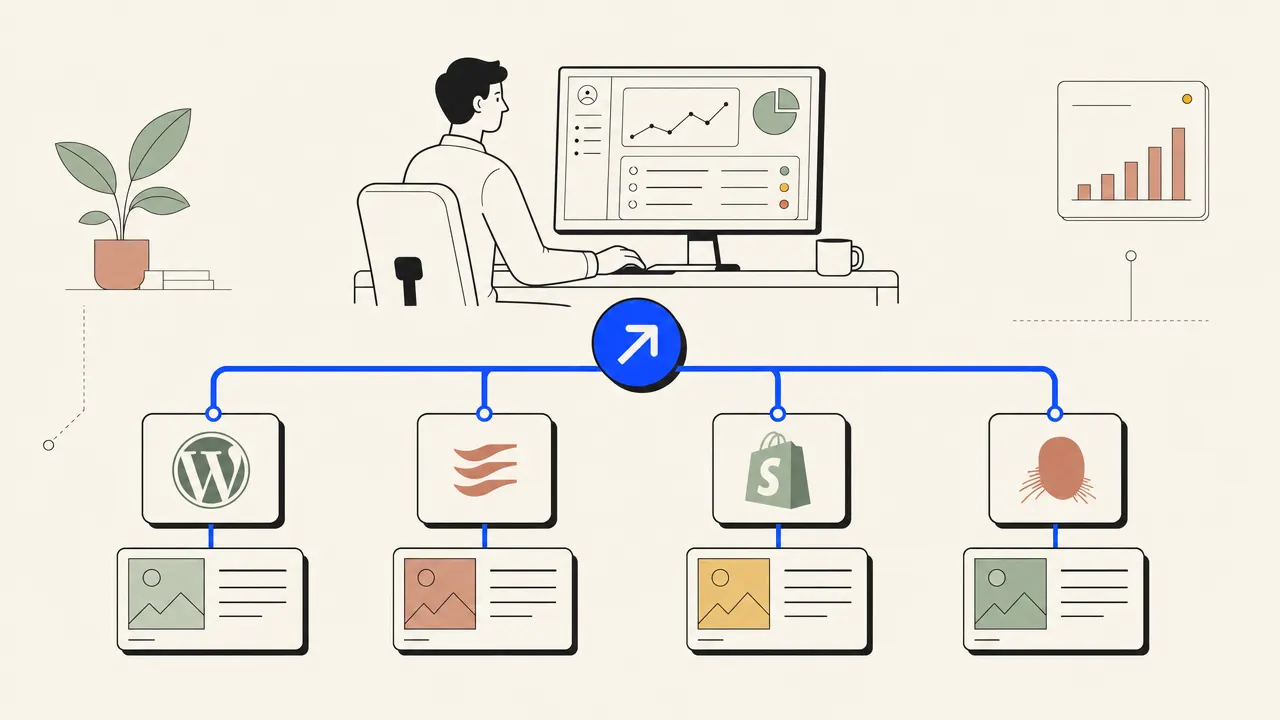
One workspace, separate pipelines for every client site.
Each client site runs as its own project with its own keyword queue and CMS connection. Connect WordPress, Webflow, Shopify, or Ghost once, then let approved work land on the correct property with headings, metadata, images, and schema attached. You manage projects instead of writer rooms and publishing checklists. That is the operating layer behind our full SEO automation pipeline. When a prospect is not ready for a retainer, send the permanent public SEO audit in a cold email and let the URL carry the evidence. Once the account is signed, the same diagnosis repeats on a schedule through our recurring technical audit for client sites. Client sites designed in Framer import through a plugin rather than an API, which SEO for Framer sites covers step by step. The month-end half of the retainer is the same problem in reverse, which is why automating client SEO reports pays off once the work log already lives in one place, and the SEO report template for clients shows the exact sections to fill. Agencies that want the output to carry their own brand rather than ours run it as white label SEO, one $79 add-on site per client. If clients need a branded reporting dashboard as well, use the white-label software comparison to choose that layer separately from article production. For the pitch half of the retainer, forecasting SEO results before the contract sets an honest range instead of a promise you cannot audit later.
The claim check does the first pass an editor would.
Writer management is expensive because every draft creates a review job. The pipeline checks every claim against the sources saved during research, softens or cuts what they do not back, and holds an article with a fact problem it could not fix before it can reach a client site. Keep approval on for sensitive accounts or switch on auto-publish per project. The AI SEO services page explains the buyer-facing alternative to an agency. This page is for the operator who keeps the client relationship and replaces the repeatable production layer. Our AI fact checker shows the verification step on its own, and the SEO bot page documents the daily loop the check sits inside.

Use current keyword data instead of defending stale estimates.
Every brief starts with current search demand, difficulty, and the pages already winning the result, so the account owner has a defensible answer when a client asks why an article exists. The product does not manufacture a white-label deck: reporting is the article ledger, the shipped URL, and the ranking movement that follows. The same standard runs through our best AI SEO tools comparison: verifiable output beats feature lists. Use the SEO agent built for shipped work when execution matters more than another dashboard. Turning that ledger into the thing you actually send a client is a separate build, and automated monthly reporting for client accounts walks through it. Store accounts sit in their own lane, priced and staffed differently, and ecommerce SEO for online stores covers what changes when the client sells products. In-house B2B operators can skip the client-management layer and use the same production loop as SEO software for SaaS teams.

$99/mo flat leaves room for the retainer to work.
A fixed retainer and variable production cost are a bad pair: more output means more freelance invoices, more QA hours, and less margin. The agent turns production into a predictable software line with no per-article meter, so the operator can price strategy, client communication, and judgment separately. The $99/mo flat pricing makes the account math visible before you sell the scope, and the free meta description generator gives prospects a small proof point. For the small-budget accounts that can never carry a four-figure retainer, the same flat line is what makes affordable SEO services for small business clients worth taking on at all. Margin comes from removing repeatable production labor, not removing the operator.

Four steps. Separate projects. One operator.
Create a separate project for each client, then connect its WordPress, Webflow, Shopify, or Ghost CMS. Credentials and publishing destinations stay attached to the correct project.
Bring the target list or let the agent find opportunities. Live volume, difficulty, and search-result evidence are checked before a keyword enters production. Approve briefs manually or enable automatic approval.
The next approved brief becomes a cited draft. A separate fact-check pass checks every claim against its sources, softens or cuts what they do not back, and holds the article for review if a fact problem is left.
Qualified work publishes to the right client CMS with the delivery record attached. Use the article ledger, live URL, and ranking movement as the evidence behind the account update.
The honest one-screen comparison.
| FEATURE | THE AGENT | EVERYONE ELSE |
|---|---|---|
| Multi-site operations | Separate projects + CMS connections | Varies by tool or contractor stack |
| Keyword validation | Live data on every brief | Often periodic spreadsheet exports |
| Draft QA | Citations + claim check against sources | Manual review or tool-specific checks |
| CMS publishing | Native to four CMS platforms | Manual or integration-dependent |
| Pricing unit | $99/mo flat, no article meter | Often seats, output, or service hours |
| White-label report generator | Not included | Available in some agency suites |
Q.01What is SEO software for agencies?+
SEO software for agencies is a production system for running keyword research, content creation, quality assurance, publishing, and delivery tracking across client sites. TheSEOAgent turns those repeatable tasks into one pipeline while the agency keeps strategy, communication, and client judgment.
Q.02Can I manage multiple client sites?+
Yes. Each client site runs as its own project with a separate keyword queue and CMS connection. The project switcher keeps the sites inside one workspace while publishing credentials and destinations stay attached to the correct client project.
Q.03Does it include white-label reports or a client dashboard?+
No. There is no white-label report generator, branded client portal, or reseller dashboard. The reporting surfaces are the permanent public audit URL, the in-product article ledger, and the articles published on the client site. Agencies that need a branded PDF should move those results into their own reporting template.
Q.04Which client CMS platforms can it publish to?+
WordPress, Webflow, Shopify, and Ghost are supported native publishing destinations. A webhook fallback covers other systems. The pipeline sends the formatted article, metadata, images, tags, and supported schema to the project destination configured for that client.
Q.05Can an account manager approve work before it publishes?+
Yes. Brief approval and publish approval can stay manual for sensitive accounts, and publish approval is the default because auto-publish starts off. Agencies that trust the queue can switch on auto-publish per project; an article with a fact problem it could not fix is still held for review.
Q.06What can I show a client during reporting?+
Show the chosen keyword and its live data, the article that shipped, its citations, the published URL, and the ranking movement recorded afterward. For prospecting, the SEO audit produces a permanent public URL that can be pasted into a cold email.
Q.07How does the pricing protect agency margin?+
The product is $99 per month flat with no per-article meter or token surcharge. That makes production a predictable software cost instead of a variable stack of writer invoices and editor hours. A free trial comes first, and cancellation is one click in the app.
Q.08Can the paid pipeline take over after I send a prospect an audit?+
Yes. Once the prospect becomes a client, create the project, connect the CMS, approve the keyword plan, and let the pipeline draft, verify, and publish the work. The audit is the prospecting surface. The paid product is the ongoing delivery system at $99 per month flat.
Related guides + features.
SEO automation
The full pipeline: research, drafting with every claim checked against its sources, and native publish. Where these tools stop, the agent ships the page.
/features/seo-automation →FREE TOOLFree SEO audit
Point it at any domain for a content and technical read in minutes.
/seo-audit →PRICINGSimple pricing
$1 for a 3-day trial if eligible, then $99 per month. No per-keyword meter. Cancel in the app.
/pricing →Run the next client campaign through the pipeline.
Connect one client site, approve the first keyword queue, and watch cited drafts go through the claim check before they publish. The free trial lets you inspect the workflow before $99/mo flat pricing starts.
FREE TRIAL · CANCEL IN ONE CLICK