AI search optimization that earns citations.
ChatGPT, Perplexity, Gemini, and Google AI Overviews answer your buyers' questions by quoting a handful of sources. This is the pipeline that makes your site one of them: articles with quotable answers, cited statistics, and schema, published to your CMS daily.
FREE TRIAL · CANCEL IN ONE CLICK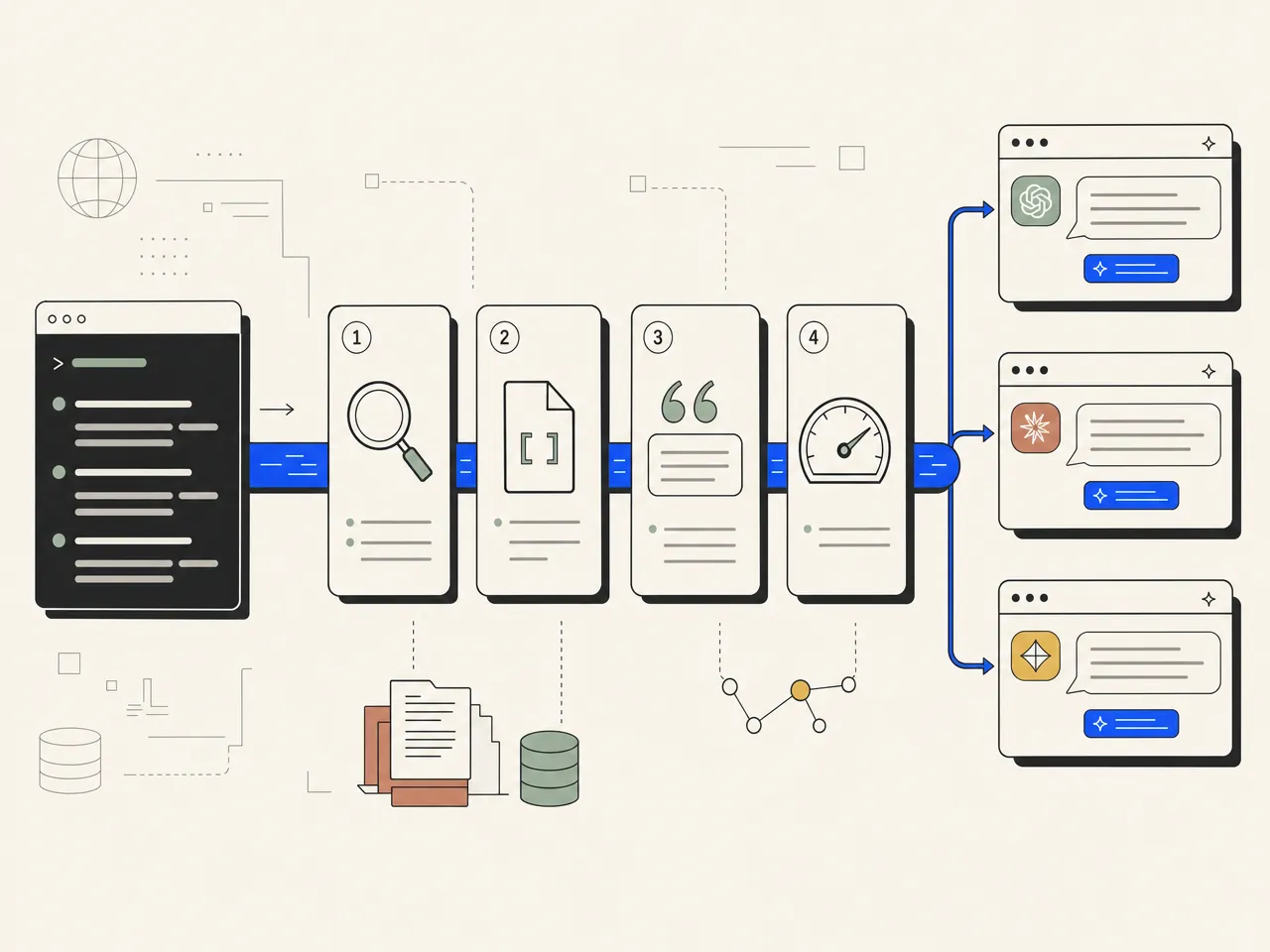
What is AI search optimization?
AI search optimization (also called AEO, GEO, or LLM SEO) is making your content the source AI assistants cite when they answer questions: ChatGPT, Perplexity, Gemini, and Google AI Overviews. The levers are direct-answer blocks an engine can quote, statistics with named sources, consistent entity naming, FAQ schema, and freshness. TheSEOAgent applies all five to every article it writes and publishes one to your CMS daily, for $99 a month flat.
Buy a dashboard that watches the problem.
The first wave of AI search tooling is monitoring: dashboards that tell you how often ChatGPT or Perplexity mentions your brand. Useful data. But a tracker cannot change the number it reports. The mentions belong to whoever published the content the answer engines cite.
- Visibility trackers report the score, they do not move it
- Most published pages have no quotable answer block for an engine to lift
- Claims without named sources rarely survive into an AI answer
- Thin or stale pages fall out of answer sets as models refresh
- Enterprise GEO platforms start around $500 a month before content costs
Produce the content that gets cited.
TheSEOAgent bakes AI search optimization into every article it writes: a direct-answer block an engine can quote verbatim, named entities instead of vague claims, statistics with sources attached, FAQ schema, and a fresh publish cadence. The same pages rank in classic search, so nothing is wasted if AI traffic arrives slowly.
- Every article leads with a quotable, number-carrying answer block
- Fact-check pass attaches named sources to every defensible claim
- FAQ schema and structured headings on every page, automatically
- Daily publishing keeps the freshness signal answer engines reward
- $99 a month flat, including the writing a GEO consultant would bill for
Four levers, applied to every article automatically.
Optimize for being quoted, not just ranked.
Classic SEO fights for position one. AI search optimization fights for the citation inside the answer: the two or three sources ChatGPT, Perplexity, or an AI Overview names when it responds. The stakes are measured, not hypothetical: clicks drop by nearly half when an AI summary answers first. The page shapes that win citations are specific: direct answers, real numbers, named entities. Our answer engine optimization guide documents the full pattern, and the AEO agent applies it to every article without being asked.
Citation-ready formatting, applied automatically.
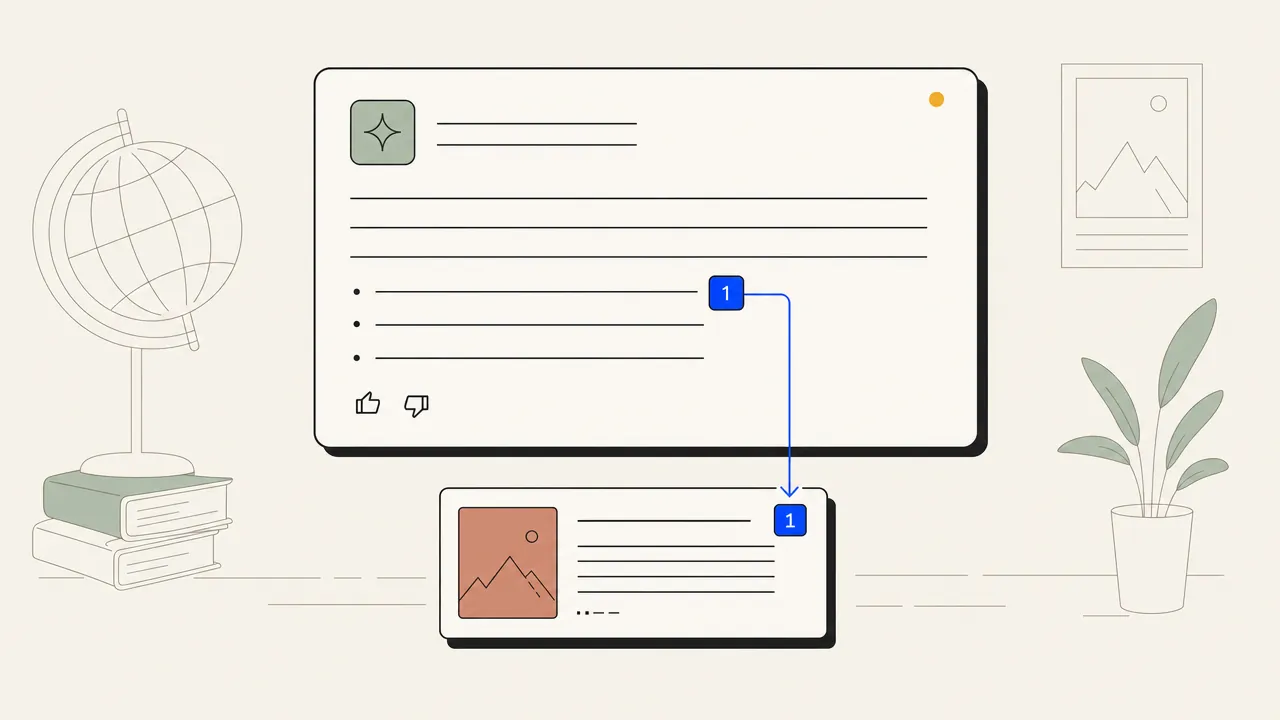
Answer engines lift content that is easy to parse: a question heading, a 50-word direct answer, a stat with a source, an FAQ block with schema. Retrofitting that structure onto an existing blog is weeks of editorial work. The agent applies it at write time, the same way the SEO automation pipeline already handles titles, internal links, and metadata. One draft, both audiences: crawlers that rank and models that quote.
LLM SEO is not per-platform work.
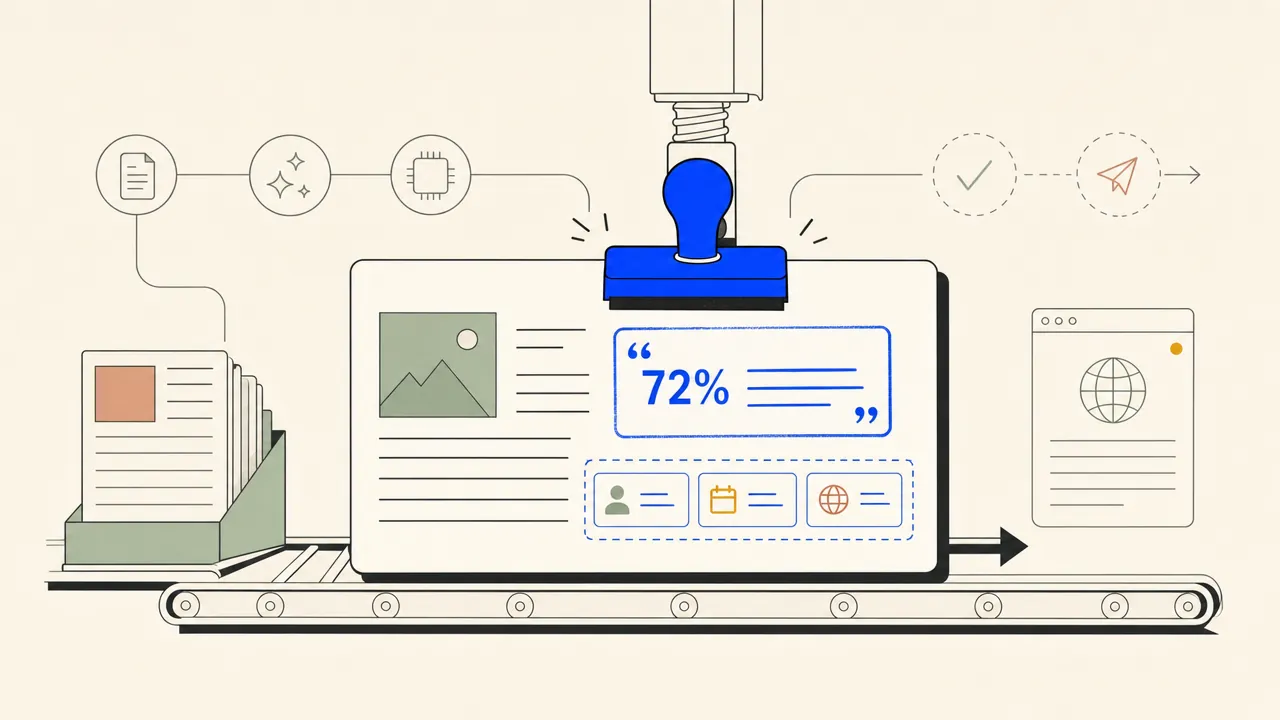
Teams ask for ChatGPT SEO, then Perplexity SEO, then Gemini. In practice the engines reward the same substance: verifiable claims, clear structure, consistent entity naming. Write one article that satisfies the strictest reader and it surfaces across all of them. Google's chat tab is the same story: optimizing for AI Mode in Google Search is a coverage problem, not a new file format. That is why we publish one citable page per question instead of five platform-shaped variants, and why the GEO tools roundup ranks production ahead of per-platform monitoring. The measurement side is covered separately in our comparison of AI visibility monitoring platforms, which trend brand mentions across those same engines. For the software that works the retrieval layer directly, see our ranked LLM SEO tools, and our own LLM SEO pipeline for how we run it. If you are still deciding how much classic ranking work this replaces, our comparison of generative engine optimization against classic SEO draws the line, and what search everywhere optimization actually means sets out the surfaces beyond AI answers that are worth the effort.
Cadence is the moat models cannot ignore.
A brand cited once is an accident. A brand cited across dozens of adjacent questions is an entity the models have learned. Getting there is a volume problem: every question your buyers ask needs a page that answers it with proof. The agent ships one every day, each fact-checked with citations attached before publish, for $99 a month flat. Coverage compounds while competitors run quarterly content sprints. Holding that cadence is the entire job of an agent that writes for answer engines.
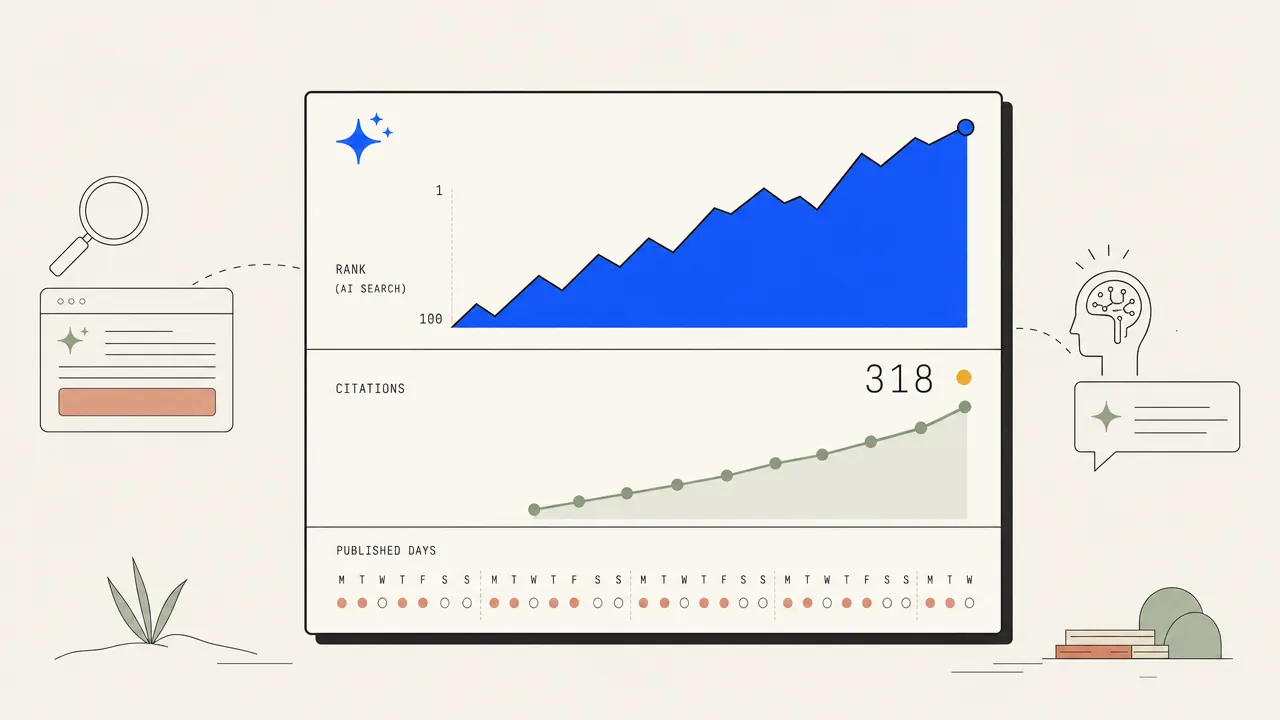
From buyer question to cited source.
The agent researches what your buyers ask, in question form, against live keyword and SERP data. Questions are what answer engines answer, so questions are what the plan targets.
Each article opens with a direct answer an engine can lift verbatim: named entities, a specific number, no throat-clearing. The body earns the answer with cited evidence.
The fact-check pass forces a named source onto every statistic and defensible claim. Unverifiable sentences get cut. Answer engines weight content they can trace.
Articles ship natively to your CMS with FAQ and article schema in place, on a daily cadence. Freshness compounds: engines re-crawl active sites and drop stale ones.
Producing beats monitoring.
| FEATURE | THE AGENT | EVERYONE ELSE |
|---|---|---|
| Moves your AI visibility | Publishes citable pages | Reports a score |
| Quotable answer blocks | ||
| Citations on every claim | ||
| FAQ + article schema | Automatic | Not their job |
| Classic Google rankings | Same pages rank | Not covered |
| Monthly cost | $99 flat | $99-500+ for monitoring only |
Q.01What is AI search optimization?+
AI search optimization is the practice of making your content the source that AI systems like ChatGPT, Perplexity, Gemini, and Google AI Overviews cite when they answer a question. It overlaps with classic SEO but optimizes for a different outcome: being quoted inside the answer rather than ranked below it. The levers are direct-answer formatting, statistics with named sources, consistent entity naming, structured data, and freshness.
Q.02How is AI search optimization different from SEO?+
Classic SEO targets a ranked list of links and wins clicks. AI search optimization targets the synthesized answer itself and wins citations and mentions. The overlap is large: answer engines pull heavily from pages that already rank, so strong SEO remains the foundation. The difference is formatting and evidence: quotable answer blocks, verifiable claims, and schema matter more, and click-bait titles matter less.
Q.03Is this the same as AEO or GEO?+
Broadly, yes. Answer engine optimization (AEO), generative engine optimization (GEO), LLM SEO, and AI search optimization all describe optimizing content for AI-generated answers. GEO usually emphasizes visibility in chat assistants, AEO includes older answer surfaces like featured snippets. TheSEOAgent applies the same production playbook regardless of the label.
Q.04Does ChatGPT SEO actually work?+
You cannot buy placement in ChatGPT, but you can be reliably cited. ChatGPT with search browses the live web and cites sources; Perplexity cites on every answer; Google AI Overviews link the pages they synthesize from. Content with direct answers, real statistics, and named sources is measurably more likely to be selected. What does not work is keyword-stuffing or publishing thin pages at volume without evidence.
Q.05How do I get my brand mentioned by AI assistants?+
Publish the content the assistant needs when it answers questions your buyers ask. That means one page per question, each with a quotable answer, statistics with sources, and consistent naming of your brand as an entity. Third-party mentions compound the effect: listicles, comparisons, and reviews that name your brand feed the same answer sets. TheSEOAgent automates the first half and its attribution network supports the second.
Q.06Do I still need an AI visibility tracker?+
Trackers are useful once you have enough citable content for the number to move. If your blog has 20 pages, a $99-500 monitoring subscription will mostly confirm you are invisible. The order that works: produce citation-ready coverage first, then add monitoring when there is something to measure. Our GEO tools roundup covers which trackers are worth it and when.
Q.07Will AI search kill my organic traffic?+
AI answers do reduce clicks on informational queries; multiple studies measured roughly half the click-through when an AI summary is present. That is exactly why being the cited source matters: citations keep your brand in the answer even when the click never happens, and buyers who do click from an AI answer arrive with high intent. The losing move is publishing content that neither ranks nor gets cited.
Q.08How long until AI engines cite my content?+
Faster than classic SEO in many cases. Perplexity and ChatGPT search read the live web, so a well-structured page can appear in answers within days of being indexed. Google AI Overviews track closer to normal ranking timelines. Sustained presence across many questions is a coverage game measured in months, which is what a daily publishing cadence is for.
Related guides + features.
Answer engine optimization
How ChatGPT, Perplexity, and AI Overviews pick their sources, the on-page levers with measured effect sizes, and a worked example.
/blog/answer-engine-optimization →LISTICLEBest GEO tools
The GEO field ranked honestly: which trackers are worth paying for and the one tool that produces citable content instead of measuring it.
/blog/best-geo-tools →PRICINGSimple pricing
$1 for a 3-day trial if eligible, then $99 per month. No per-keyword meter. Cancel in the app.
/pricing →Be the source they cite.
Connect your CMS and let the agent ship citation-ready articles daily: quotable answers, real statistics with sources, schema in place. Free trial first, $99 a month after, cancel in one click.
FREE TRIAL · CANCEL IN ONE CLICK