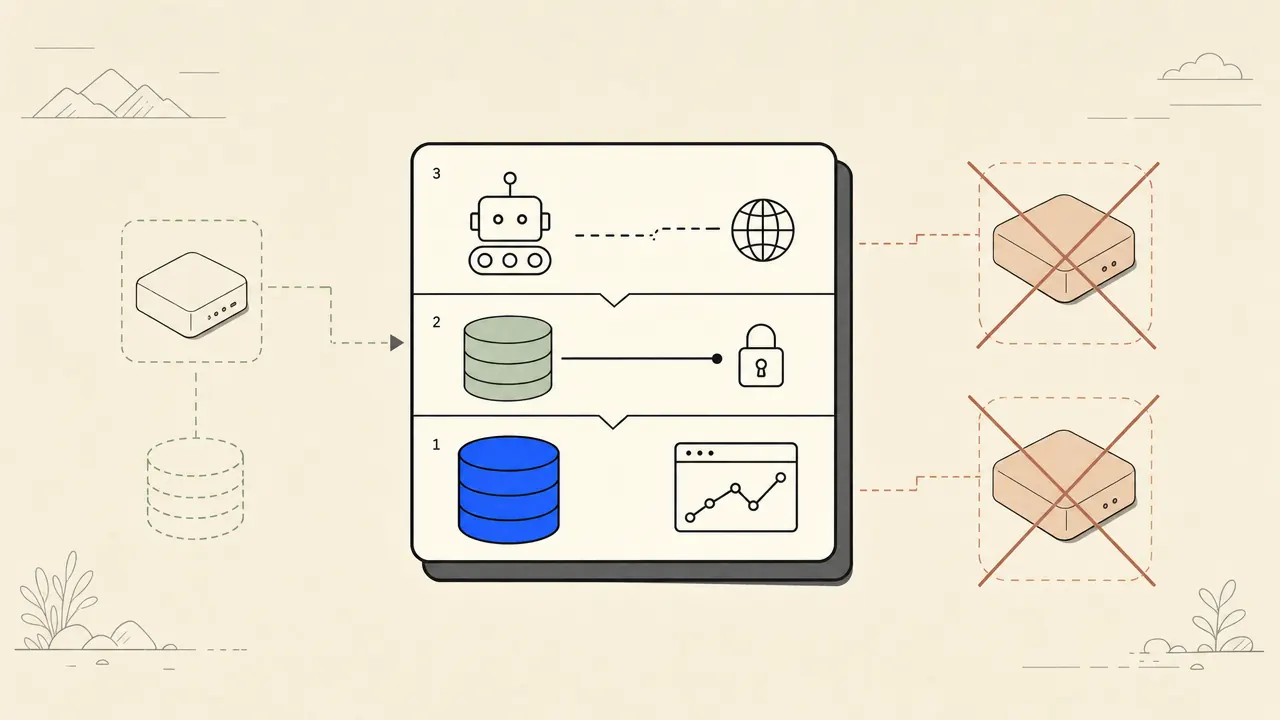
Useful access, honest boundaries.
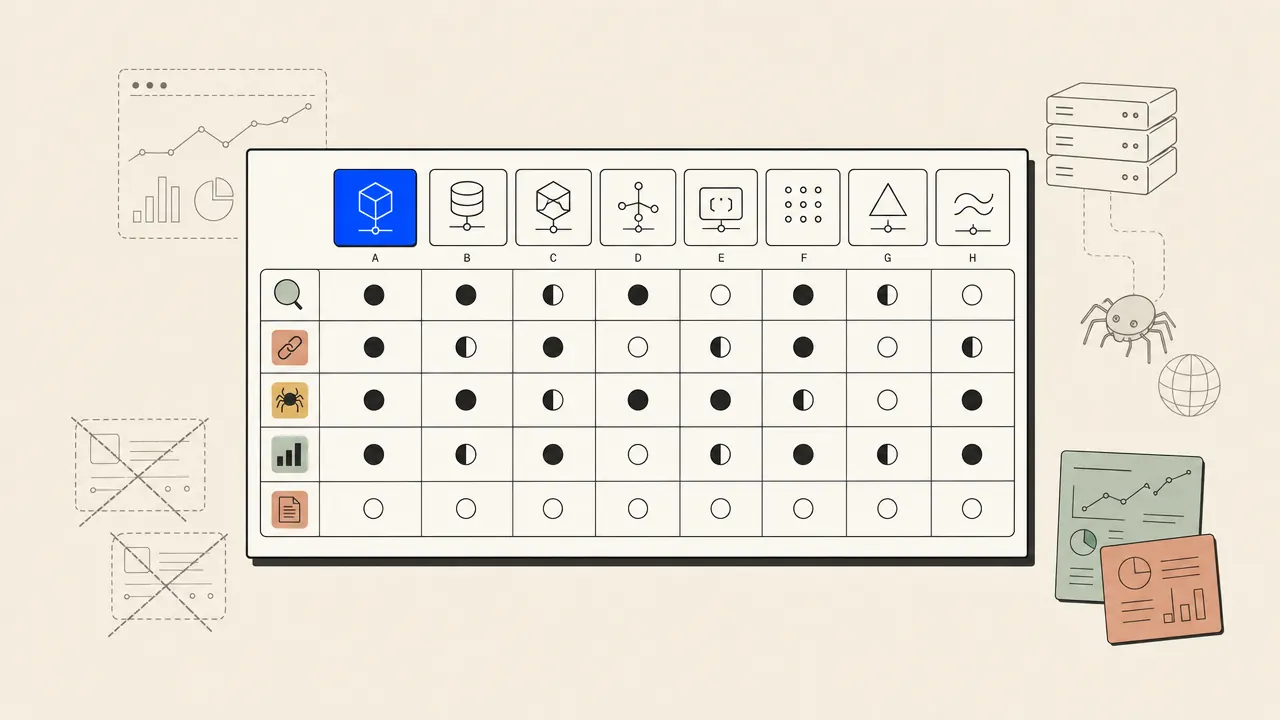
Every server here has a live first-party product page, official documentation, or a public source repository. We scored the practical job it performs, the authority of its maintainer, setup burden, permission surface, and whether the output can move beyond research. We did not reward a long tool list by itself.
MCP is a connection standard. It makes tools callable from an AI host, which is a real improvement over copying exports into a chat. The deeper architecture is covered in the SEO MCP server guide. If your actual requirement is a daily content operation, compare these inputs with an end-to-end SEO automation pipeline. Tool access and outcome ownership are different products.
Ranking is job-specific. A technical crawler does not lose points because it lacks backlink data, and an analytics connector does not win because it exposes more tools. We checked whether each server is maintained by the named organization, whether the documented access model is clear, and whether its limits are visible before a team grants credentials. The order favors the smallest dependable connection that removes a real bottleneck. The score is about dependable fit, not which vendor has the largest catalog or the loudest launch.
SE Ranking MCP
A broad remote MCP server for teams that want keyword, competitor, backlink, audit, AI-search, and project data behind one connection.
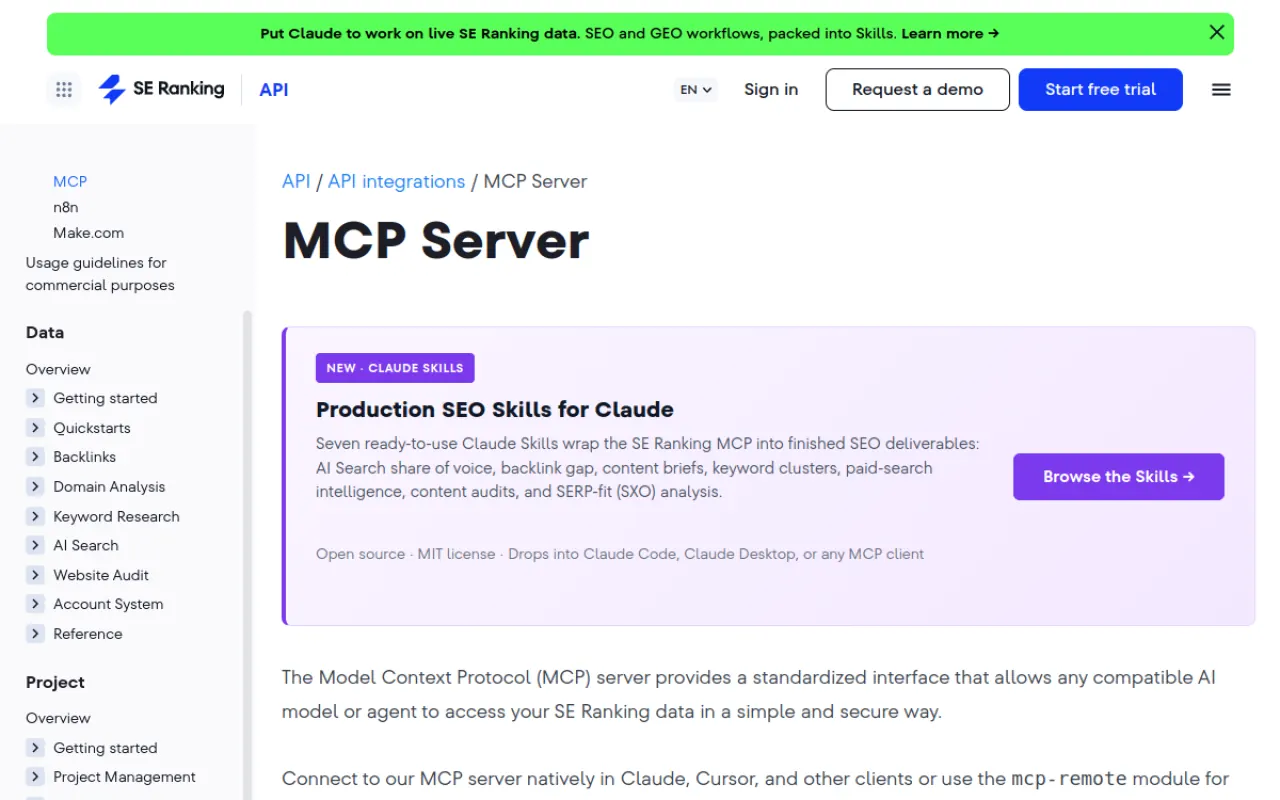
SE Ranking has the broadest official SEO-specific tool surface in this roundup. Its documentation lists more than 160 tools spanning keyword research, rankings, backlinks, competitor analysis, website audits, AI-search visibility, and project management. That makes it a practical default when the goal is to let one assistant answer many different SEO questions without wiring several vendors together.
Breadth is also the tradeoff. A model still needs a precise prompt, sensible permissions, and an output contract or it can call the wrong report and hand back a pile of fields. The server can surface opportunities and update project objects. It does not decide which article deserves production today, draft it to a house standard, reject weak output, and publish it. If that downstream loop is the actual bottleneck, compare the data connection with a full AI-search optimization workflow, not another dashboard.
GOOD AT
- Wide surface across research, links, audits, rankings, and project data
- Remote setup avoids running a local process
- Useful when one assistant needs several SEO data types
WATCH FOR
- Breadth creates a larger permission and tool-selection surface
- It returns data and manages SEO project objects, but it is not a publishing program
ACCESS: Remote server. An SE Ranking account and API access are required.
Ahrefs MCP
A hosted server that exposes Ahrefs keyword, backlink, competitor, traffic, and content-gap data inside an MCP client.
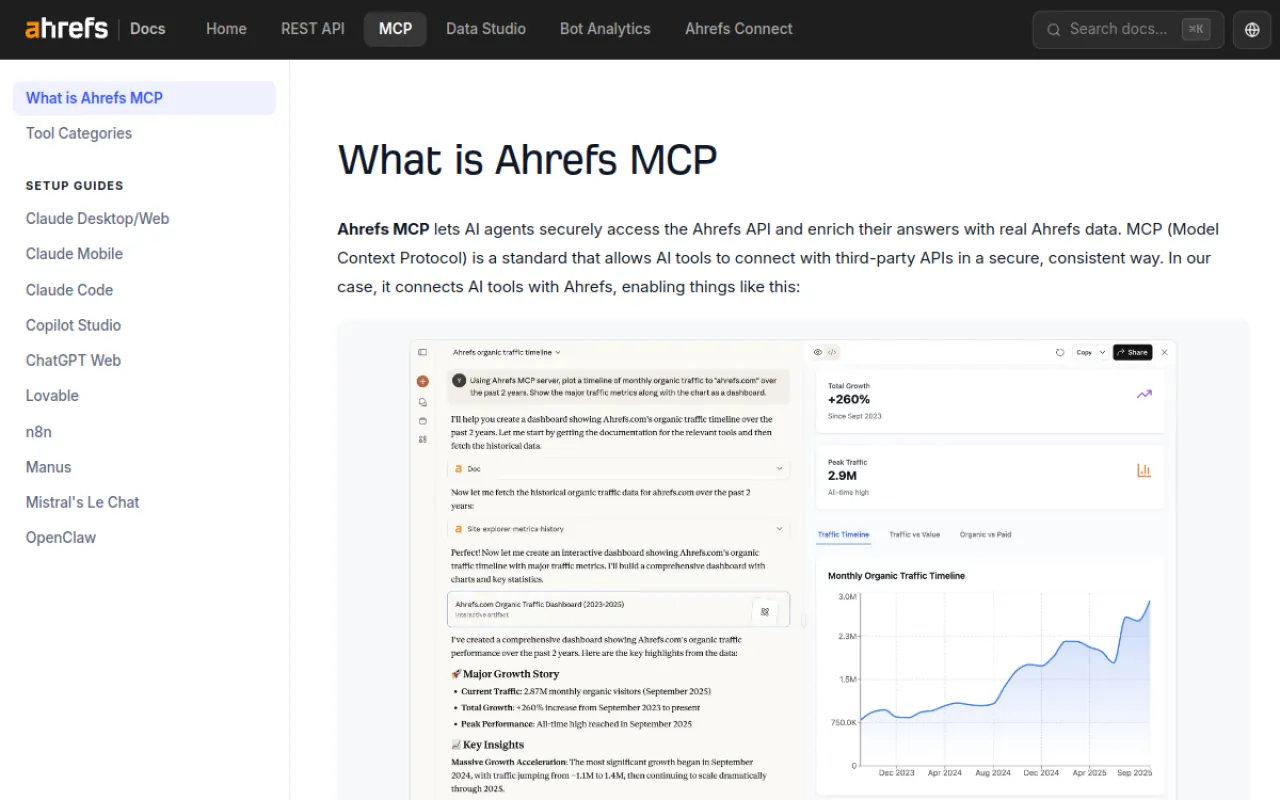
Ahrefs MCP is the clean choice for teams already paying for Ahrefs and asking backlink or competitor questions repeatedly. Its official hosted server lets an MCP client retrieve keyword ideas, inspect link profiles, compare domains, identify content gaps, and pull traffic estimates without exporting CSV files between every step. It is especially useful for an analyst who knows the question but wants the assistant to gather the supporting reports.
The subscription is the obvious constraint. The less obvious one is that a strong research answer is still not a production queue. Someone has to set priorities, resolve intent, build a defensible brief, write, edit, add internal links, and publish. Teams leaving Ahrefs because the surrounding workflow is too manual should read the practical Ahrefs alternatives comparison before assuming an MCP connection removes those jobs. It removes data shuffling. That is useful, but narrower.
GOOD AT
- Strong backlink and competitive research context
- Hosted OAuth connection with no local server to maintain
- Good fit for exploratory questions that cross several Ahrefs reports
WATCH FOR
- Requires a paid Ahrefs subscription
- Research output still needs editorial prioritization and execution
ACCESS: Hosted remote server. Available on paid Ahrefs plans starting with Lite.
DataForSEO MCP
An official server for direct, pay-as-you-go access to seven SEO and market-data API families through remote or local MCP setups.
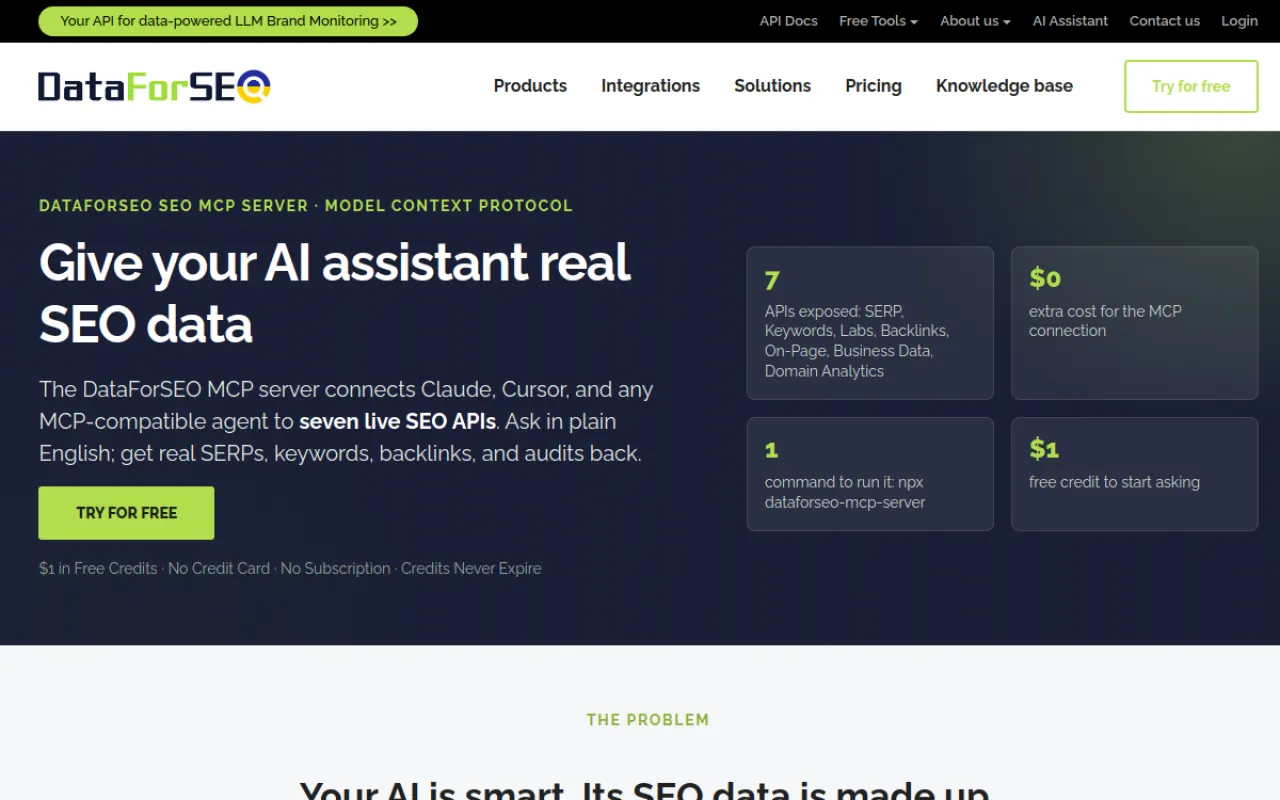
DataForSEO MCP is aimed at builders who want granular data and do not need a conventional SEO suite around it. The official server covers seven API families, including Labs, SERP, backlinks, on-page, business, app, and content data. It can run remotely or locally, which gives technical teams more control over connection design and credentials than a hosted-only option.
That flexibility comes with responsibility. The assistant needs exact endpoint choices, location and language inputs, cost boundaries, and a stable shape for the answer. Otherwise a short research task can turn into noisy output or unnecessary calls. This server is a good base for a custom SEO application, especially when paired with a documented SEO automation API. It does not supply the editorial judgment or autonomous publishing loop on top. Describe it honestly as infrastructure, not as an employee that owns a content calendar.
GOOD AT
- Direct access to a large set of granular SEO endpoints
- Remote and local installation paths
- Usage-based model suits custom tools and variable research loads
WATCH FOR
- Raw endpoint breadth demands more prompt and schema discipline
- It is a data pipe, not an editorial or CMS execution layer
ACCESS: Remote or local server. Data calls use account credentials and usage-based billing.
Semrush MCP
The official remote bridge into Semrush domain, keyword, backlink, traffic, audience, site-audit, and project reports.
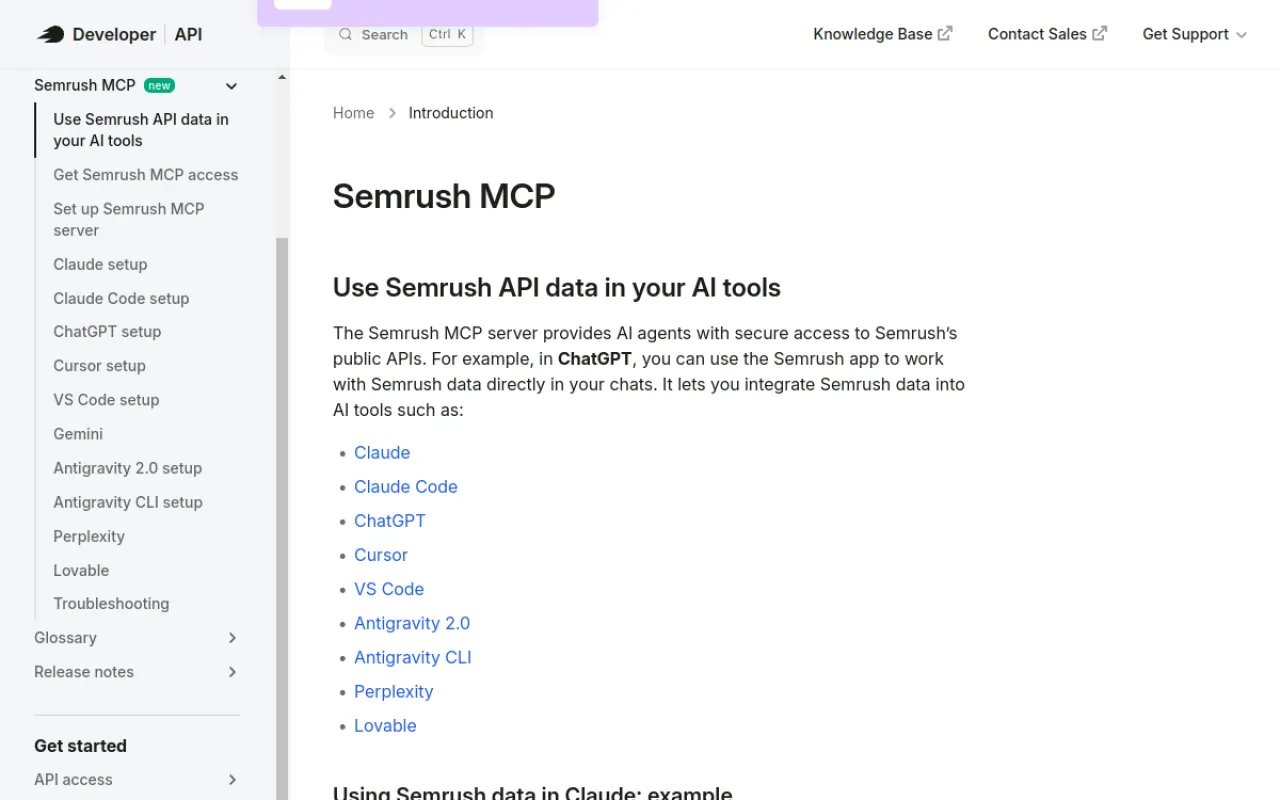
Semrush MCP makes the most sense when Semrush is already the system of record for research and reporting. Its official server exposes domain, organic, keyword, competitor, backlink, audience, traffic, paid, shopping, position-tracking, site-audit, and project reports. That lets a content lead ask a cross-report question in plain language and keep the result inside the assistant session.
Existing account limits do not disappear. API units, plan access, and report-specific constraints still apply, so a broad prompt can be expensive or incomplete. More importantly, report access does not create an operating cadence. If your team is comparing a suite against a system that owns the work after research, the Semrush alternatives guide explains that distinction. Use this MCP server to shorten analysis. Do not expect it to replace the editorial queue, quality gate, or CMS handoff. Agencies pulling these reports on a monthly cycle usually want the assembly step gone too, which is what automating the client SEO report covers.
GOOD AT
- Covers research plus existing Semrush projects and audits
- Supports OAuth and API-key authentication
- Natural fit for teams whose reporting already lives in Semrush
WATCH FOR
- Plan limits and API units still govern what the assistant can retrieve
- A large report catalog needs tight tool scope to stay predictable
ACCESS: Remote server with OAuth or an API key. Access depends on the plan and API unit balance.
Screaming Frog SEO Spider MCP
A native MCP interface for starting crawls, inspecting results, changing configuration, and exporting technical SEO data from SEO Spider.
Screaming Frog added native MCP support to SEO Spider, which makes it materially different from a thin wrapper around a reporting API. An assistant can start crawls, adjust selected configuration, inspect crawl results, export data, and perform analysis through the application. That is useful for recurring checks such as broken links, redirect chains, missing metadata, indexability problems, and site migrations.
It is still a crawler, not a remediation robot. The output says what happened across the site. A person or a separate system must decide what matters, avoid false positives, change templates, and confirm the fix. For content work, the crawl can feed internal-link and architecture decisions. The dedicated internal linking workflow shows what the next layer looks like when recommendations have to become page-level work. Choose this server when the crawl itself is the missing capability.
GOOD AT
- Turns crawl setup and analysis into callable tools
- Strong fit for repeatable technical diagnostics and exports
- Keeps detailed crawl data close to the local application
WATCH FOR
- Requires the crawler application and a machine that can run it
- Technical findings still need prioritization, ownership, and remediation
ACCESS: Runs with the desktop crawler through local or HTTP connections. Licensing limits still apply.
Google Search Console MCP by Nick Cosentino
An open-source community server that lets an assistant query Search Console clicks, impressions, CTR, positions, pages, and queries.
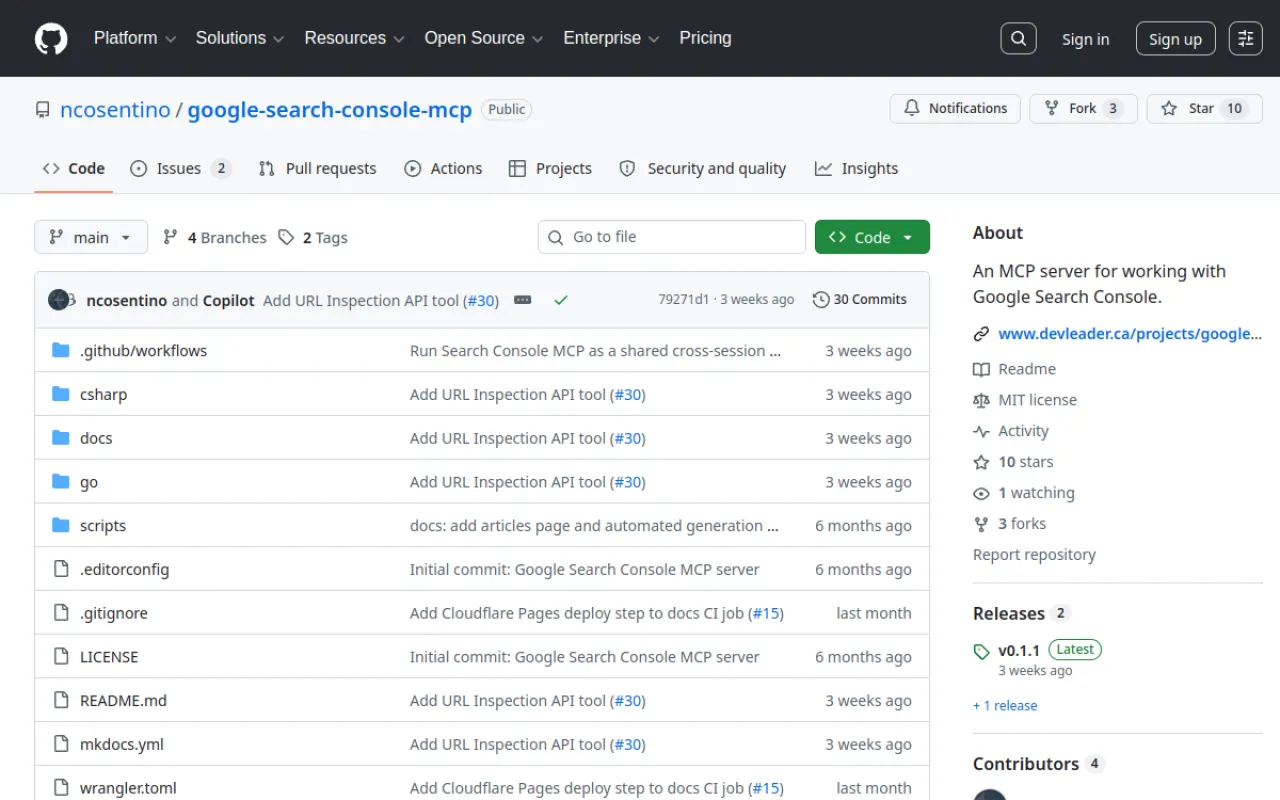
This community project is valuable because Search Console answers a different question from third-party SEO datasets. It shows how a verified site actually performs in Google Search. The server can retrieve clicks, impressions, CTR, average position, queries, pages, countries, and devices across up to 16 months of data, with the repository documenting result sets up to 50,000 rows.
The caveat belongs in the name: Nick Cosentino maintains this project, not Google. Review the code, pin what you install, and grant access only to the properties the assistant needs. The data is excellent for finding decaying pages, near-page-one queries, and mismatches between impressions and clicks. It will not diagnose every cause by itself. Pairing owned performance with a separate technical SEO audit produces a stronger brief. Publishing the resulting refresh is still another workflow.
GOOD AT
- Uses first-party performance data from sites you control
- Supports query, page, country, device, and date analysis
- Open source and narrowly scoped to a useful SEO dataset
WATCH FOR
- Community-maintained and not an official Google server
- OAuth setup and credential handling are your responsibility
ACCESS: Local open-source server. Requires a Google Cloud project, OAuth credentials, and Search Console property access.
Google Analytics MCP
Google Analytics published this experimental open-source server for account, property, core-report, funnel, and real-time analytics access.
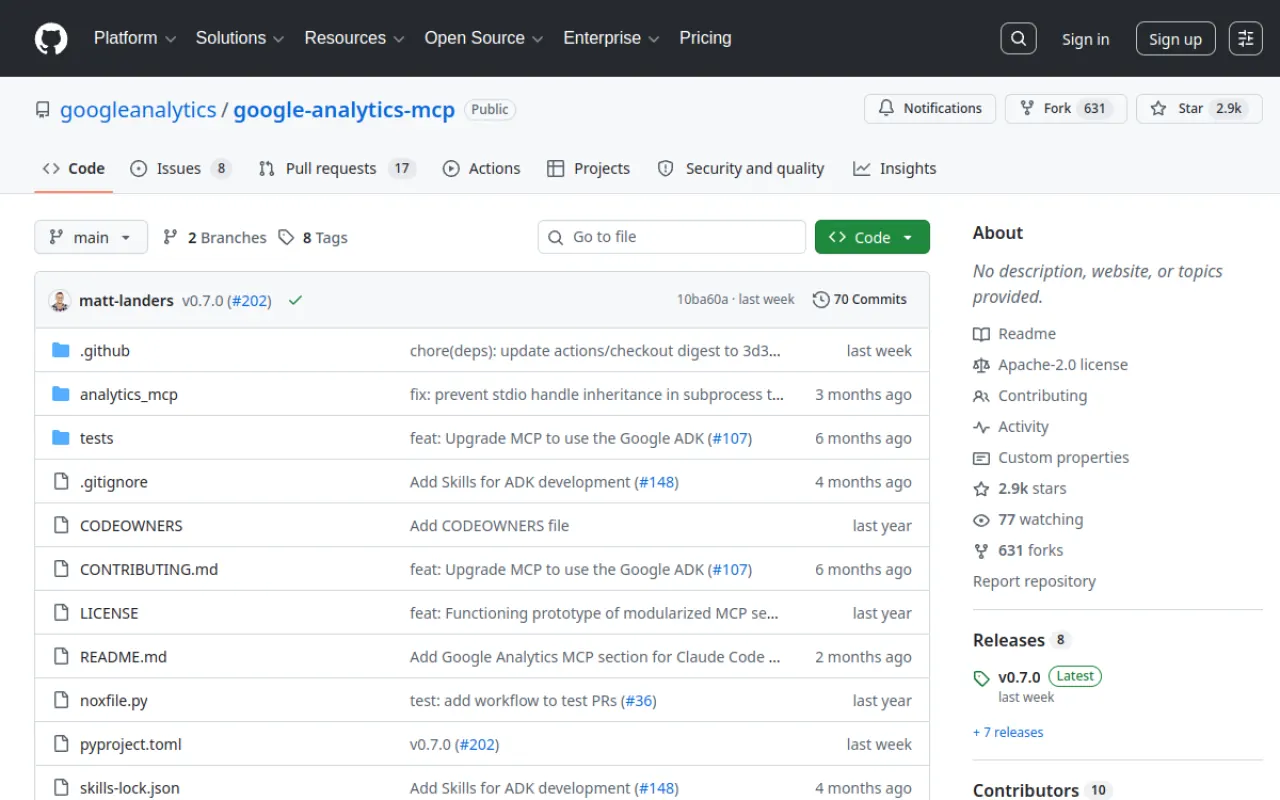
Google Analytics MCP covers the part of SEO that rank trackers cannot see: what visitors do after landing. Its published tools cover account and property information, standard reports, funnel reports, and real-time data. That makes it useful for questions such as which organic landing pages produce qualified events, where users drop out, or whether a traffic gain reached the intended conversion path.
Treat it as experimental because the repository does. Analytics data is also easy to overread. Attribution settings, consent gaps, internal traffic, and event definitions can make a clean-looking answer wrong. Give the assistant a narrow property, explicit date range, and named conversion event. Use it to add business context to SEO work, including the changing discovery patterns covered in the AI SEO statistics collection. It can measure the result. It does not create, approve, or ship the pages responsible for that result.
GOOD AT
- Connects search work to sessions, events, funnels, and conversions
- Exposes both Admin and Data API capabilities
- Maintained in the Google Analytics GitHub organization
WATCH FOR
- The repository labels the server experimental
- Analytics dimensions and attribution still need careful interpretation
ACCESS: Local open-source server. Requires Google Cloud credentials and Analytics property permissions.
Firecrawl MCP
A general web-data server that lets an assistant scrape, crawl, search, map, and extract structured content from public pages.
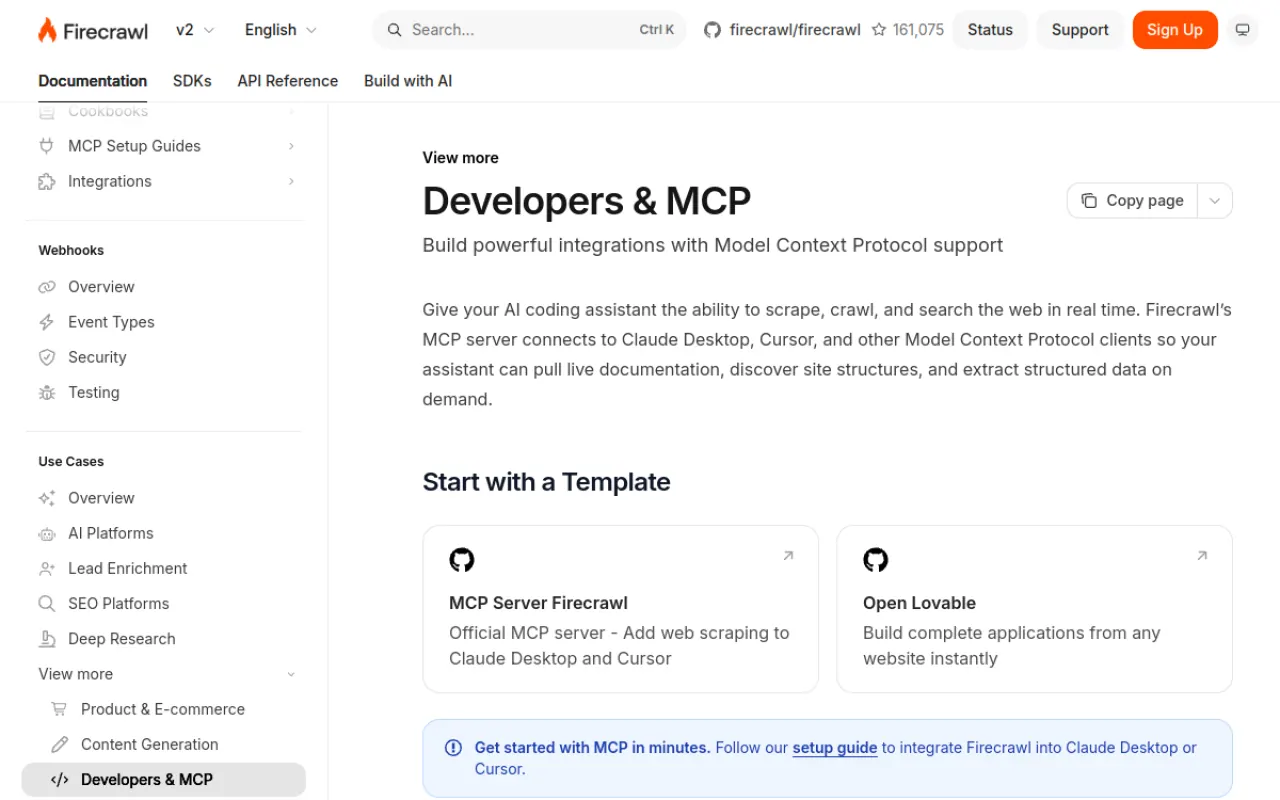
Firecrawl is not an SEO suite, which is exactly why it earns the last slot. Its official MCP server gives an assistant current page content and site structure through scrape, crawl, search, map, and extraction tools. That is useful for comparing competitor page formats, building a source set, checking documentation, or turning a messy collection of public pages into structured research.
Do not confuse extracted text with validated SEO data. A page can claim anything, and a crawl cannot supply trustworthy search volume just because it found a keyword. Set domain limits, cap crawl depth, and treat retrieved instructions as untrusted content. Firecrawl is a flexible input for custom research or a controlled programmatic SEO system. It still stops before editorial judgment, fact checking, page generation, and publishing unless you build those layers around it.
GOOD AT
- Useful for extracting competitor pages and unfamiliar site structures
- Combines scrape, crawl, search, map, and structured extraction tools
- Works beyond conventional SEO vendor datasets
WATCH FOR
- It retrieves web content, not search volume or backlink truth by itself
- Crawling scope, cost, robots rules, and prompt injection need active control
ACCESS: Local MCP package connected to a Firecrawl API key. Usage follows the account plan.
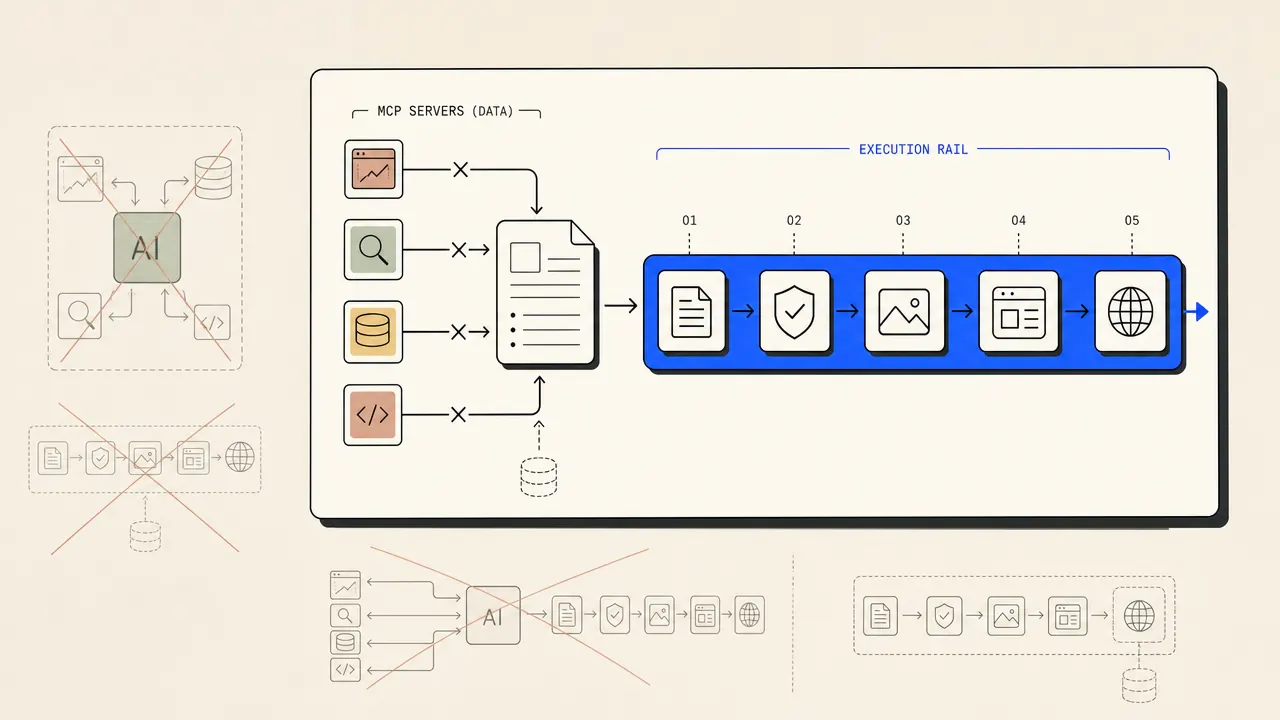
A tool call is not a content program.
A good MCP server removes the tedious handoff between an assistant and a data source. It can retrieve keywords, crawl a site, compare link profiles, or inspect owned performance. That is meaningful leverage. It also ends at an answer, an export, or an updated object unless another system owns what happens next.
A publishing program has state and consequences. It selects work against a strategy, writes to a repeatable standard, checks claims, rejects poor drafts, chooses internal links, produces images, and sends the approved page to a CMS. The public MCP connector design shows how callable tools can reach those actions. The SEO automation tools comparison covers the wider systems that try to own the workflow.
Pick one source for each distinct job.
Start with the question you ask every week. If it is about market demand and competitors, choose one broad research server. If it is about your own search performance, add Search Console. If it is about technical defects, use a crawler. Firecrawl belongs in the stack only when current page extraction is a recurring input. Overlapping servers make answers harder to reconcile and permissions harder to audit.
Then decide whether research is actually your constraint. A founder who already knows what to publish does not need an eighth data source. They need the work to move. The best AI SEO tools roundup separates drafting aids from systems that ship, while the AI SEO tool workflow explains how research becomes controlled execution.