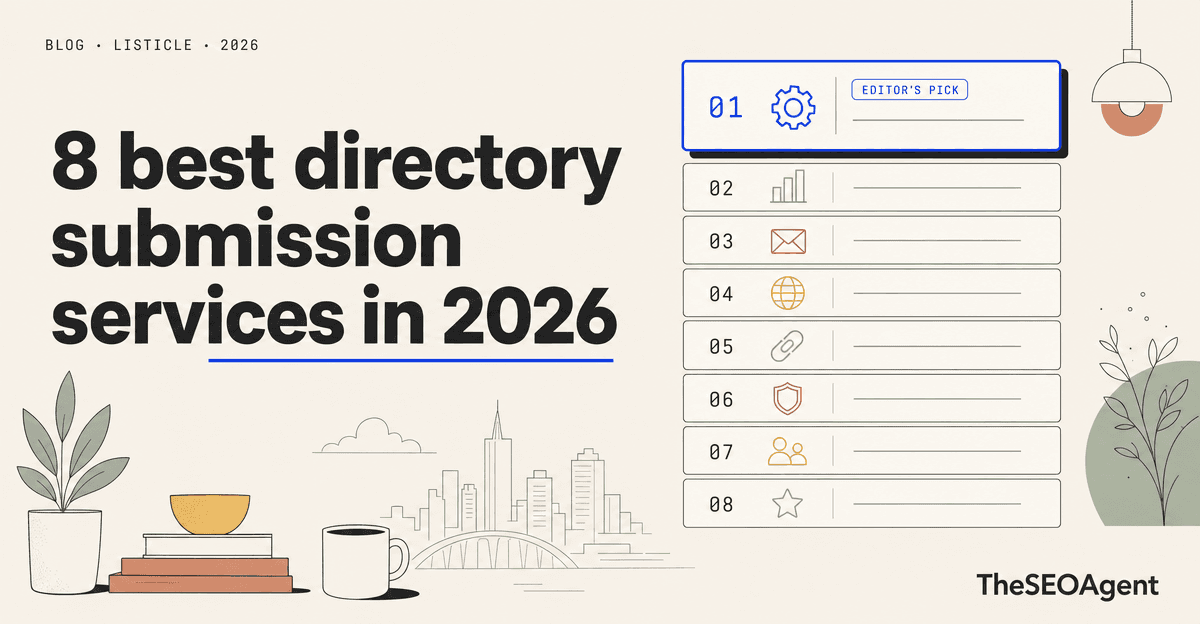
8 best directory submission services in 2026, ranked.
Eight services that earn their fee in 2026, scored on directory quality, audience fit, turnaround, and price. From AI tool directories to enterprise local citation managers, with honest pros and cons on every entry. No affiliate links, no sponsored placements.
Directory links do more for a site that keeps publishing. The SEO Agent adds one researched, cited article a day to yours. Enter your site to start.
Free trial · Cancel in one click- 01aidirectori.esBEST FOR AI TOOLS
- 02BetaListBEST FOR PRE-LAUNCH STARTUPS
- 03WellfoundBEST FOR STARTUP DIRECTORY + HIRING
- 04BrightLocal Citation BuilderBEST FOR LOCAL BUSINESSES
- 05Whitespark Local CitationsBEST FOR PREMIUM LOCAL CITATIONS
- 06YextBEST FOR ENTERPRISE MULTI-LOCATION
- 07Moz LocalBEST FOR SMB LISTING SYNC
- 08SynupBEST FOR LISTING ACCURACY AT SCALE
How we picked these eight.
A directory submission service makes this list when it does three things: filters its directory list for live, indexable, topically relevant destinations rather than blasting you to 500 link-farm shells; matches its submission workflow to a real audience (AI tools, startups, local businesses, multi-location brands); and prices itself transparently rather than burying the per-submission cost behind a sales call. The scoring criteria are directory quality, audience fit, turnaround, and total cost to run a real campaign. Run the audit of your existing presence first with the free SEO audit, then pick the service that matches your audience.
The list is ordered by defensibility for the audience reading this blog: founders, AI tool builders, and small content teams. If you are a brick-and-mortar local business, the local citation entries at #4 through #8 are where you should start. The longer story of how TheSEOAgent itself approaches the off-site mechanic sits on a separate page; this post is about the submission tools, not the content side.
One more pointer before the list. Directory submission is one half of the off-site SEO mechanic; the other half is content. If you are running both, the SEO automation pipeline on this site pairs cleanly with whichever submission service you pick, the fact-check pass keeps the articles those submissions point at from breaking under reader scrutiny, and the $99/month flat tier removes the per-article meter most autoblogging tools hide their pricing behind. Submissions get you found; content gets you ranked.
aidirectori.es
A curated submission service built specifically for AI tools. The directory list is a hand-graded set of 100+ AI directories, ranked by DR, monthly traffic, and how strict their editorial review is. You can submit yourself using the directory list, or hand it off to the team for a flat fee. The difference is the filtering. Most generic services blast you to 500 directories and 470 of them are dead, no-index, or DR 10. This one cuts the list down to what an AI founder actually wants.

aidirectori.es takes the top slot for the AI-tool audience because the directory list is the one part of any submission service that actually decides whether a campaign moves rankings. The list is reviewed regularly, scored by DR and monthly traffic, and tagged by submission cost and review timeline so you can see at a glance which directories are worth your weekend and which ones can wait. The curation covers the established AI directories most founders want a listing on (the team publishes a current breakdown of the top AI directories if you want their working scorecard), plus the smaller niche directories that bulk submission tools miss entirely. For a DIY view of the broader landscape, our own free backlinks index catalogs 112 hand-checked directories you can submit to yourself.
The paid tier is where the time savings land. Most AI founders do not want to spend three hours filling identical fields into 80 forms; they want to ship features. Flat-fee submission pricing covers the submission queue end-to-end, status reports land when listings go live, and any directory that rejected the submission gets flagged with the reason. The work pairs well with editorial content if you run any kind of SEO automation program alongside it, and slots cleanly next to the autoblogging pipeline for AI tool founders who need both volume and discovery.
- Every directory in the list is hand-checked for live status and indexability
- Filtered for AI tool relevance rather than generic SEO directory bloat
- Free tier surfaces the directory list itself, paid tier does the submissions
- Submission notes include review timelines and any quirks per directory
- Audience is AI tools and SaaS, weak fit for local or e-commerce
- Hand-submission style means turnaround is days, not minutes
BetaList
A pre-launch directory that has been the indie SaaS launch ritual for over a decade. Free submission with a 60 to 90 day queue, or paid Featured slots that skip the line. The traffic is not enormous, but the audience is the right one: early adopters, indie hackers, and SaaS journalists who use BetaList as a tip sheet for what to write about next. Often the source of the first 50 paying users for a new product.
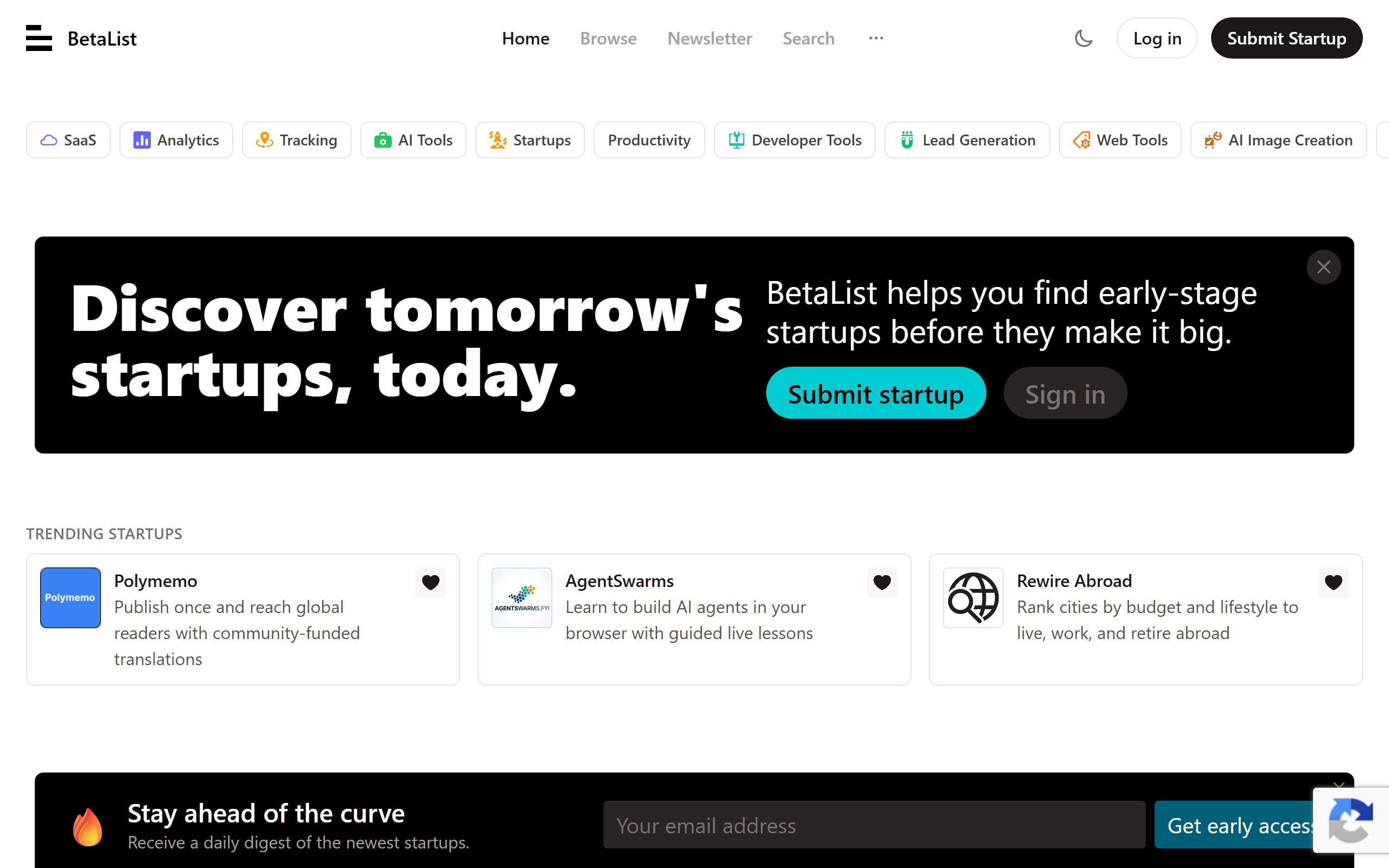
BetaList is a single-directory submission, not a service. It makes this list because the audience genuinely cares about pre-launch startups, which means a submission converts to signups instead of disappearing into a link graveyard. The free queue is honest about its wait time, and the paid Featured slot is a defensible spend if you have a launch date you are trying to hit.
The pairing logic with the other entries is straightforward. BetaList for the launch announcement and the first wave of early adopters; a broader submission service like aidirectori.es or Wellfound for the long tail of permanent backlinks; an SEO audit to figure out what is missing from your own site before any of those links start pointing at it.
- Audience skews early-adopter and converts on emerging products
- Free submission tier is genuinely free, no upsell wall
- Featured paid tier surfaces you to the top of the daily digest
- Free queue is multi-month and you cannot accelerate it without paying
- Single directory, not a service that fans you out to many
Wellfound
Formerly AngelList Talent. Wellfound hosts one of the largest startup company directories on the web, paired with a hiring platform that doubles as a discovery channel. A single Wellfound profile gets you indexed in the company directory and surfaces you to candidates browsing roles, investors browsing portfolios, and journalists looking for sources. The DR is high enough that the backlink alone is worth the submission.
Wellfound is the closest thing the startup world has to a default directory submission. The listing is free and the platform pulls double duty: while the directory listing compounds its SEO value, the same profile is being read by candidates browsing jobs, investors browsing portfolios, and journalists looking for source interviews. Wellfound shows up in startup advice consistently because the listing pays back in more than one currency.
One caveat worth printing. Wellfound is high-volume, so the listing alone does not move a brand search onto page one. Pair it with one or two niche directories from aidirectori.es or BetaList and you have the kind of spread that moves a new brand from invisible to indexed. The pattern shows up in our own best AI SEO tools roundup: one tool rarely wins, the stack does.
- Profile doubles as a company directory listing and a hiring channel
- Established brand recognition with founders, candidates, and investors
- Free to create a company profile, no paid tier required for the listing
- Profile maintenance is on you; stale profiles drop off the active feed
- Geared toward venture-backed and SaaS startups, less useful for bootstrapped local services
BrightLocal Citation Builder
The dedicated citation-building service inside the BrightLocal local SEO suite. Hand-built citations to a curated list of high-quality local directories, with a focus on the ones Google actually uses to verify business legitimacy (Yelp, Apple Maps, Foursquare, Bing Places, the major industry-specific directories). Sold as a one-off campaign or a recurring monthly service. Aimed squarely at brick-and-mortar businesses and local service providers.
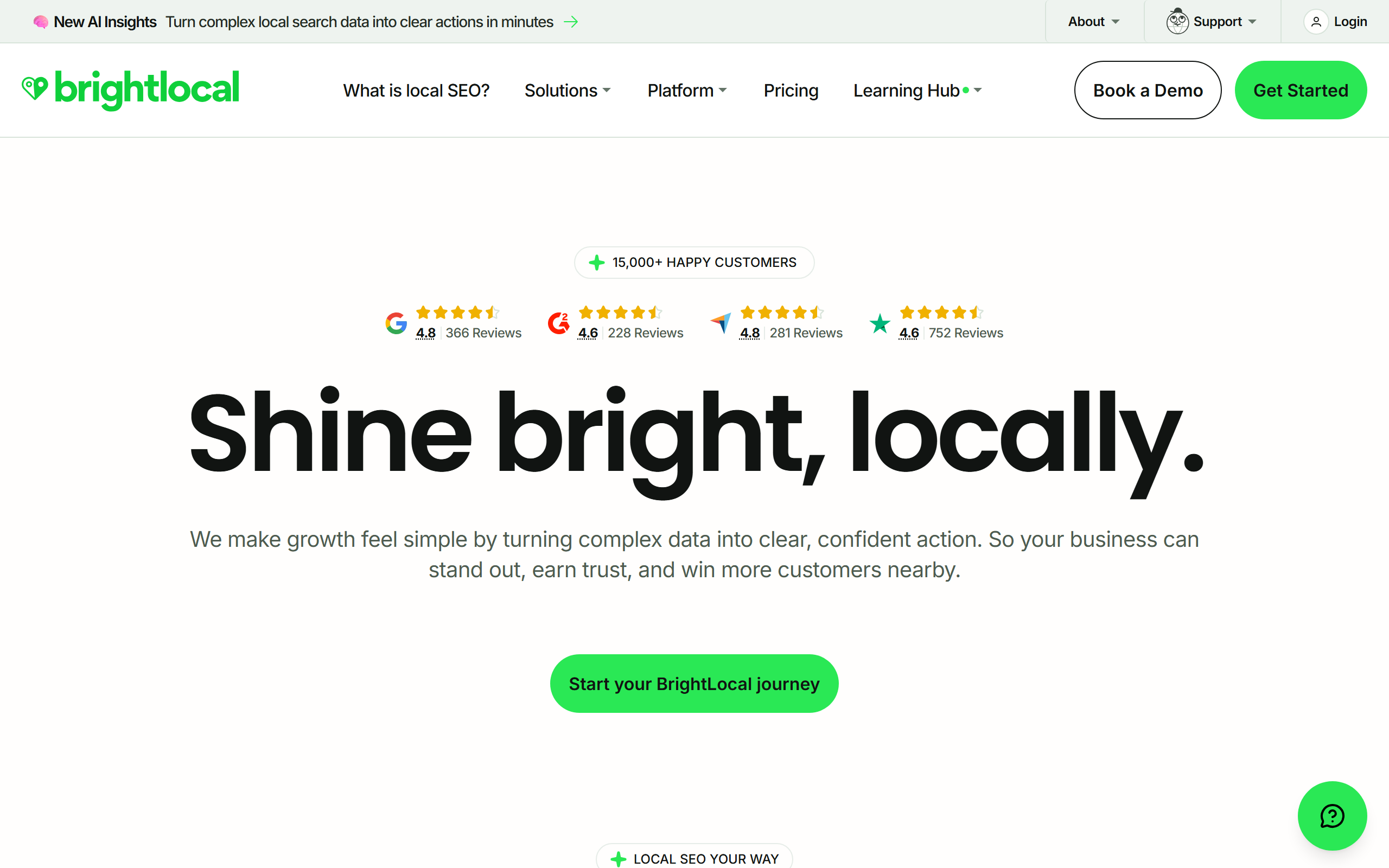
For a local business, the citation-building question is not “how many directories can you find me” but “which directories does Google actually treat as authoritative for my industry and city”. BrightLocal Citation Builder answers that question with a vetted per-vertical list and a hand-submission workflow that produces real verified citations rather than form-fills that get rejected next quarter. Before commissioning the work, run a structural site audit so the citations point at a page that converts when the traffic arrives.
The honest framing: if you are a SaaS founder reading this, BrightLocal is not for you. If you run a dental practice, a multi-location franchise, or a regional service brand, this is the entry to take seriously. Most local businesses sit on WordPress, where the WordPress SEO automation pipeline on this site covers the on-page half of the loop. Compare BrightLocal against Whitespark and Yext below for the three-way decision in this category.
- Hand-built citations rather than automated bulk submission
- Directory list is vetted for the specific verticals Google trusts
- Bundled inside BrightLocal so you can monitor citation health afterward
- Local SEO only, irrelevant for SaaS, AI tools, or pure online businesses
- Pricing per campaign is higher than DIY tools but lower than Yext or Whitespark
Whitespark Local Citations
The premium hand-built option in the local citation category. Whitespark is run by working local SEO professionals who built their own service after years of frustration with automated tools, and the result reads accordingly. Smaller batches, higher per-citation cost, longer turnaround, and citations on the high-DR directories the cheaper tools cannot consistently land. The local-SEO community treats Whitespark as the reference.
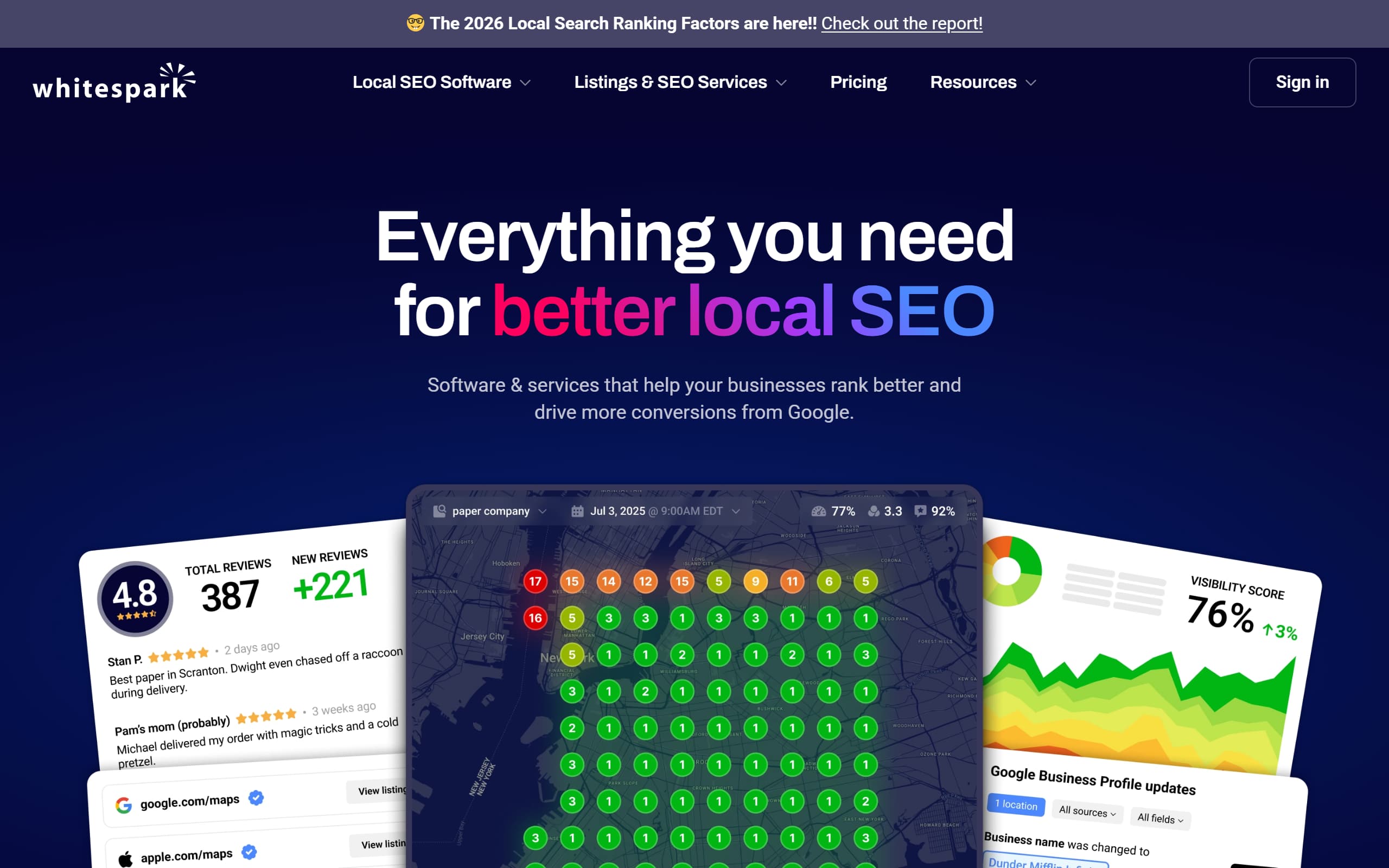
Whitespark pays off when citation source matters more than citation count. The team will land you on directories that bulk submission tools fail at consistently, including industry-specific directories that require human review or phone verification. The premium is the cost of their refusal to automate placement. For a high-margin local business where one well-placed citation can outperform fifty generic ones, the math works out.
Whitespark also publishes the Local Search Grid, a separate product that maps your ranking by zip code, and a citation finder that audits your existing citations before you commission new ones. Run the audit first; you may find the gap is in cleanup, not new submissions. We take the same audit-first move on the content side of the SEO loop and surface the same kind of structural issues through the free site audit.
- Industry reputation for citation quality, regularly cited by Moz and Search Engine Land
- Manual placement on directories that reject automated submissions
- Solid Local Search Grid and citation finder tools as adjacent products
- Higher per-citation cost than BrightLocal or Moz Local
- Turnaround can stretch into weeks for batch campaigns
Yext
Listing management at enterprise scale. Yext does not "submit you once to a directory" so much as it owns the listing on your behalf across 200+ platforms in perpetuity. Update your hours in Yext, the change syncs to Google Business Profile, Yelp, Apple Maps, Bing Places, Foursquare, and every other connected platform in minutes. Priced for multi-location brands and franchises. Overkill for a single storefront, essential for a chain.
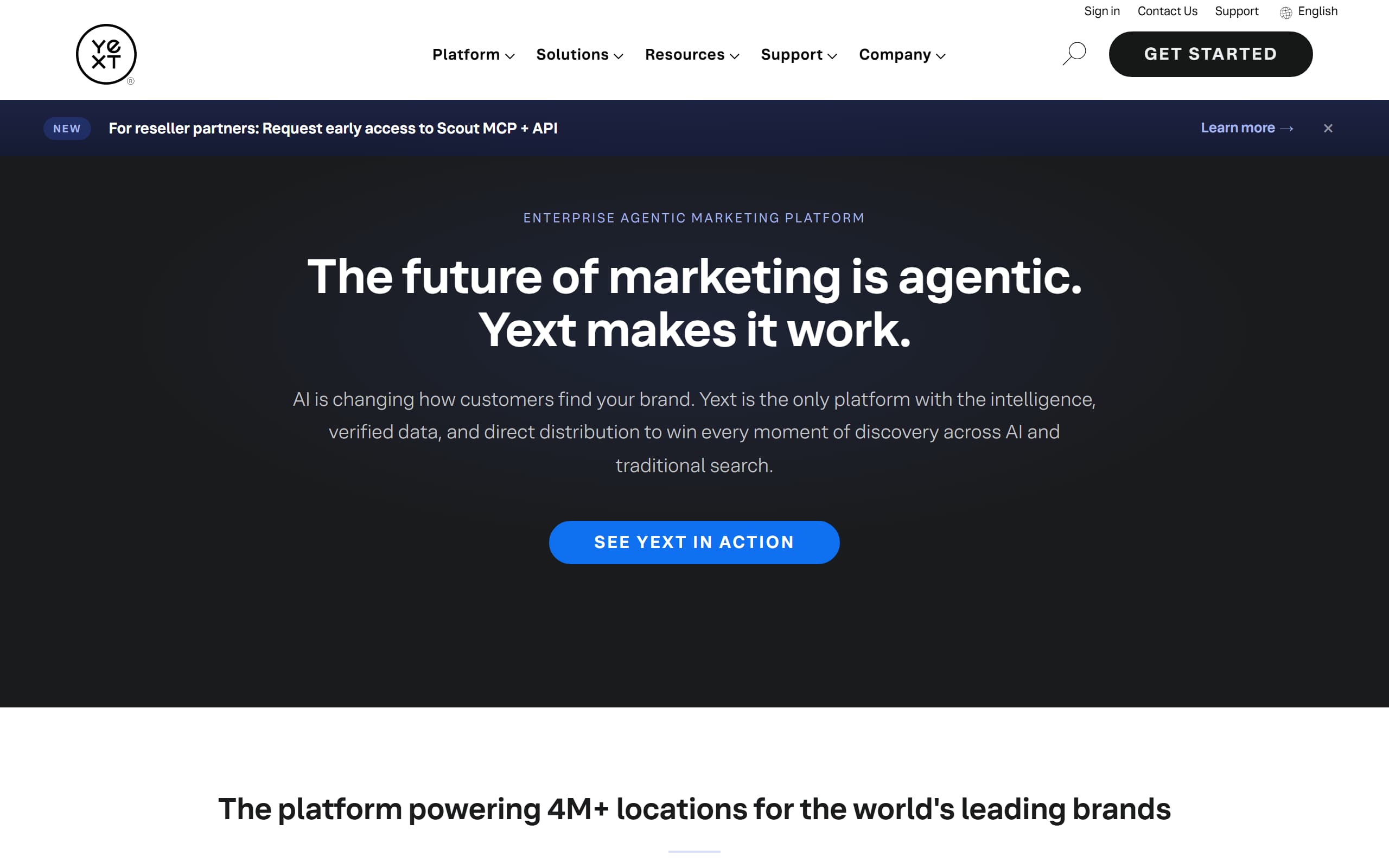
Yext pays off once you have more than three locations and updating the hours on each one across every platform would otherwise be a person-day of work. The catch is the subscription model: you are not buying citations, you are renting listing accuracy. Cancel the contract and the listings stop syncing, which over time drifts out of accuracy without active maintenance from your side.
For single-location businesses the math rarely works. The accuracy can be maintained by hand or via the cheaper bundles from BrightLocal or Moz Local. Where Yext earns its keep is enterprise scale with hundreds of locations, where the per-location cost flattens and the central-control workflow saves a marketing ops team from drowning in listing maintenance. Chains running per-location landing pages alongside citations should pair Yext with a programmatic SEO program so the content scales at the same rate as the listings, and run a free audit across a sample of locations before committing to the contract.
- Sync-update workflow keeps every listing identical across 200+ platforms
- Network of integrations is the deepest in the category
- Analytics layer surfaces listing impressions and clicks at the location level
- Pricing scales by location and feature set, easily five figures a year for chains
- Subscription model means listings revert if you cancel the contract
Moz Local
The cheaper, simpler local listing manager from the team behind Moz. Distributes your business listing to the data aggregators (Foursquare, Data Axle, Neustar Localeze) that feed the long tail of smaller directories, plus direct sync to the major platforms. Less feature depth than Yext, much lower price, aimed at SMBs and single-location businesses that want listing accuracy without the enterprise contract.
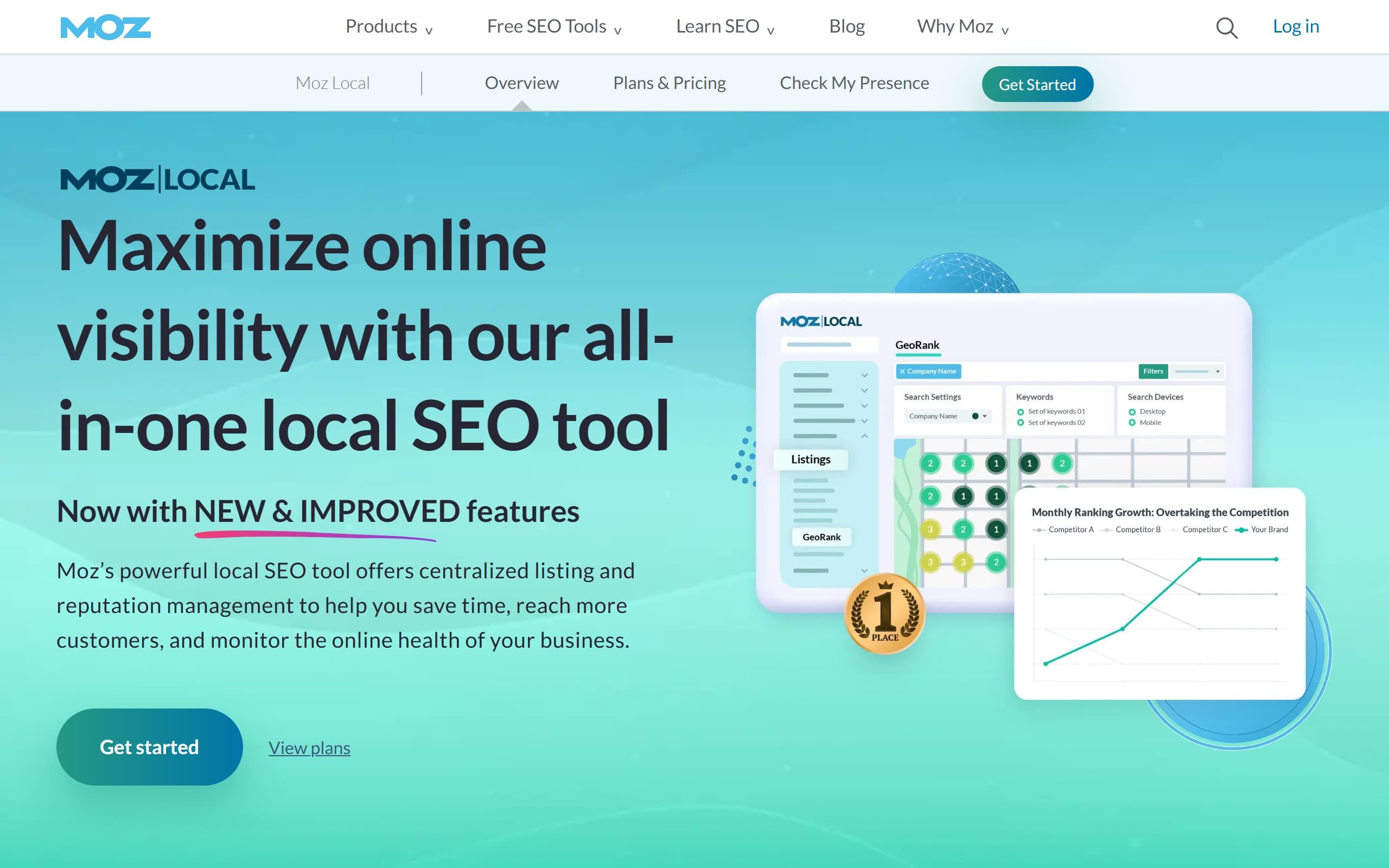
Moz Local is the value pick in the local listing category. The product is intentionally smaller in scope than Yext: instead of trying to maintain a direct integration with every platform, Moz feeds the data aggregators that propagate listings to the long tail for you. For an SMB with one or three locations that does not need real-time sync to 200 platforms, this is the right tradeoff at a fraction of the cost.
A small but real bonus: Moz Local pairs cleanly with the rest of the Moz Pro suite if you already use it for keyword and rank tracking. Bundling pulls the effective per-feature cost down further. For the content half of an SMB local-SEO program, the autopilot SEO bot on this site handles the article volume at $99/month, and the single flat tier removes the per-location pricing complexity Yext brings into the room.
- Flat per-location pricing in the low hundreds per year, no enterprise tier
- Distribution through the data aggregators is the highest-leverage move for SMBs
- Bundled with Moz Pro if you already pay for the SEO suite
- Fewer direct platform integrations than Yext
- Analytics layer is thinner than premium competitors in the category
Synup
A mid-market Yext alternative that prices itself between Moz Local and Yext while covering most of the same workflow. Listing distribution to the major platforms, accuracy monitoring across the long tail, review aggregation, and analytics in one dashboard. Lighter on the enterprise contract requirements, heavier on the feature set than the SMB tools. The right pick for the 5-to-50 location bracket that gets squeezed out of the obvious choices.
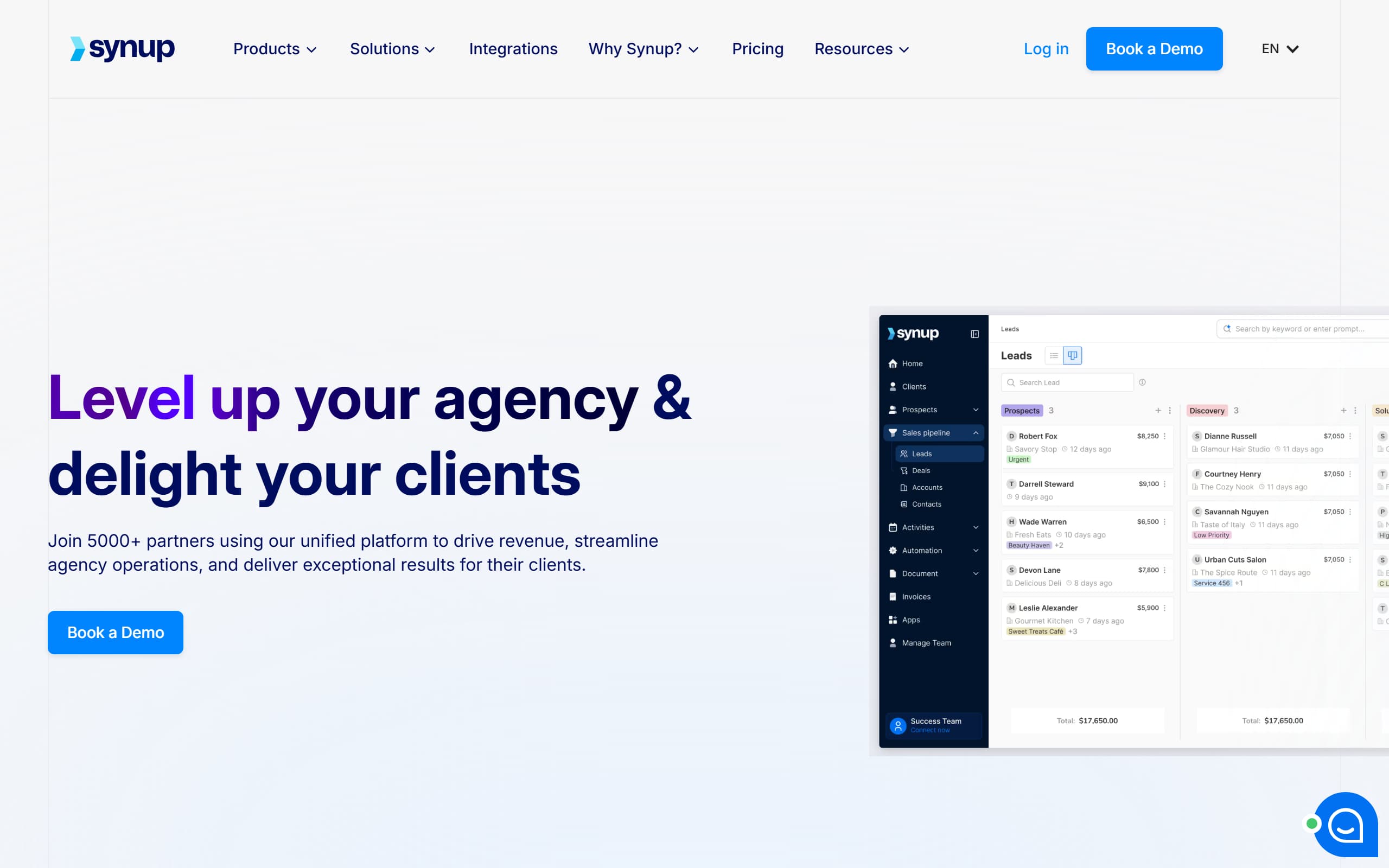
Synup fits the businesses between the SMB and enterprise tiers. If you are a regional chain with a dozen locations, a multi-unit franchise, or a service brand expanding into new markets, Yext is overpriced and Moz Local is under-featured. Synup sits in the middle with a feature set close to Yext at a fraction of the contract size.
The review aggregation layer is the underrated part. Listing accuracy is necessary table-stakes, but the response rate on Google reviews and the volume of recent reviews are what actually move local pack rankings. Synup bundles listening and response into one dashboard, so the team running listings is also the team triaging reviews. The single-dashboard discipline is the one we copied for content automation at TheSEOAgent: one workflow beats five.
- Pricing fits the awkward 5 to 50 location bracket better than the alternatives
- Review aggregation bundled in rather than priced as an add-on
- AI-driven listing optimization suggestions are above average for the price
- Smaller integration network than Yext, occasional manual workarounds required
- Brand recognition is lower, so vendor approval inside enterprise procurement can stall
What's the difference between a directory submission service and a citation builder?
Mostly the audience. Directory submission services pitch themselves to SaaS, AI tools, and content sites; the goal is backlinks and discovery. Citation builders pitch themselves to local businesses; the goal is name-address-phone consistency across the directories Google checks for local trust. The mechanics overlap; the buyer is different.
How long does directory submission take to show up in Google?
Three to twelve weeks depending on the directory. The high-DR established directories index within days. Smaller, lower-DR directories can take months and a handful never index the listing at all. The right benchmark is when traffic or referring-domain count moves, not when the submission goes live.
Are these services worth it versus DIY submission?
For 5-10 high-priority directories, DIY is fine. For the long tail of 50+ directories that you would otherwise never get around to, the per-submission cost on a service like aidirectori.es or BrightLocal is lower than your hourly rate. The math gets clearer the further down the long tail you go.
Will Google penalize me for directory submissions?
Not if the directories are real, indexed, and topically relevant to your business. The penalty risk shows up when a service blasts you to 500 link-farm directories with no editorial review. Every service on this list filters for directory quality, which is the entire point of paying instead of going DIY.
How many directories should I submit to?
Quality beats count. Twenty well-chosen directories that fit your vertical will outperform 200 generic ones every time. The aidirectori.es approach (curated list scored by relevance, not raw count) is the right shape; the old-school "submit to 1000 directories for $49" services are the wrong one.
Are there free alternatives?
Yes, and the largest one is the free backlinks directory at theseoagent.ai/free-backlinks, which lists 112 hand-checked directories you can submit to yourself without paying for a service. The DIY trade-off is your time. If you have spare hours, run the list yourself; if you have spare dollars, one of the paid services above will absorb the queue.
Is this list sponsored?
No. None of the services on this list pay for placement and there are no affiliate links on this page. The ranking reflects audience fit and category defensibility for the readers of this blog, not a paid arrangement.
I'm running a SaaS, not a local business. Where do I start?
Start with aidirectori.es for the curated AI and SaaS directory list, plus BetaList for the pre-launch audience, plus Wellfound for the startup directory and hiring profile. Skip everything in the local citation category. Once those three are live, the content side is where the next 90% of the work lives, and that is what TheSEOAgent at $99 a month is for.
Related guides + features.
Free backlinks
DR-ranked directories and subreddits worth a listing, with a claim tracker.
/free-backlinks →PILLAR · SEO AUTOMATIONSEO automation
The full pipeline: research, drafting, a check on every claim, and native publish. Where these tools stop, the agent ships the page.
/features/seo-automation →PRICINGSimple pricing
$99 flat per month after a free trial. No per-keyword meter, and cancellation is one click in the app.
/pricing →One program for keywords, drafting, and publish.
Pair whichever submission service you picked with the content side of the SEO loop. Three days for a dollar. Connect your CMS, point it at a keyword list, watch articles ship native. Cancel in one click if it is not earning.
FREE TRIAL · CANCEL IN ONE CLICK