The 10 best free rank tracker software picks in 2026.
The best free rank tracker is the one Google already gave you, and the other nine are worth knowing for the jobs it does badly. Free-tier limits checked on 9 September 2026, one honest catch on every entry, and a closing section on the thing a tracker cannot fix.

What is the best free rank tracker software?
Google Search Console, free forever, because it reports the average position of every query that earned an impression with 16 months of history from the ranking system itself. Add Bing Webmaster Tools for the second index and Ahrefs Webmaster Tools for a third-party view of up to 1,000 keywords on a site you verify. For a curated keyword list with no ceiling, Rank Tracker by SEO PowerSuite is free on the desktop. For self-hosting, SerpBear is MIT licensed with unlimited keywords and a scraping key you supply. SEO Gets and Looker Studio are free front ends on Search Console data, Rank Math puts the same numbers inside WordPress, SERPRobot answers a one-off check with no account, and a Semrush free account tracks ten keywords daily.
A rank tracker tells you where you stand. The SEO Agent picks keywords you can win and publishes a cited article for one of them each day. Enter your site to start.
Free trial · Cancel in one clickThe shortlist, scannable in ten seconds.
- 01Google Search ConsoleBest free rank tracker, full stop
- 02Bing Webmaster ToolsBest free tracker for the index nobody checks
- 03Ahrefs Webmaster ToolsBest free keyword list for your own site
- 04SEO GetsBest free interface for data you already have
- 05Looker StudioBest free build-your-own option
- 06Rank MathBest free option without leaving your CMS
- 07Rank Tracker by SEO PowerSuiteMost generous free keyword ceiling
- 08SerpBearBest self-hosted option
- 09SERPRobotBest free spot check
- 10Semrush free accountBest free trial of a real platform
How we picked these ten.
The first filter was the word free. Most lists of free rank trackers are lists of 14-day trials, and a countdown is not a free tier, it is a sales process with a date on it. Nine of the ten entries here are free with no expiry, and the one spot checker that also sells a paid plan is marked as exactly that. Anything whose free plan ends was cut, which is why several well-known names are missing and why the FAQ says which ones.
The second filter was where the number comes from, because that is the thing free tools differ on and the thing nobody explains. A position from Search Console is an average across the impressions Google served you. A position from a tracker is one synthetic search from one location. A position from a self-hosted app is whatever scraping service you pointed it at. Those are three different measurements wearing the same label, so the entries are grouped by which one you are getting rather than ranked against each other: the data you already own, free front ends on that data, free forever tools that run their own checks, and the free tier of a paid platform.
We do not sell a rank tracker and we are not an entry on this list. What we have a stake in is the closing section, which argues that measurement is the cheap half of SEO and publishing is the expensive half. If you want the product argument rather than the roundup, it is on the programmatic SEO page and in our AI SEO agent overview. Free-tier limits were read off each vendor's own pages on 9 September 2026. No affiliate links and no paid placements: the screenshots are the evidence.

Google Search Console
Everyone, before they pay a cent for anything else.
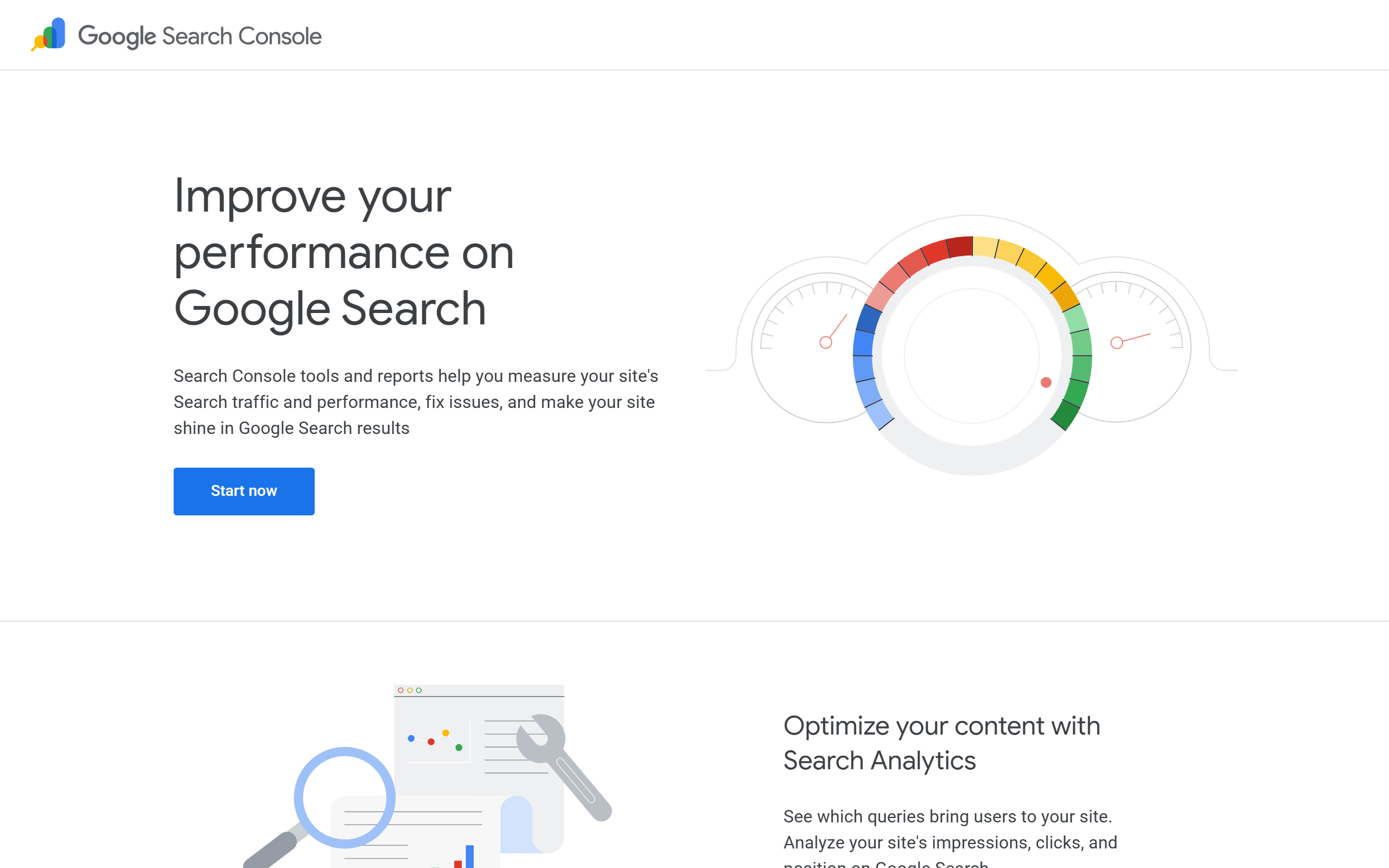
Free forever, no tier, no card. Reports the average position of every query that earned your site an impression, with 16 months of history, filterable by country, device, page and date range. It is the only tool on this page reading the ranking system rather than sampling it from the outside.
Start here, because everything else on this page is either a nicer window onto this data or an approximation of it. Search Console reports what Google actually served: which queries showed your pages, where they sat, how often anyone clicked. Third-party trackers fire a synthetic search from a datacentre and record what came back, which is a reasonable proxy and is not the same thing. When the two disagree, Search Console is the one that pays your invoices.
The reason people bounce off it is that it does not look like a rank tracker. There is no keyword list you curate and no green arrow when you move from 12 to 9. Position is an average across every impression in the range, so a query that ranks 4 in Sydney and 30 in Berlin reads as 17 and looks like nothing is happening. Fix that by filtering to one country and one device before you read anything, and by comparing 28-day windows rather than staring at the daily line.
Used properly it does a job no paid tracker can: it tells you the queries you did not know you ranked for. Sort by impressions, filter to positions 8 to 20, and you have a list of pages that are one decent revision away from the top of page one. That list is the input to a content plan, which is the part where an SEO automation pipeline earns its keep. Connecting it takes about ten minutes and we walk through the same setup on our site audit page.
Position is an average, not a rank check, and the data lands with a day or two of lag. No competitor tracking, no local grid, and no alert when you drop.
Bing Webmaster Tools
Anyone who has never checked whether the other index has their pages.
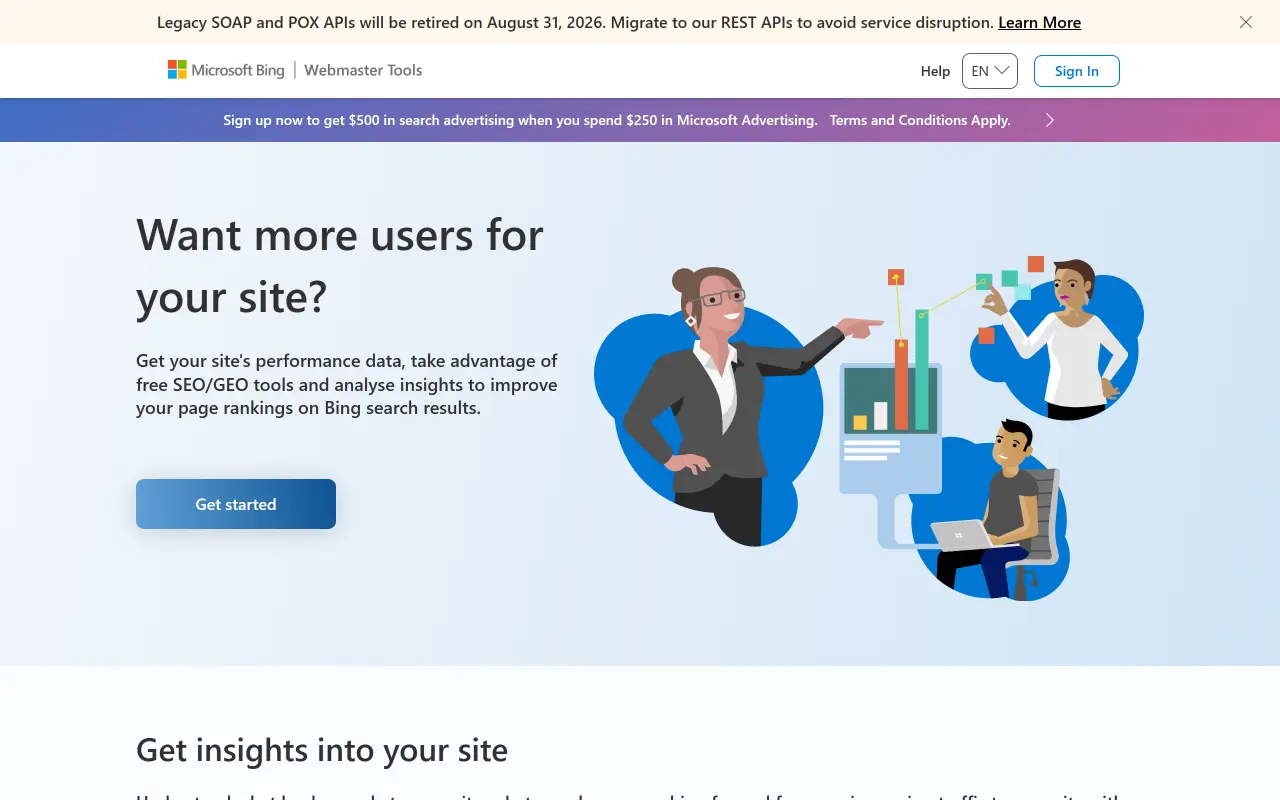
Free, no paid tier, and it imports your existing Search Console verification in one click so setup is a minute rather than an afternoon. Reports clicks, impressions and average position for Bing, plus crawl and index coverage for your pages.
Bing is small and Bing matters more than its share suggests, because it is the index behind Microsoft Copilot and a chunk of the assistant answers people now read instead of search results. Being absent from it costs you nothing visible, which is exactly why nobody notices for years. Verifying takes a minute and the report is the same shape as the Google one, so there is no learning curve.
The practical use is not daily tracking. It is a coverage check: are your important pages indexed here at all, and do the queries that convert in Google show any position here? A site that ranks 6 in Google and nowhere in Bing usually has a crawl or a canonical problem rather than a content problem, and that is a cheap fix with a real payoff across two answer surfaces. The same measurement logic drives our roundup of tools that track AI answer visibility.
Smaller sample means noisier numbers, and low-traffic sites will see whole weeks with almost no rows. Useful as a coverage check, thin as a tracker.
Ahrefs Webmaster Tools
Owners who want an outside opinion on which keywords they rank for.
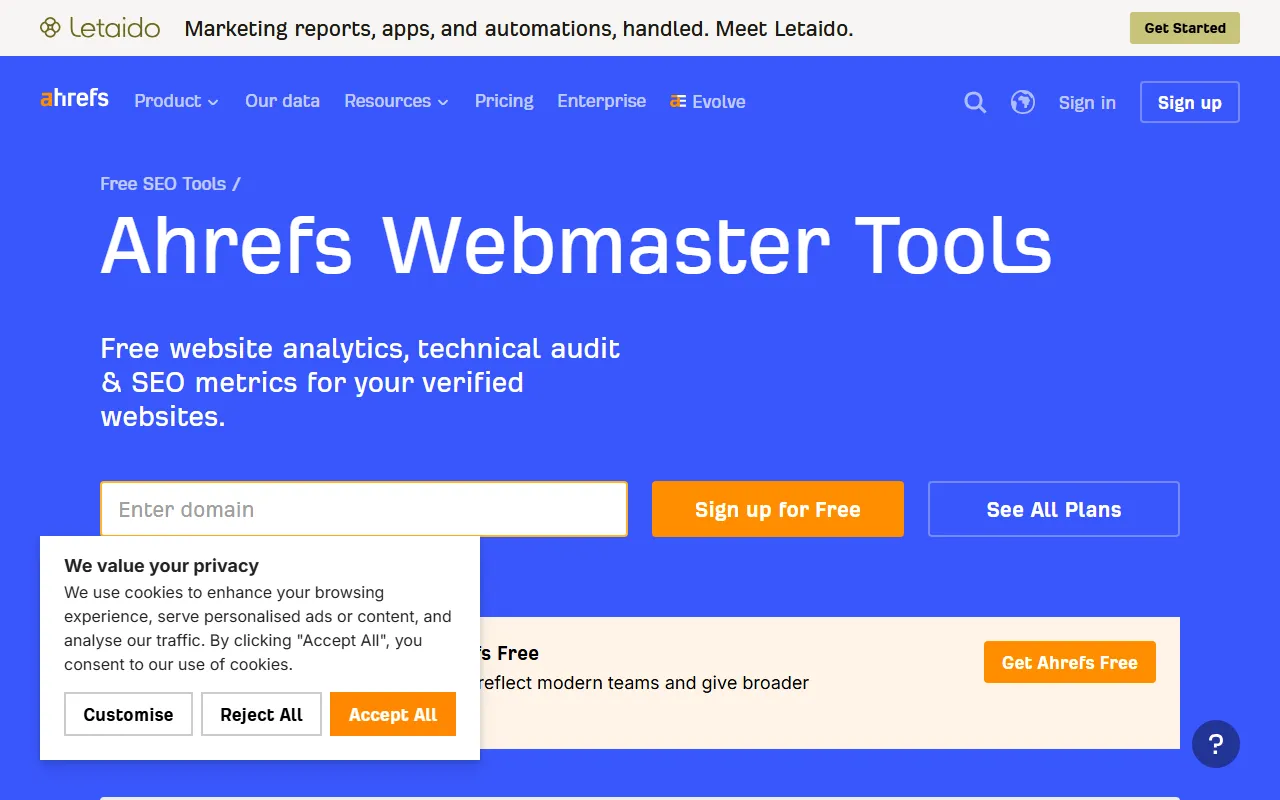
Free for verified site owners, unlimited verified sites. Site Explorer shows up to 1,000 of the keywords your site ranks for with their positions, Site Audit gives 5,000 crawl credits a month, and Web Analytics allows up to 1 million events a month per project.
This is the free tier that behaves most like a paid tool. Verify a site and you get a third-party view of the keywords it ranks for, pulled from an independent index rather than from your own analytics, which makes it a genuine cross-check against Search Console. Where the two disagree is usually where something interesting is happening: a page that ranks in one view and not the other is normally a canonical, a redirect, or a very recent change.
The 1,000-keyword ceiling sounds tight and is not, for a small site. What it will not do is track a curated list on a schedule, because it is a crawl-driven index refresh rather than a daily rank check, and the competitor half of the product is the part they charge for. So treat it as a monthly audit of where you stand rather than a dashboard you open on Monday morning. If you are comparing full platforms rather than free tiers, the paid landscape is in our AI SEO tool comparison.
Your own verified sites only, so no competitor tracking. Positions refresh on the index crawl, not on a schedule you control, and the free view caps at 1,000 keywords.
SEO Gets
People who have Search Console and cannot stand looking at it.
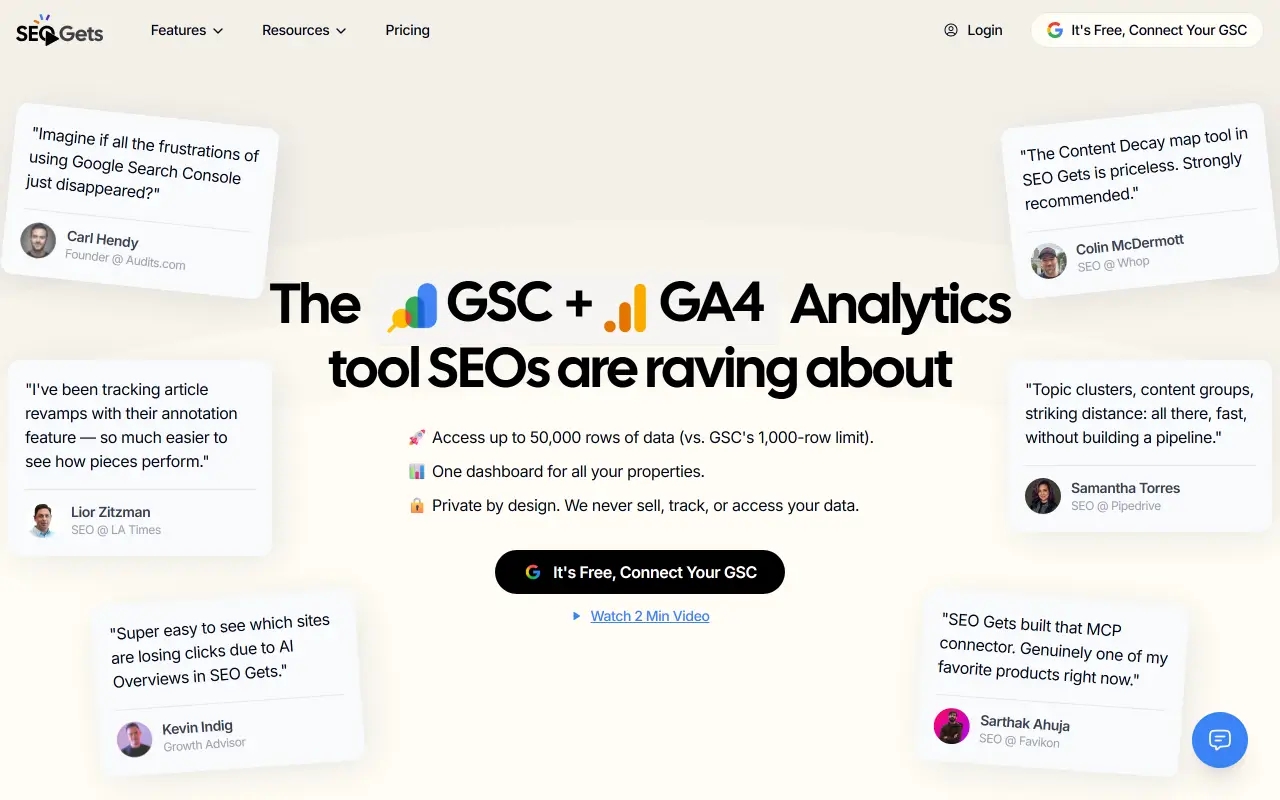
Free plan at $0 with unlimited connected Search Console properties, unlimited team members and a 16-month data window. The paid Core plan is $59 a month and adds analytics data, content decay tracking, branded versus non-branded splits and client portals.
Search Console holds the right numbers behind a slow interface with a 1,000-row export limit and no memory of what you looked at yesterday. Tools in this category solve exactly that: same data, same API, a front end that groups pages, tracks movement per query, and loads in under a second. Nothing here is new information, and that is the point. You are paying zero to stop losing twenty minutes every time you want to know whether a page is rising.
The free tier is unusually honest about what it is: a simple Search Console tool with the full 16-month window and no site cap, with the reporting and client-facing features sitting behind the paid plan. For a founder tracking one site that is the whole job. For an agency running client reports, the paid tier competes with a spreadsheet you would otherwise maintain by hand, and that comparison is the subject of our SEO report walkthrough and the guide to automating client reporting.
It cannot show you anything Search Console does not already hold, so the averaging and the reporting lag come along with it. No competitor data at any tier.

Looker Studio
Anyone who wants a specific view badly enough to build it once.
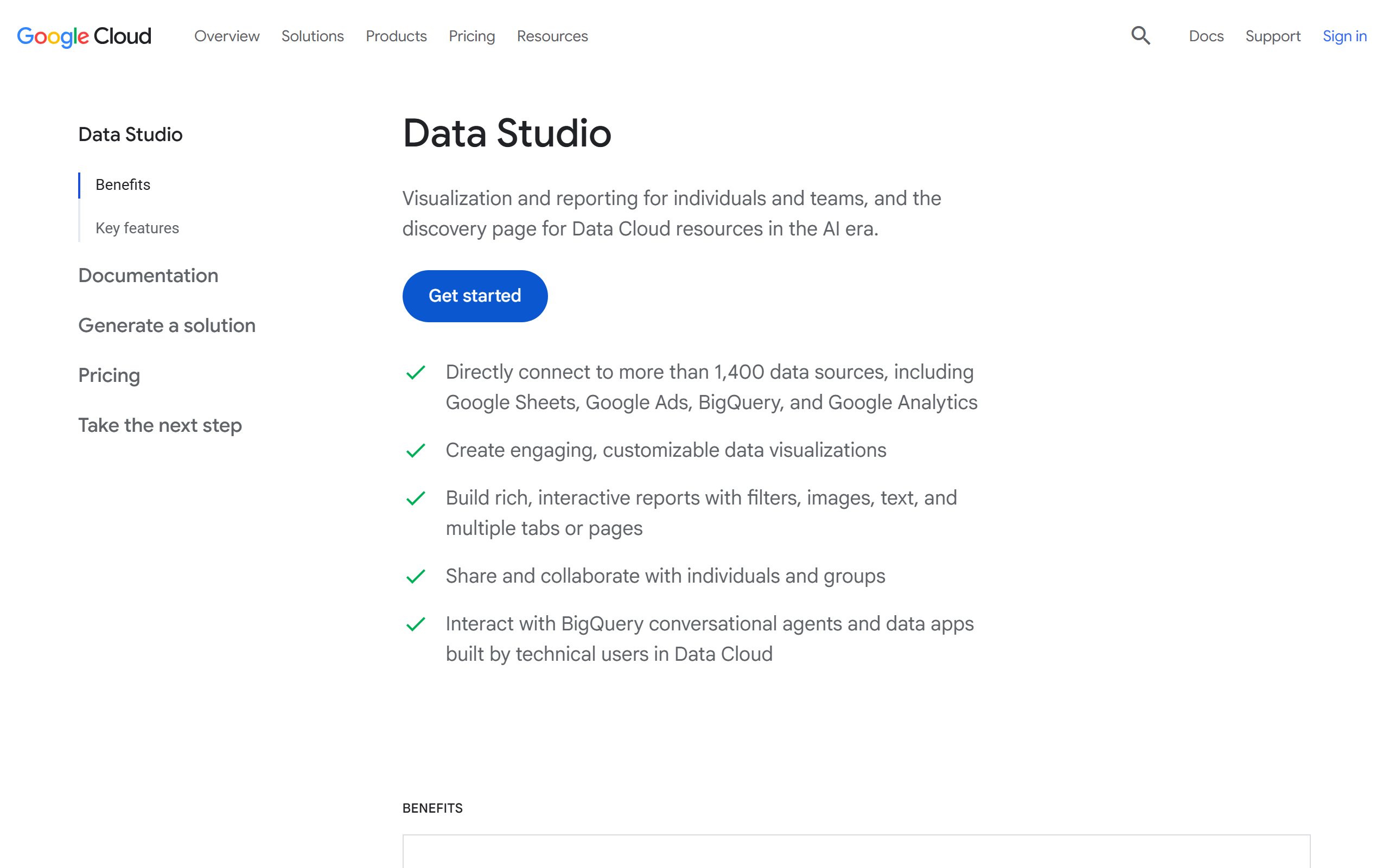
Free, with a first-party Search Console connector and a first-party analytics connector. Blend both, add a date-range control and a query filter, and you have a keyword position dashboard that refreshes itself and can be shared with a link or emailed on a schedule. Several of Google’s own product pages still carry the older Data Studio name, which is the same tool.
This is the option people forget because it is not marketed as a rank tracker. Connect Search Console, put average position on the y axis, date on the x axis, and filter to the twenty queries you care about. You now have the chart every free tracker sells, drawn from better data, refreshing on its own, for nothing. Scheduled email delivery means you can stop opening it entirely and just read the Monday snapshot.
The cost is an afternoon and the willingness to maintain a thing nobody else on your team understands. Dashboards rot: a filter goes stale, a property gets renamed, and six months later the chart is quietly wrong. Build it if you have a specific question you ask every week, not because building it feels productive. The same trade shows up whenever you consider assembling tooling instead of buying it, which we argue through in the SEO automation tool roundup.
It is a build, not a product. Nobody is fixing it when the connector changes, and the underlying numbers are still Search Console averages with the usual lag.
Rank Math
WordPress owners who never leave the admin dashboard.
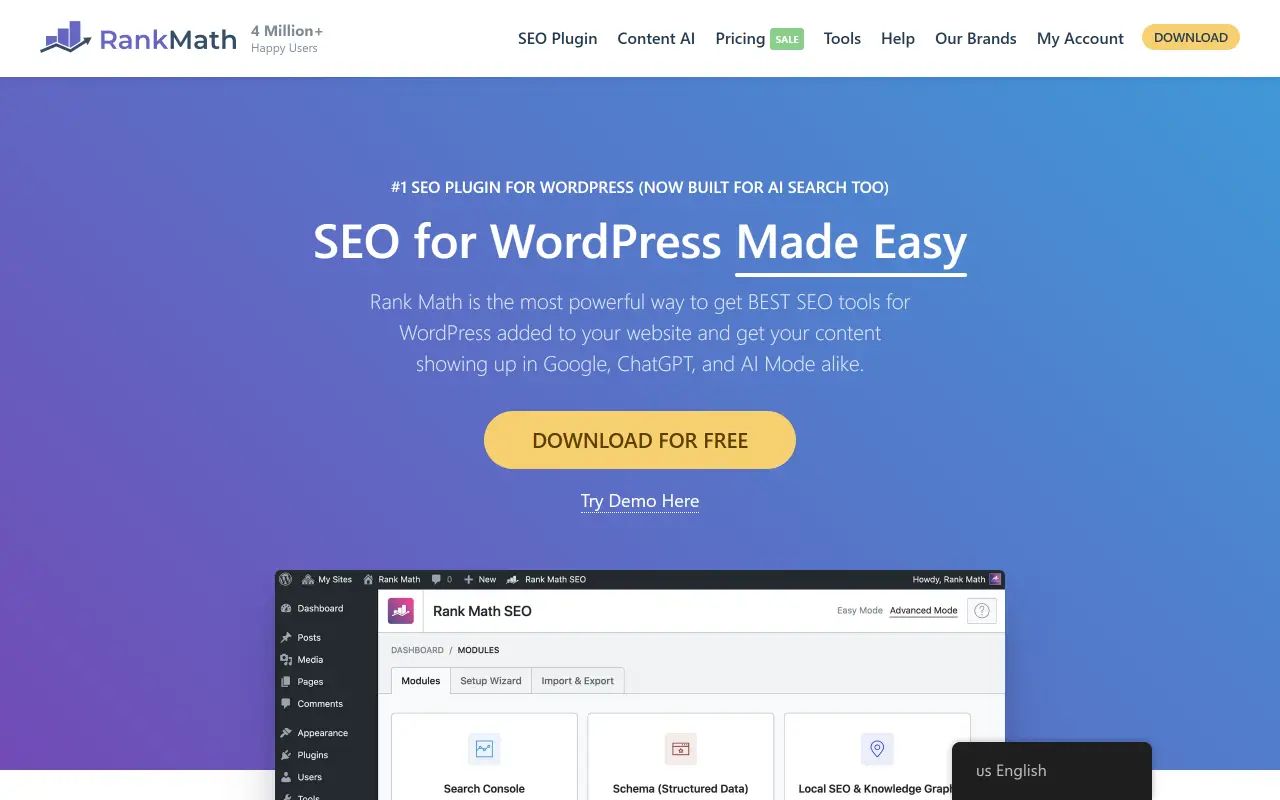
The plugin is free with no time limit and pulls Search Console data into a WordPress analytics dashboard beside the post it belongs to. The dedicated keyword rank tracker, tracking up to 500 keywords, and history beyond the short default window are Pro features.
Proximity is the argument. Seeing that a post slid from 7 to 14 while you are editing that post is worth more than the same number in a tool you open on Thursdays, because it turns measurement into a revision instead of a note. For a site with a few hundred posts the free plugin covers the loop: write, publish, watch the position on the post screen, rewrite the ones that stalled.
Be clear about the boundary, because the marketing blurs it. The free plugin is a Search Console front end. The keyword rank tracker with its own list and its own history is the paid module, and that is a fair split rather than a trap. If you are choosing plugins in the first place, the wider field is in our WordPress SEO plugin comparison, and the publishing half of the job is covered on our WordPress automation page.
WordPress only, and the actual rank tracker module is a paid upgrade. Adding another plugin that phones home on every admin load is not free in performance terms.
Rank Tracker by SEO PowerSuite
Anyone who wants to check hundreds of keywords without paying per keyword.
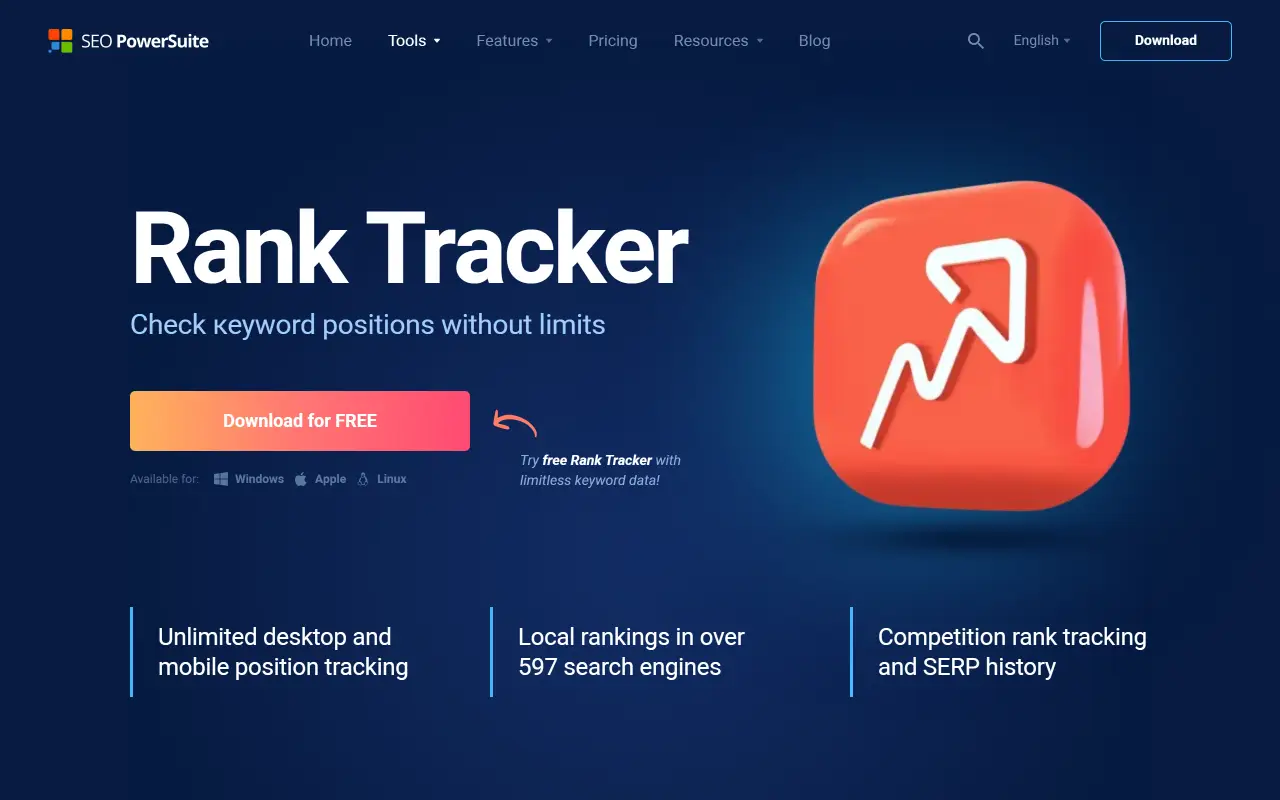
The free build runs ranking checks with no limit on the number of keywords, locations, search engines or check-ups, and includes eight pre-built report templates. Competitor tracking is capped at one competitor per project on the free tier, against five and forty on the paid tiers.
Every hosted tracker prices per keyword because every check costs them a scrape. This one runs on your machine, so the ceiling disappears and you can point it at 400 keywords across three countries without a plan upgrade. For a site with a large existing footprint, that single fact makes it the most useful free option here after the ones reading your own data.
It is desktop software and it behaves like it. Checks take real time because they are real requests, the interface is dense in the way desktop SEO tools have been dense for fifteen years, and running hundreds of keywords frequently from one connection will eventually meet rate limiting unless you add proxies. Use it for a thorough monthly or weekly sweep rather than a daily rank tracker, and let Search Console cover the day-to-day.
One honest note on what all of this measures. A tracked position is a snapshot of one result page from one location at one moment, and results are personalised, localised and increasingly wrapped in generated answers. Treat it as a trend line rather than a fact, the same way you would treat any AI SEO tooling output you did not verify.
Desktop only, so nothing runs while your laptop is shut. Large keyword lists need proxies to avoid rate limiting, and the free tier tracks one competitor.
SerpBear
Developers who would rather run a container than pay a subscription.
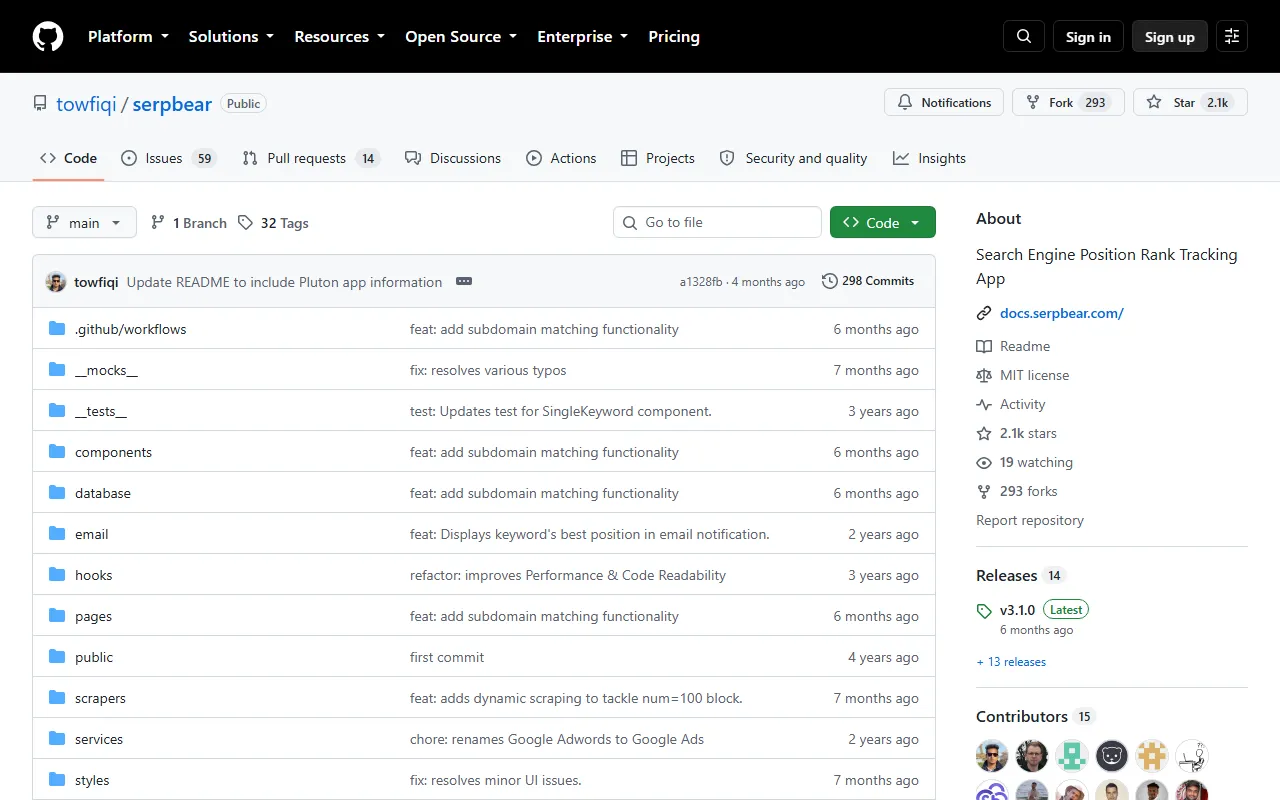
MIT licensed and free to run, with unlimited keywords and unlimited domains, email notifications on rank changes, a Search Console integration and its own API. Ranking data comes from a third-party scraping service you supply a key for, or from your own proxies.
The honest description is that SerpBear is the dashboard and someone else is the data. You deploy it, point it at a scraping API, and get an unlimited tracker for the cost of the scrapes, which on a small keyword list can genuinely be zero on a provider free tier. For anyone comfortable with a container and an environment file, this is the closest thing to a paid tracker that never sends you an invoice.
The costs are the ones self-hosting always carries. You own uptime, backups, the database, and the moment a scraping provider changes its response shape. It is a fair trade for a developer and a bad trade for a marketer, and the failure mode is not that it breaks loudly, it is that it quietly stops collecting and you notice a month of missing history. If you want tooling that plugs into your own stack more broadly, the SEO tooling for agents and editors roundup covers that shape.
Free until you count your time. You supply the scraping key, the host and the backups, and a silent collection failure costs you the history you were tracking for.

SERPRobot
Checking one keyword right now without signing up for anything.
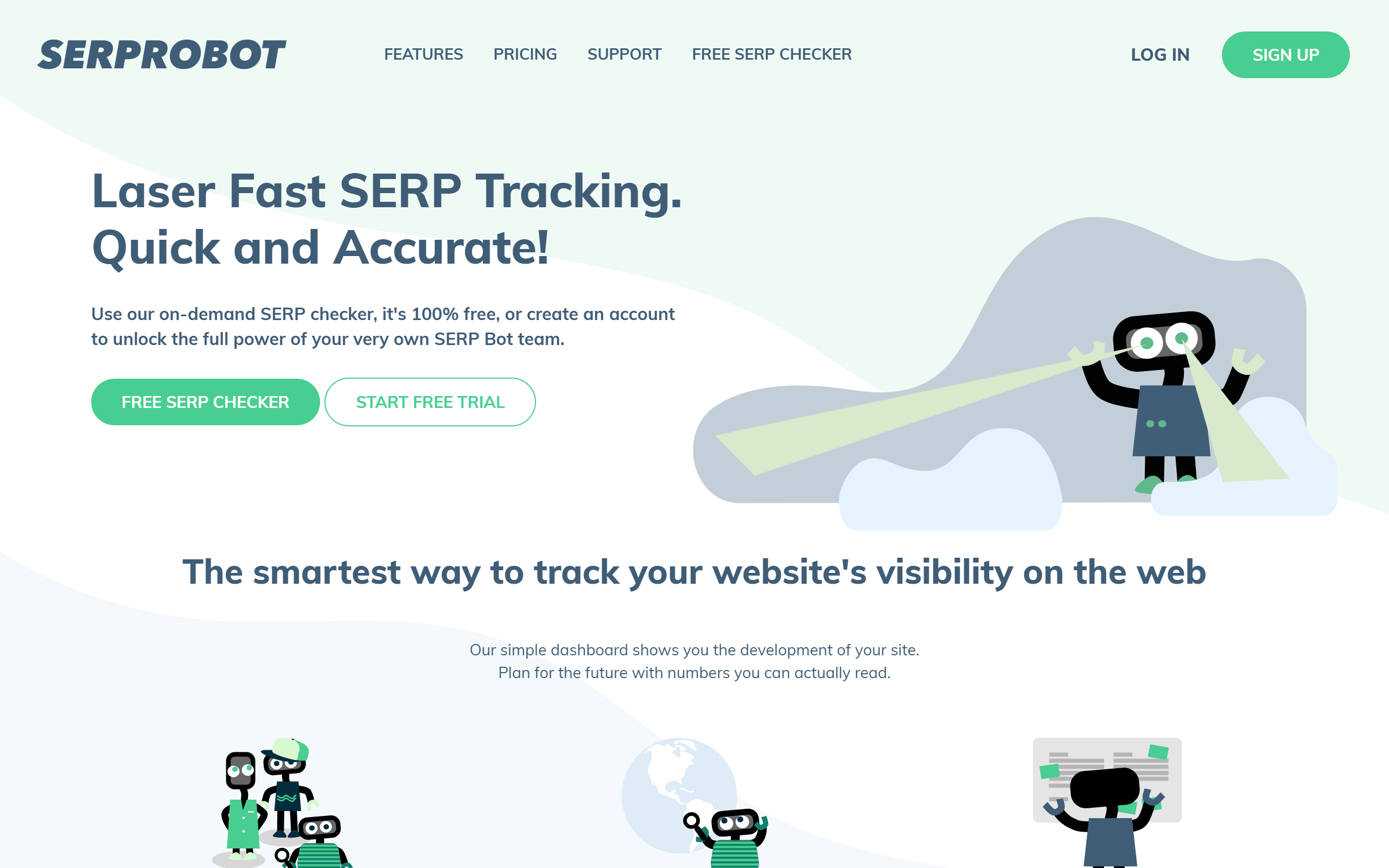
The on-demand SERP checker is free to use with no account required: type a domain and a keyword, pick a country, get the current position. The monitored version with saved projects and daily checks is a 14-day full-service trial and then a paid plan.
There is a real job here that dashboards do badly. Somebody asks where you rank for a phrase, you want the answer in ten seconds, and you do not want to add a keyword to a project or burn a credit to get it. This does that, from a clean page, without an account. It is also the fastest way to sanity-check a number a client or a tool has quoted at you.
What it is not is monitoring. Nothing is stored, nothing alerts you, and a position with no history behind it tells you almost nothing: rank 14 is good news or bad news depending on where it sat last month. Pair it with one of the free tools above that keeps history, and use this for the ad-hoc question. Anyone shopping for a monitored tool should look at the paid field rather than stretching a free spot checker, which is what our agency software comparison exists for.
A single point in time with no stored history and no alerting. The free checker is a demo of the paid product, and heavy use hits daily limits.
Semrush free account
Seeing what a serious tracker reports before you decide it is worth paying for.
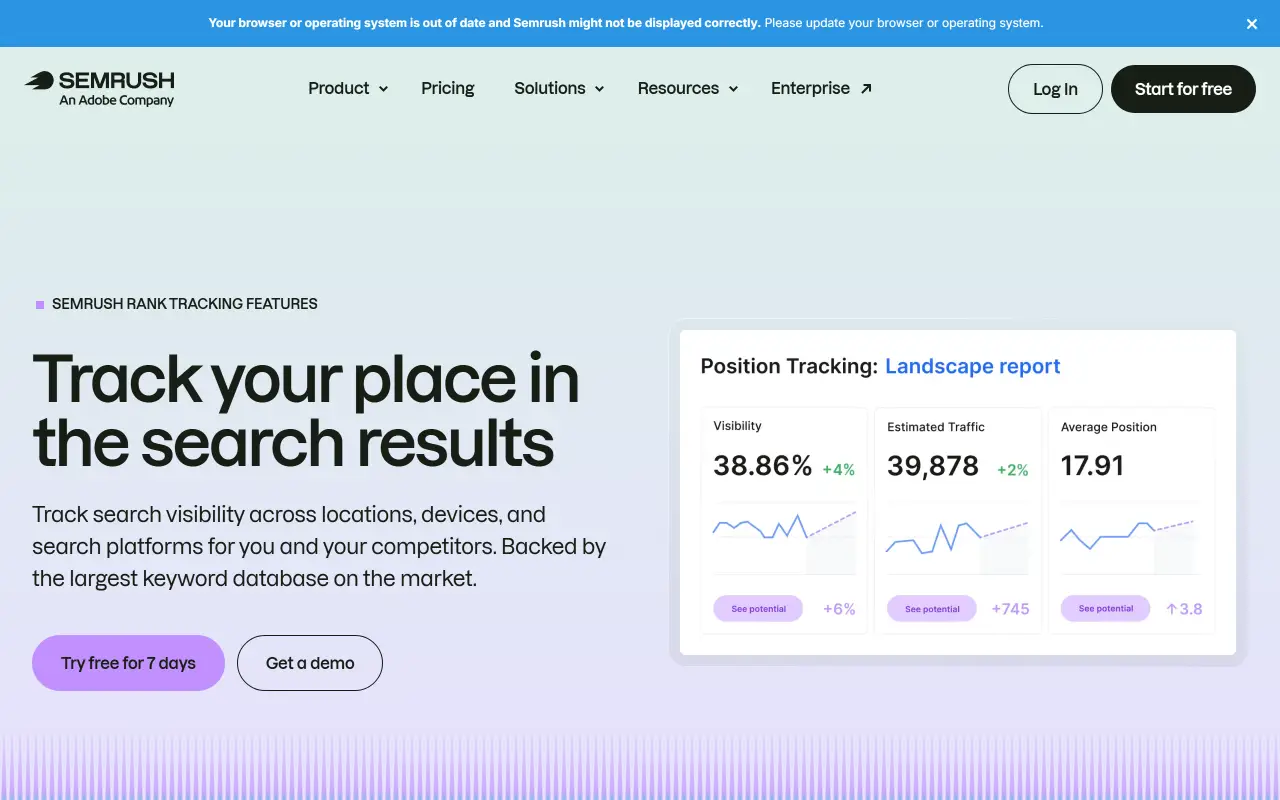
A free account, not a trial, gives you Position Tracking on one project with a limit of ten keywords and a daily-limited number of report requests. Everything above that, including the local grid, competitor sets and the device split at scale, sits on the paid plans.
Ten keywords is not a rank tracking programme and nobody at Semrush thinks it is. What it is worth is calibration. Put your ten money keywords in, let it update daily for a fortnight beside your Search Console report, and you learn something more useful than any of the individual numbers: how far a tracked position drifts from the average position your own data reports, on your site, in your market.
Do that once and you will read every rank report you ever see more carefully. It also settles the buying question honestly. If ten keywords tracked daily produce a decision you would not otherwise have made, the paid tier is probably worth it. If they produce a chart you glance at and close, the answer is that measurement was never your bottleneck, which is the argument the rest of this page ends on. The full paid field is covered in our comparison of AI-era SEO platforms.
Ten keywords and one project. The free account exists to sell the paid plan, and the interesting features are visible but locked.
A rank is a measurement, not a fact.
Two people searching the same phrase in the same city get different result pages, and both of those differ from what a datacentre scraper sees. Location, device, search history, and the generated answer block at the top of the page all move where your link sits and whether anyone reaches it. That is not a reason to ignore rank data. It is a reason to read trends over weeks instead of positions on a Tuesday, and to always know which location and device a number came from before you act on it.
The second habit is pairing rank with impressions. A page that moved from 14 to 9 on a query nobody searches is a chart going up and nothing else. A page that held position 6 while impressions doubled is real growth you would have missed watching rank alone. Search Console gives you both columns side by side, for free, which is most of why it leads this list. Independent reference points on how click share falls away with position are worth reading too, and Advanced Web Ranking's public CTR study is the usual one people cite.
The third habit is deciding in advance what a number would change. Before you add a keyword to any tracker, write down what you will do if it drops five places. If the answer is nothing, you are collecting data for the feeling of control, and the time would be better spent on the page itself. A serious technical and content audit answers more questions in an afternoon than a year of watching a dashboard.
Measuring is the cheap half. Publishing is the other one.
Every tool on this page is free or nearly free, and that tells you something about where the value sits. Measurement has been commoditised: the numbers come from an API anyone can call, so nobody can charge much for showing them to you. What has not been commoditised is producing the thing being measured. A tracker will tell you that you rank 42 for a term worth having. It will not write the page that gets you to 8, and it will not write the next thirty pages that give you something to rank with at all.
That gap is where most small sites actually stall. The dashboards are connected, the keyword list is curated, the weekly report goes out, and two months later the site has published four posts because writing is the part that needs a person with a spare afternoon. Cadence, not measurement, is the constraint. It is why scheduled publishing beats a better chart, and why the tools that win are the ones that ship pages.
That is the job our agent does. It researches what your buyers search using live keyword data rather than estimates, writes articles with real citations, cuts what its sources do not back, and pushes the finished pages into your CMS on a cadence you set. Keep Search Console for the measuring, since it is free and it is better than what you would pay for, and put the money where the bottleneck is. It is $99 a month flat, with a free trial first and one-click cancellation, and the full pipeline is documented on the automation overview.
Ten free trackers, side by side.
| FEATURE | GOOGLE SEARCH CONSOLE | BING WEBMASTER TOOLS | AHREFS WEBMASTER TOOLS | SEO GETS | LOOKER STUDIO | RANK MATH | RANK TRACKER BY SEO POWERSUITE | SERPBEAR | SERPROBOT | SEMRUSH FREE ACCOUNT |
|---|---|---|---|---|---|---|---|---|---|---|
| Free forever (not a trial) | Spot check | |||||||||
| Keyword limit on the free tier | None | None | 1,000 shown | None | None | Your GSC queries | None | Unlimited | Per check | 10 |
| Keeps history | 16 months | 6 months | 16 months | As built | Pro for long history | |||||
| Daily updates | Next-day | Next-day | Next-day | Next-day | Next-day | On demand | On demand | |||
| Tracks a curated keyword list | Partial | Partial | Pro | |||||||
| Competitor positions | Paid | 1 free | Paid | |||||||
| Runs without your machine on | ||||||||||
| Setup under ten minutes |
What is the best free rank tracker software?
Google Search Console, and it is not close. It reports the average position of every query that earned your site an impression, with 16 months of history, for nothing, using the ranking system itself rather than a scrape of it. Add Bing Webmaster Tools for the second index. If you want a curated keyword list checked on demand instead of an averaged report, Rank Tracker by SEO PowerSuite has no keyword ceiling on its free build, and SerpBear is the self-hosted open source option.
Is there a genuinely free daily rank tracker?
Sort of, with a caveat worth understanding. Search Console updates daily but reports an averaged position with a day or two of lag. Semrush free tracks ten keywords daily and stops there. SerpBear checks daily on whatever schedule you set, but you supply the scraping key. Nobody gives away unlimited daily checks across a real keyword list, because every check costs the provider a scrape and those scrapes are the actual product.
Why is Search Console position different from what a rank tracker reports?
They measure different things. Search Console averages your position across every impression Google actually served, so it blends countries, devices and personalised results. A rank tracker fires one synthetic search from one location and records that result page. A keyword at 4 in one market and 30 in another reads as 17 in Search Console and as 4 in a tracker pointed at the first market. Neither is lying. Filter Search Console to one country and one device before you compare them.
Are these ranked best to worst?
No. They are grouped by where the number comes from: the data you already own, free front ends on that same data, free forever tools that run their own checks, and the free tier of a paid platform. Inside each group we ordered by how many people it fits. A self-hosted app for developers and a browser spot checker are not competing for the same person, so a single leaderboard would be dishonest.
How many keywords should I actually track?
Fewer than you think. Twenty to fifty is plenty for most sites: the pages that make money, the ones sitting in positions 8 to 20 where a revision pays off, and a handful of competitor terms. Tracking 500 keywords produces a chart nobody acts on and a monthly bill. The number that matters is how many pages you published against the questions your buyers ask, not how many rows are in your tracker.
Is this list sponsored?
No. No affiliate links, no paid placements, and no outbound links to the tools listed: the screenshots taken on 9 September 2026 are the evidence instead. We build SEO software and we deliberately left ourselves off this list, because we do not sell a rank tracker and putting a content pipeline at number one on a list of trackers would be the wrong answer to the question.
What did you leave off the list?
Anything whose free plan is a countdown. Wincher, Nightwatch, AccuRanker, SE Ranking and Mangools all run free trials rather than free tiers, and a fortnight of access is a sales process, not a free rank tracker. We also left off the browser extensions that report a position without saying which location or device it came from, because an unlabelled number is worse than no number.
Do I still need rank tracking if I have Search Console?
For most small sites, no. You need it when you have a specific question Search Console cannot answer: how you rank against three named competitors, how a page performs in a city rather than a country, or whether a position moved today rather than this week. Those are real questions and they are worth paying for when you have them. Buying a tracker before you have one of them is buying a dashboard.
What actually moves a position once I can measure it?
Publishing something that deserves the position, then the internal links and the technical hygiene that let it be found. Measurement is the cheap half of the job and it is where most people stop, because a dashboard feels like progress. The expensive half is producing enough well-researched pages, consistently, on the questions your buyers ask. That is the part our agent takes over, at $99 a month flat.
Related guides + features.
SEO automation
The full pipeline: research, drafting, a check on every claim, and native publish. Where these tools stop, the agent ships the page.
/features/seo-automation →FREE TOOLFree SEO audit
Point it at any domain for a content and technical read in minutes.
/seo-audit →PRICINGSimple pricing
$99 flat per month after a free trial. No per-keyword meter, and cancellation is one click in the app.
/pricing →A better chart never moved a position.
The agent researches what your buyers search, writes articles with real citations, checks every claim against its sources, and publishes them to your site on a cadence you set. $99 a month flat, free trial first, cancel in one click.
FREE TRIAL · CANCEL IN ONE CLICK