The 10 best AI copywriting tools in 2026.
Every tool here writes competent copy, so the differences are everywhere else: brand governance, performance scoring, catalog scale, live search research, and whether anything reaches your site. Ten picks grouped by the job the copy has to do, list prices read off each vendor on 13 September 2026, one honest catch on every entry.
What is the best AI copywriting tool in 2026?
There is no single best one, because copywriting is four different jobs. Jasper at $69 a month is the strongest option for brand and campaign copy across a team. Copy.ai starts at $29 for repeatable short-form workflows. Rytr is the cheapest usable paid tool at $7.50 a month. Anyword from $49 scores ad and landing page copy against performance data before you spend on it. Hypotenuse AI handles ecommerce product descriptions at catalog scale on quote-only pricing. For search-facing articles, Frase from $49 builds research-led briefs, Surfer from $49 grades drafts against the ranking pages, Writesonic bundles articles with visibility tracking from $79, and The SEO Agent runs research, fact-checked drafting, a quality gate and native CMS publishing for $99 a month flat. ChatGPT is free and is the baseline every paid tool has to beat.
The shortlist, scannable in ten seconds.
- 01JasperBest AI copywriter for brand voice
- 02Copy.aiBest for repeatable short-form copy
- 03RytrCheapest tool that is still worth using
- 04AnywordBest for ad and landing page copy
- 05Hypotenuse AIBest for ecommerce product descriptions
- 06Surfer SEOBest for editing copy toward a search target
- 07FraseBest for research-led article briefs
- 08WritesonicWidest feature spread for the money
- 09The SEO AgentBest for SEO articles end to end
- 10ChatGPTBest free starting point
How we picked these ten.
The first thing to accept is that raw writing quality stopped being a differentiator. Point any of these at a well-briefed headline and the outputs are close enough that a blind test would not settle a purchase. So ranking them on prose would produce a list that sounds authoritative and helps nobody. We ranked them on the parts that still differ: what the tool remembers about your brand, what it knows about your market, what it refuses to let through, and whether the finished copy lands anywhere.
The second filter was the job. Copywriting is not one activity. A performance marketer picking between two ad headlines, an ecommerce manager with 4,000 bare product pages, and a founder whose blog has not moved since March are three different buyers, and the tool that serves one serves the others badly. The entries are grouped accordingly: brand and marketing copy, conversion and catalog copy, search-facing article copy, and the free assistant everything else is priced against. Inside each group we ordered by how many people it fits.
Worth naming the split with the neighbouring list. This page is about writing copy. If the question is which platform to run your search programme on, the ranked field is in our best AI SEO tools comparison and the blog-specific mechanics are in the blog SEO guide. We build software in this category and we are entry nine, which we say again in the entry itself along with the three tools here that beat us on short-form copy. Prices were read off each vendor's own pricing page on 13 September 2026. No affiliate links and no paid placements: the screenshots are the evidence.

Jasper
Marketing teams with a style guide and more than one person writing.
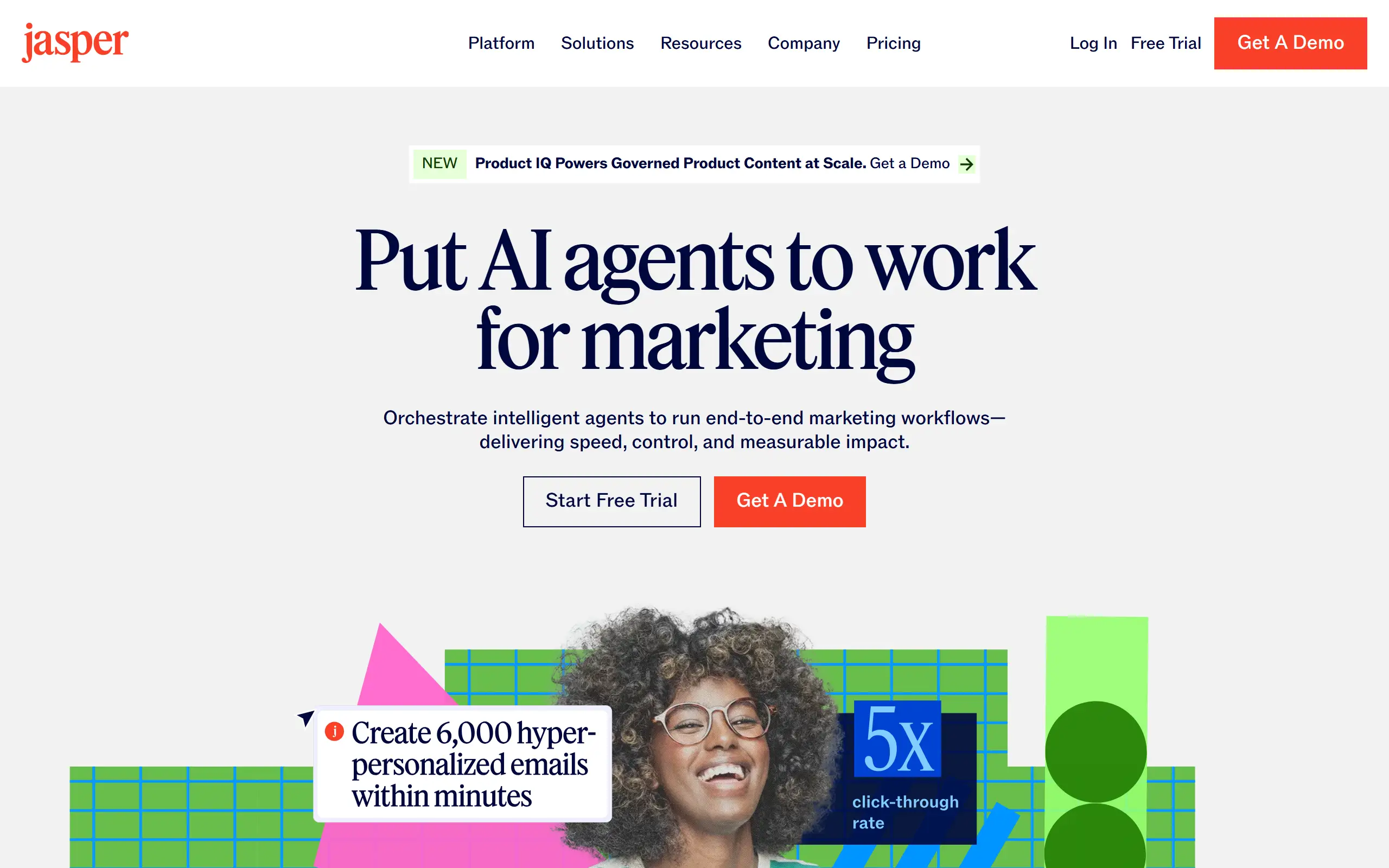
Pro is $69 a month billed monthly, $59 a month on annual, one seat, with a 7-day free trial. Business pricing is quote-only. The product is built around stored brand voices, audience profiles and reusable campaign workflows rather than one-off generations.
Jasper is the category's default for a reason that has nothing to do with raw writing quality, which is now roughly equivalent across every tool on this page. It is the governance. You load your tone rules, your product facts and your audience definitions once, and every piece of copy anyone on the team generates inherits them. That is the difference between five people each prompting privately and a team producing copy that reads like it came from one company.
What you are buying at $69 a month is consistency at volume: landing page variants, email sequences, ad sets and social copy that all sit inside the same guardrails. If you write two things a week, the guardrails are overhead and the free assistant at the bottom of this list does the same job. If you ship campaign copy weekly across channels, the setup pays back fast.
The gap shows up when the deliverable is a long, search-facing article with sourced claims. Brand voice does not make a page rank, and voice tooling is not research tooling. That split is why the SEO field gets its own roundup in our comparison of AI SEO tools, and why teams often run one tool for campaigns and another for the blog. If Jasper is the tool you are leaving rather than choosing, the swap options are in our Jasper alternatives roundup.
The most expensive entry-level seat here, and the brand-voice setup only pays back if someone maintains it. One seat on Pro means a second writer is a second bill.
Copy.ai
Sales and marketing teams that generate the same five assets every week.
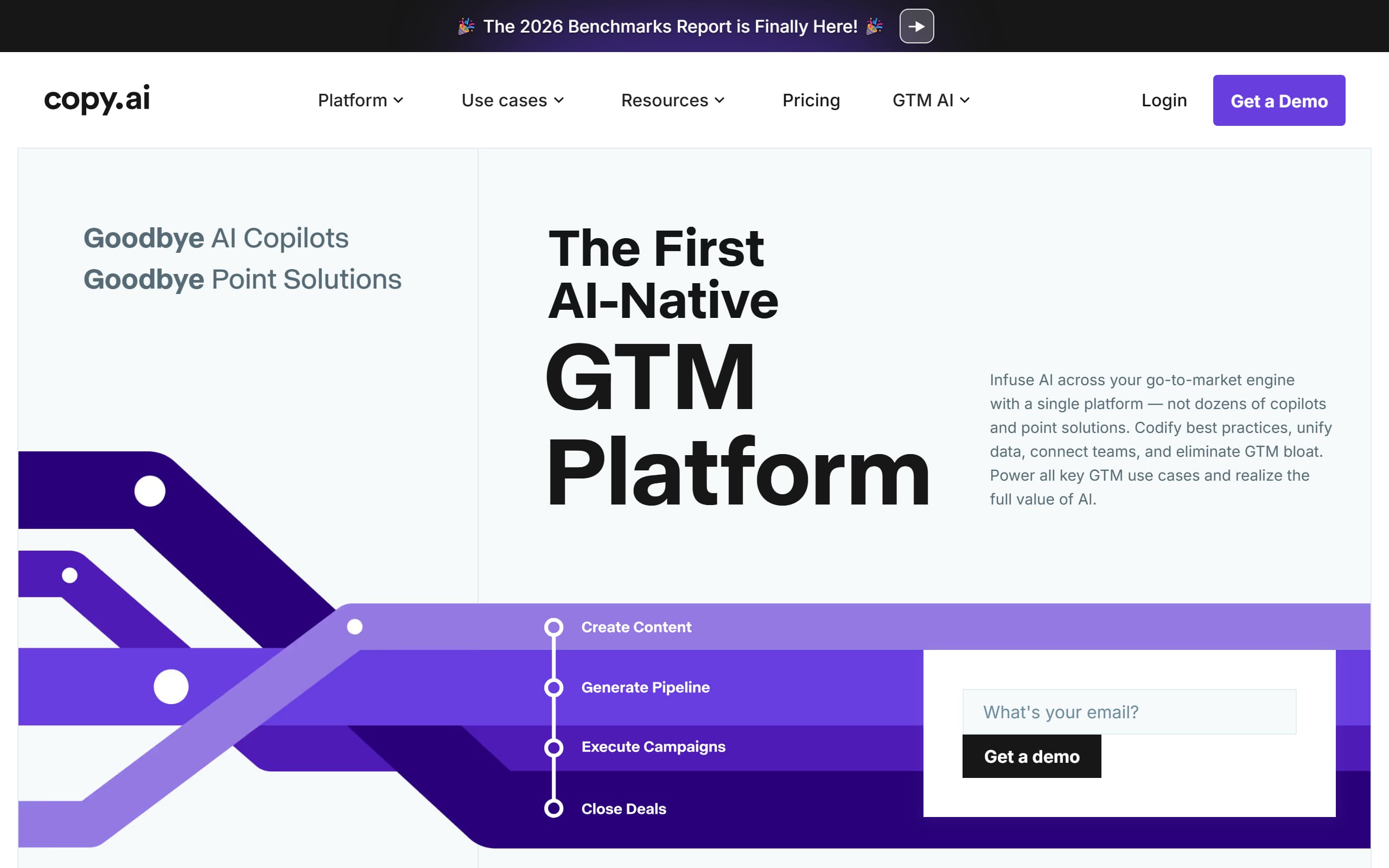
Chat is $29 a month, $24 on annual, with five seats and no word cap. The workflow plans that carry the GTM automation, credits and integrations start at $1,000 a month for 75 seats, so the gap between the self-serve tier and the platform tier is roughly thirty times the price.
Copy.ai has spent the last two years turning itself from a copy generator into a go-to-market workflow platform, and the product reflects that. The interesting unit is not the prompt, it is the workflow: take a list of accounts, enrich each one, generate a tailored opener, push the result somewhere. For outbound and lifecycle teams doing the same sequence at volume, that is genuinely better than a blank chat box.
The $29 tier, though, is the one most readers will use, and it is a competent multi-seat chat product with template libraries and unlimited words. Judged on that alone it is fair value and a cheaper starting point than Jasper. Judge it on the workflow story and the honest answer is that the workflow story starts at four figures a month.
One thing worth copying from it regardless of which tool you buy: the assets it produces are short, repeatable and templated, which is exactly the shape of work worth automating first. The same logic applied to pages instead of emails is what programmatic SEO does for a site.
The pricing cliff from $29 to $1,000 is the whole product decision, and the marketing does not lead with it. Long-form output is the weakest part of the suite.
Rytr
Solo founders who need a headline, a bio and a product blurb, not a platform.
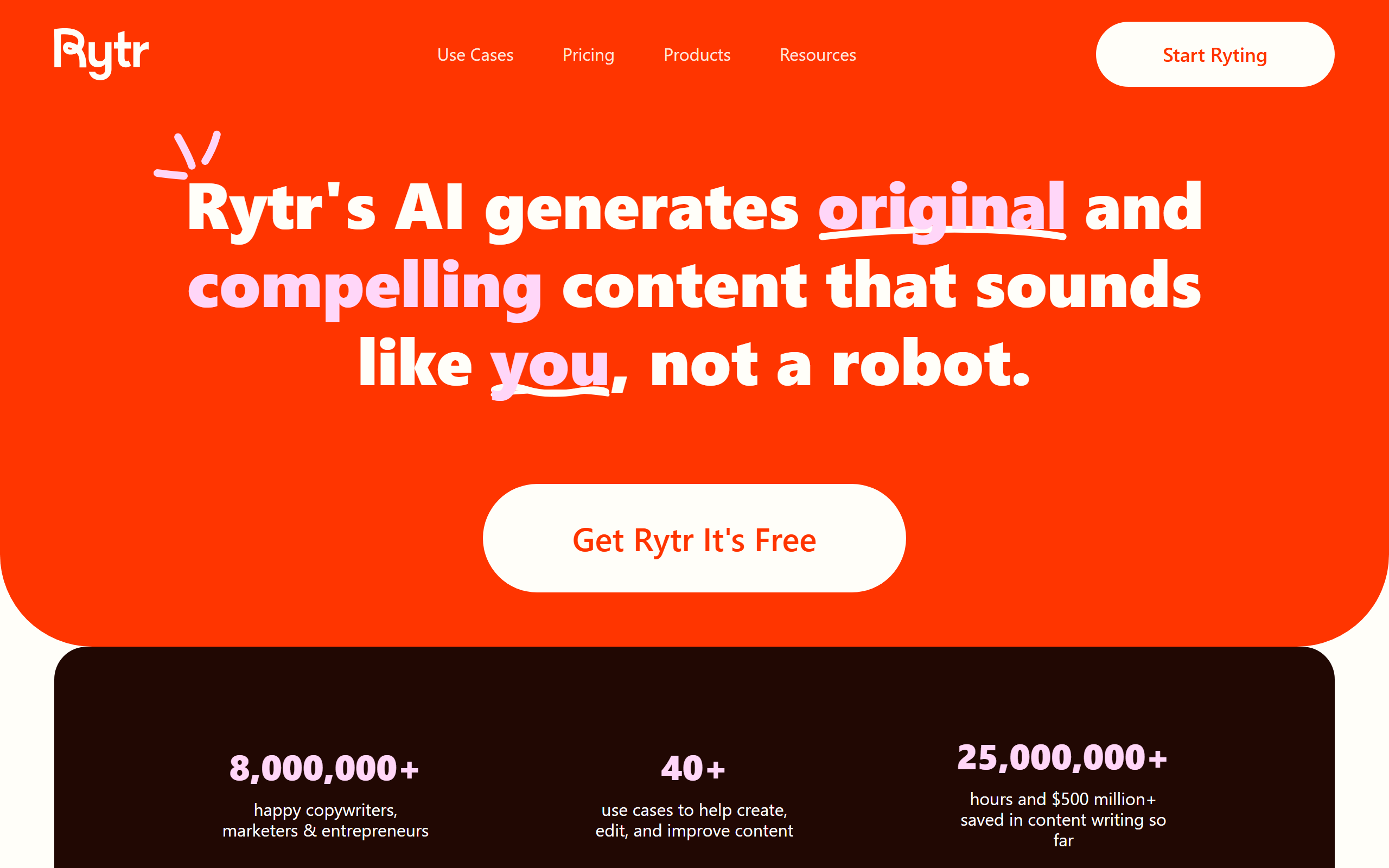
A free tier gives 10,000 characters a month, roughly 1,500 words. Unlimited generations are $7.50 a month and Premium is $24.16 a month with 40-plus languages, more custom tones and a larger plagiarism-check allowance. It is the only paid entry here under $10.
Rytr is built around 40-plus named use cases: product description, job ad, email reply, testimonial, video hook. You pick one, feed it three lines of context, and it writes to that shape. For someone who needs copy occasionally and does not want to learn prompting, the constraint is the feature. The output is not as strong as Jasper's on brand-heavy work, and at a tenth of the price it does not need to be.
The catch is what happens when you grow. There is no meaningful team layer, no stored brand system worth the name, and the use-case library is shallow once you have hit every template twice. It is the correct first purchase and the wrong third one.
If you only need a specific piece of copy rather than a subscription, several of the jobs it covers are free on this site: the headline generator and the meta description tool cost nothing and require no account.
Thin on team features and brand consistency, and the free tier is about 1,500 words a month, which is one blog post and nothing else.
Anyword
Performance marketers choosing between variants with real money behind them.
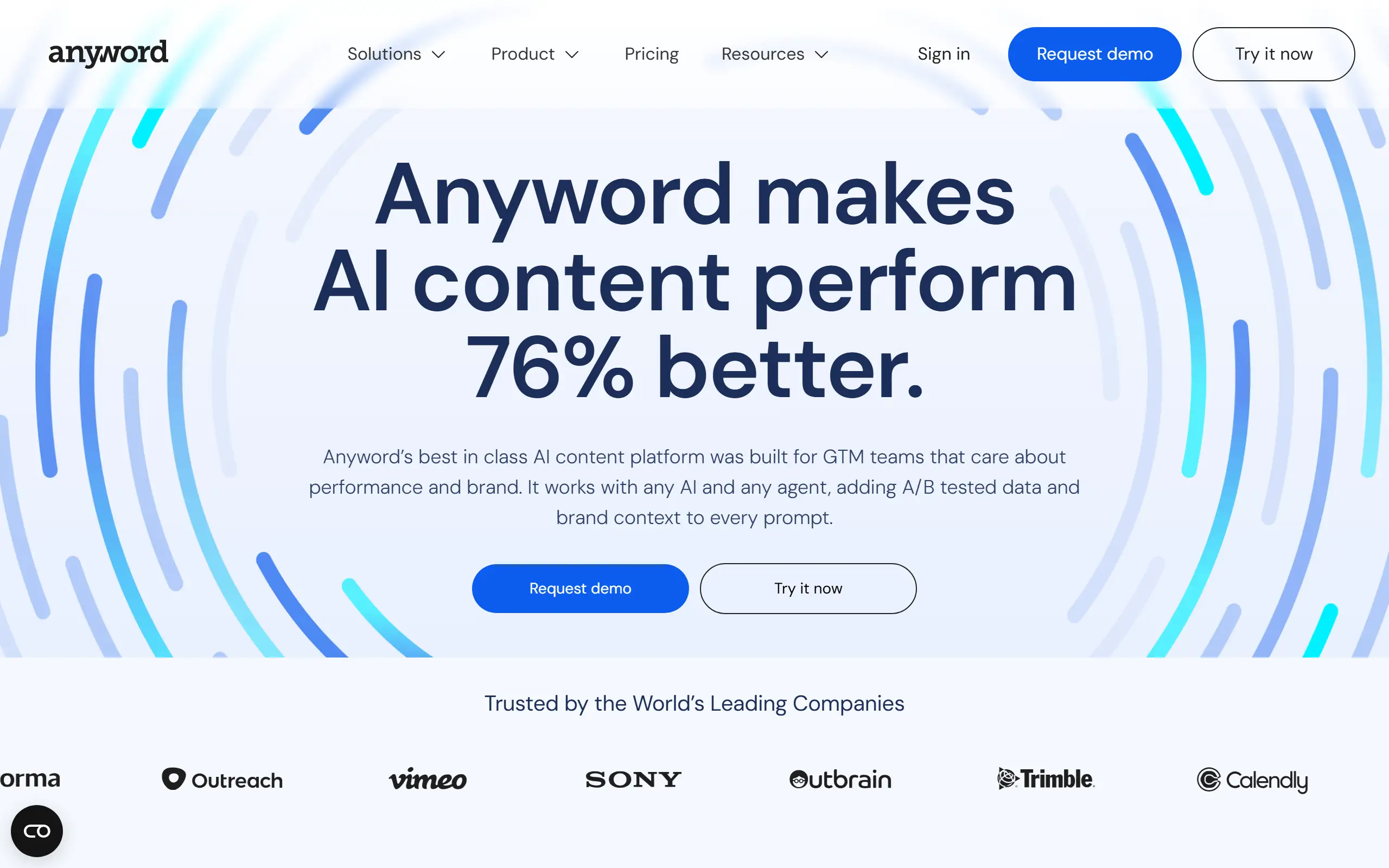
Starter is $49 a month, $39 on annual, one seat, with 50 predictive scores a month. Data-Driven is $99 a month, $79 on annual, three seats and 100 scores. The free trial runs 7 days and caps generation at 2,500 words. Word generation is unlimited on the paid plans.
Anyword's pitch is the one thing most copy tools cannot do: it predicts how a piece of copy will perform before you spend anything running it, scored against historical performance data for your audience type. Whether the score is exactly right matters less than what it changes about the workflow. It gives a team a non-political way to pick between two headlines, which is otherwise the most expensive argument in marketing.
Use it where a variant decision has money attached: paid search headlines, ad primary text, landing page heroes, lifecycle subject lines. Do not buy it to write your blog. The predictive layer is trained on short conversion copy, and a 1,800-word article does not decompose into a score that means anything.
The honest ceiling is that prediction is a prior, not a result. It narrows the field before the test; it does not replace the test. Teams that treat the number as a verdict stop running experiments, which is a worse outcome than not having the tool. Read it the same way you would read any AI tooling output you did not verify yourself.
Predictive scores are capped per month, and the useful multi-seat tier is $99. The scoring model is built for short conversion copy, so long-form results are unremarkable.
Hypotenuse AI
Ecommerce teams with thousands of products and no product copy worth reading.
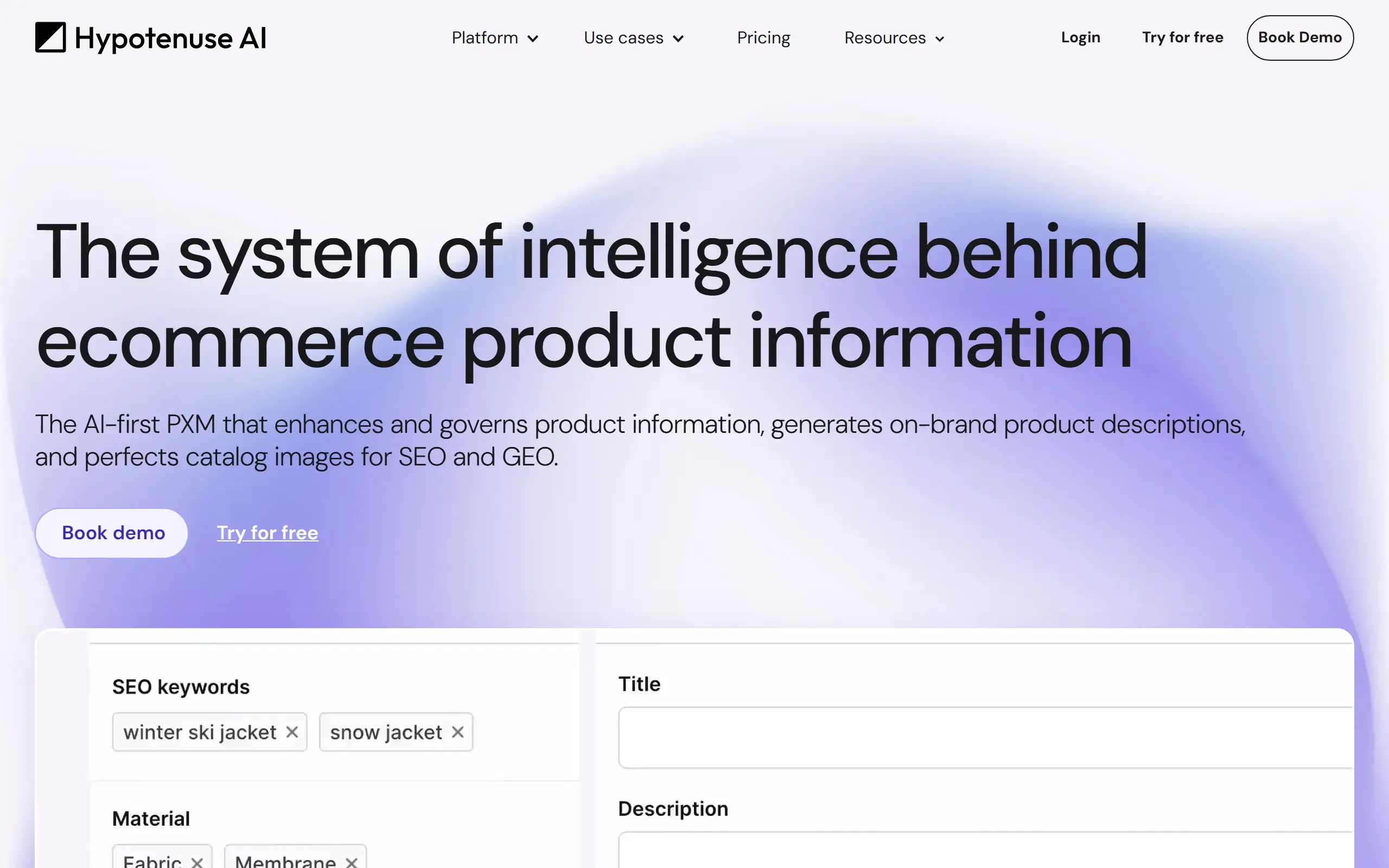
Now positioned as a product information platform rather than a writing app: bulk product descriptions, attribute enrichment, tagging and catalog images, generated from structured product data. Every tier including the entry plan is quote-only, with a free trial available.
Catalog copy is a different problem from marketing copy and most generic tools are bad at it. You are not writing one persuasive paragraph, you are writing 4,000 of them from structured fields, keeping attributes accurate, and never claiming a jacket is waterproof when the field says water resistant. Hypotenuse is built for that shape: pull from the product feed, generate on-brand descriptions in bulk, enrich the attributes at the same time.
The bulk workflow is the actual product. Judged as a place to write a blog post it is unremarkable; judged as a way to take a 6,000-SKU catalog from bare specs to usable descriptions in an afternoon it does something the rest of this list cannot. Store owners weighing that against wider store optimisation should also read our ecommerce SEO breakdown and the roundup of Shopify SEO apps.
The pricing is the irritation. Nothing is published, so a founder with 300 products cannot find out whether this is a $50 tool or a $2,000 one without a sales call. That is a reasonable posture for an enterprise product information platform and an annoying one for everyone below that line.
No public pricing at any tier, so evaluation starts with a sales call. Overkill for anyone without a real catalog, and the general writing features are weaker than the specialists above.

Surfer SEO
Writers who want a scored target to edit against before publishing.
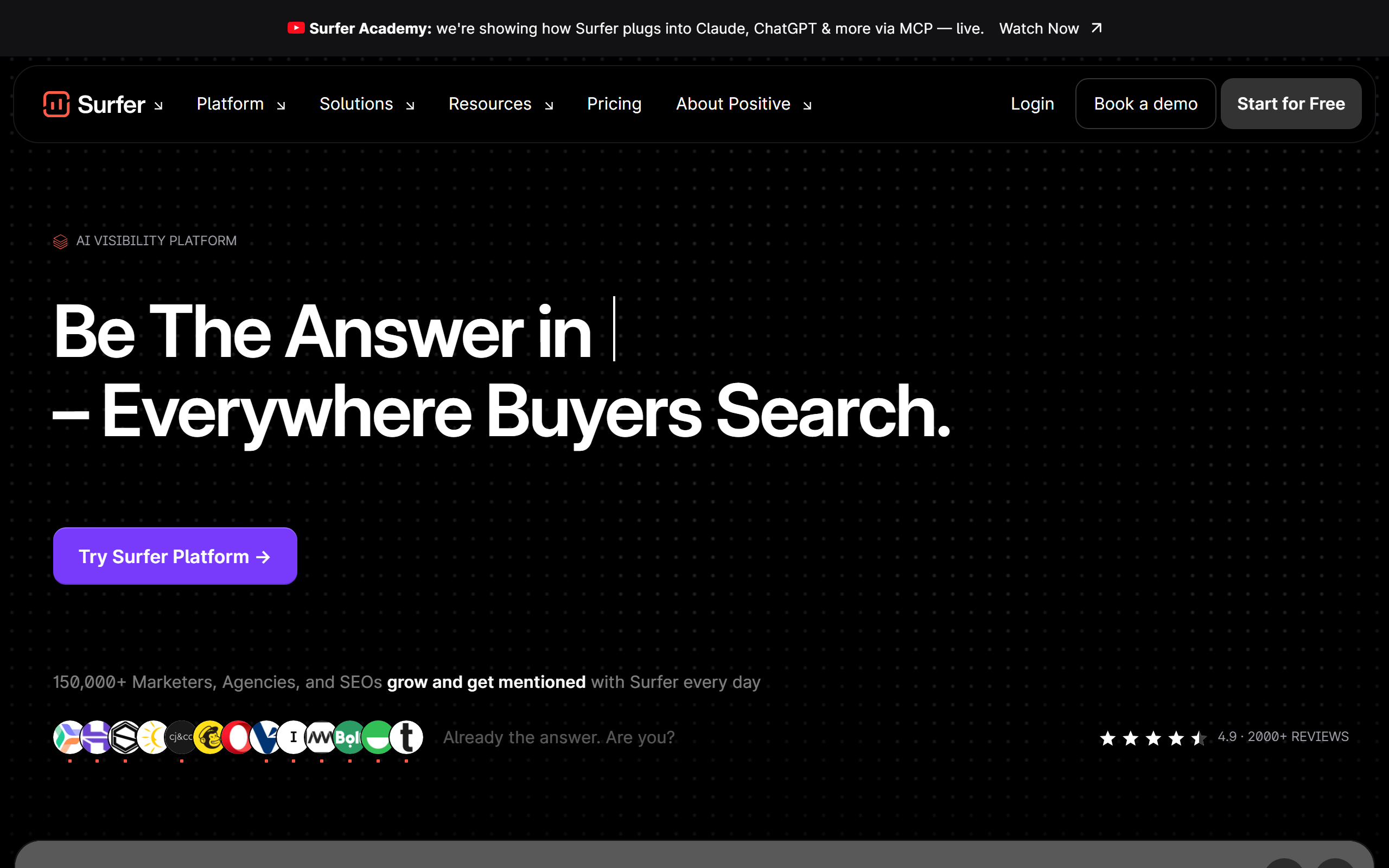
Discovery is $49 a month, Standard is $99 with 360 documents, Pro is $182, Peace of Mind is $299 with unlimited optimisation under fair use, and Enterprise is $999. A separate AI Search Analytics tier at $82 tracks how often assistants name your brand.
Surfer is not a copywriter and does not really claim to be. It reads the pages currently ranking for a term, extracts what they cover, and scores your draft against that target as you edit. Used well it is a check on omissions: the subtopic every competing page covers and yours does not. Used badly it is a scoreboard people write toward until the prose is keyword soup with a green number on it.
The honest framing is that it is an editing layer, so it presumes a draft exists. Pair it with anything on this list that writes, or with a human, and it earns its place. Buy it expecting an article factory and you have bought an expensive grader. Our full verdict on the product is in the Surfer SEO review.
The document limits are the thing to model before you buy. At 360 documents on the $99 tier, a team optimising every draft twice burns through the allowance faster than it expects, and the tiers above it climb steeply.
It grades, it does not write, and optimising to the score can flatten good copy. Document allowances are consumed by revisions, not just by new articles.
Frase
Editors who brief writers and want the research done before the brief lands.
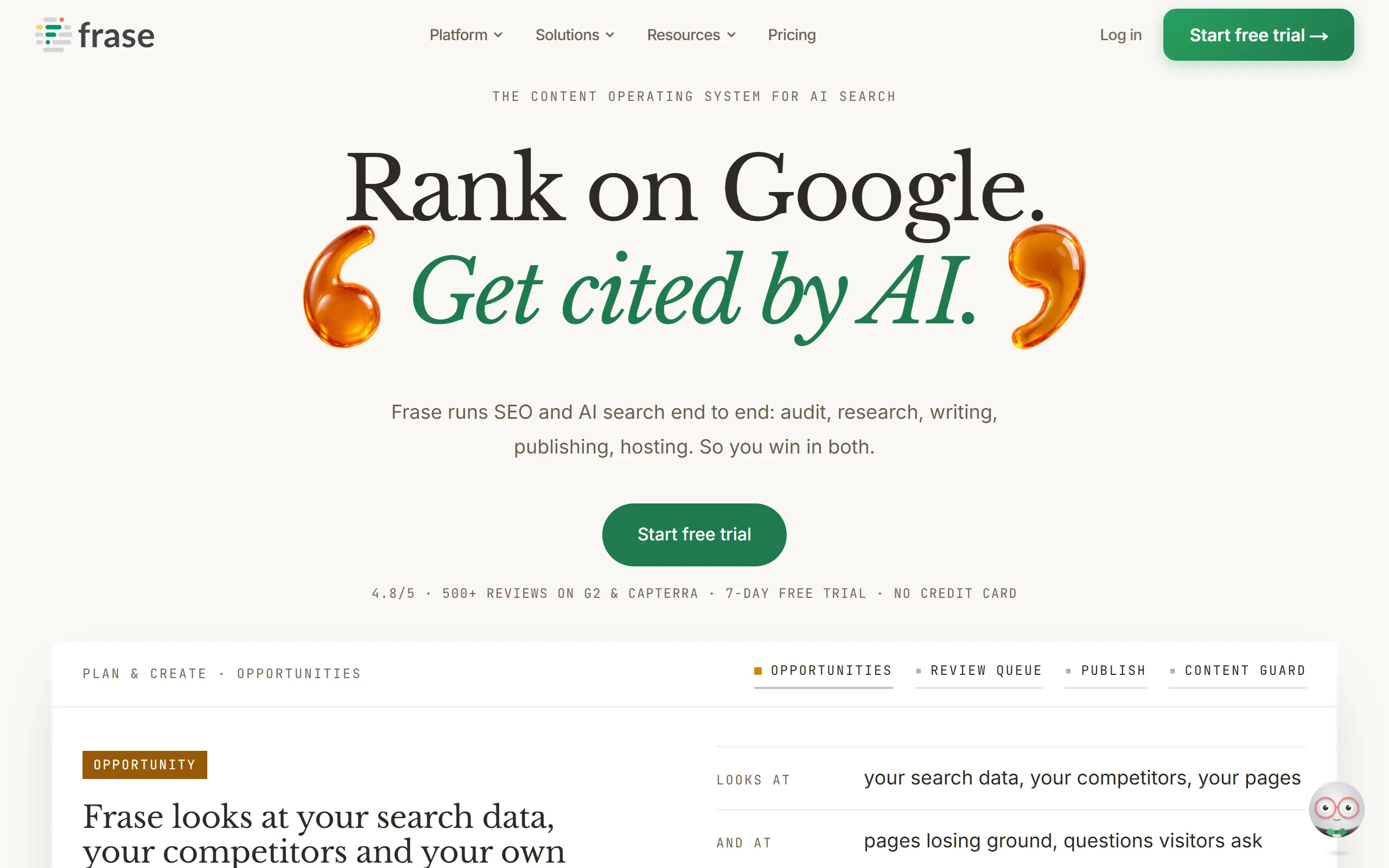
Starter is $49 a month billed monthly, $39 on annual, with 10 articles and 50 audit pages. Professional is $129 a month, $103 on annual, with 40 articles. Scale is $299, $239 on annual, with 100. The 7-day trial needs no card and opens the Professional feature set.
Frase's strength is the half of the job most copy tools skip. It pulls the pages ranking for a query, breaks out their headings and questions, and assembles a brief before anyone writes a word. For a team where a person still does the writing, that is the highest-leverage automation available: the research hours disappear and the judgement hours stay.
Its own drafting is serviceable rather than remarkable, which is the common shape for research-first tools. Treat the generated draft as a scaffold to rewrite, not as output. The article caps are real: 10 a month on Starter is two a week, and the jump to 40 costs $129. We go deeper on the trade-offs in the Frase review.
Where it stops is publishing. You still move the finished piece into your CMS, format it, set the metadata and schedule it, which is the unglamorous work that quietly decides whether a content programme survives contact with a busy month. That handoff is the gap scheduled publishing exists to close.
Article limits bite early on the cheap tier, the generated prose needs a rewrite, and nothing reaches your site without a manual step.
Writesonic
Teams that want articles and assistant-visibility tracking on one bill.
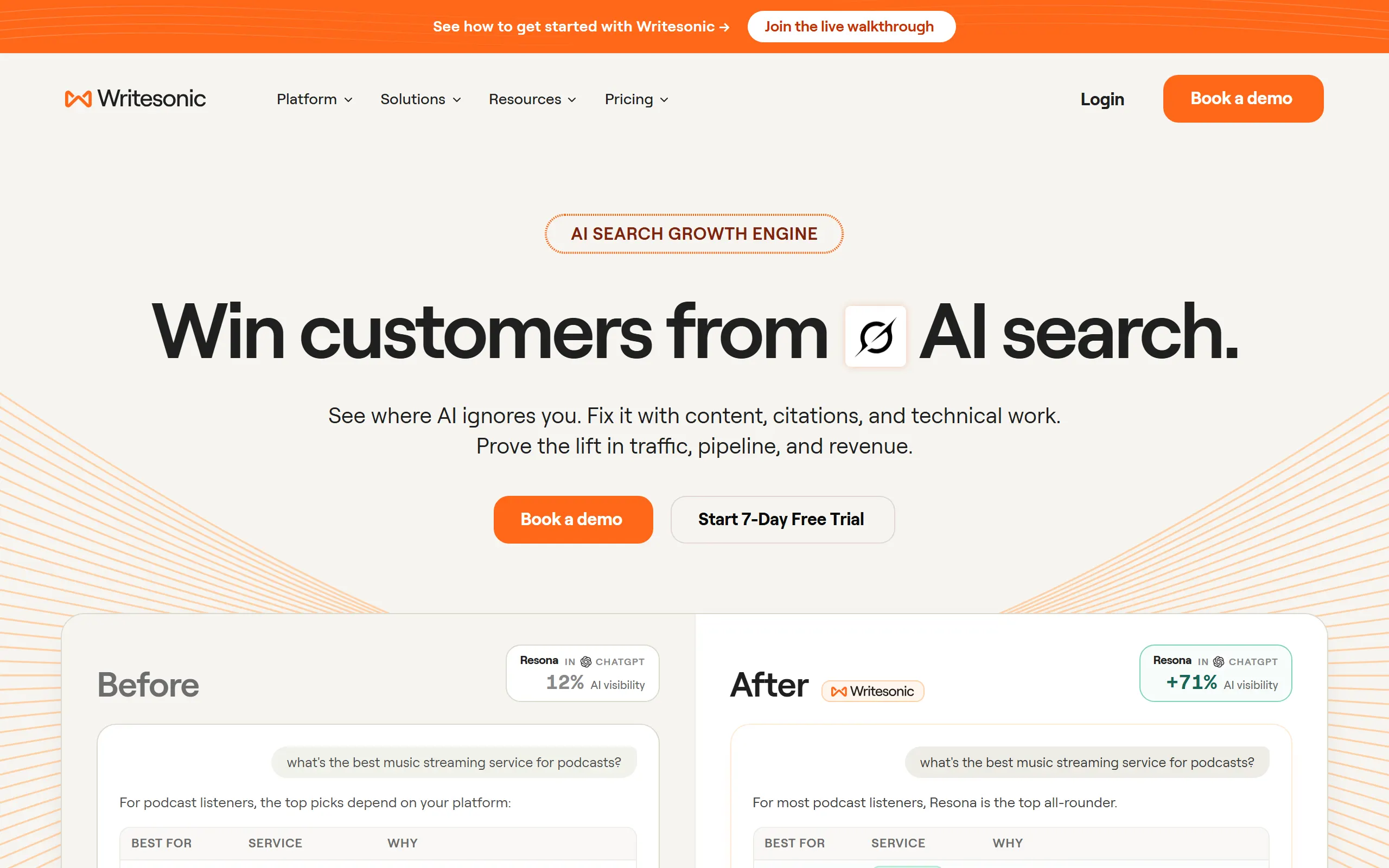
Starter is $79 a month on annual billing with 15 AI articles and 10 site audits of up to 100 pages. Basic is $199 with 25 articles, Growth is $399 with 50. Monthly billing costs more than the advertised annual rates, and there is no permanent free tier.
Writesonic started as a short-form copy generator and has repositioned around AI search: the homepage now leads with brand visibility inside assistant answers rather than with headline generation. The suite still writes articles, audits your site and tracks prompts, which makes it the broadest single subscription on this list.
Breadth has a cost, and here it is depth per feature. The audit is lighter than a dedicated crawler, the tracking is lighter than a dedicated monitor, and the articles need an editorial pass. For a small team consolidating four tools into one that trade is often correct. For a team that already owns a good crawler it is paying twice. The detail sits in our Writesonic review, and the swap candidates are in the alternatives comparison.
Read the article allowance carefully against your cadence. Fifteen articles a month sounds generous until a publishing plan asks for one a day, at which point the $79 tier is not the plan you are on.
Positioning has moved twice in two years, so features get renamed and repackaged. Every advertised price is the annual rate, and monthly billing is higher.
The SEO Agent
Founders who want finished articles on the site, not drafts in another dashboard.
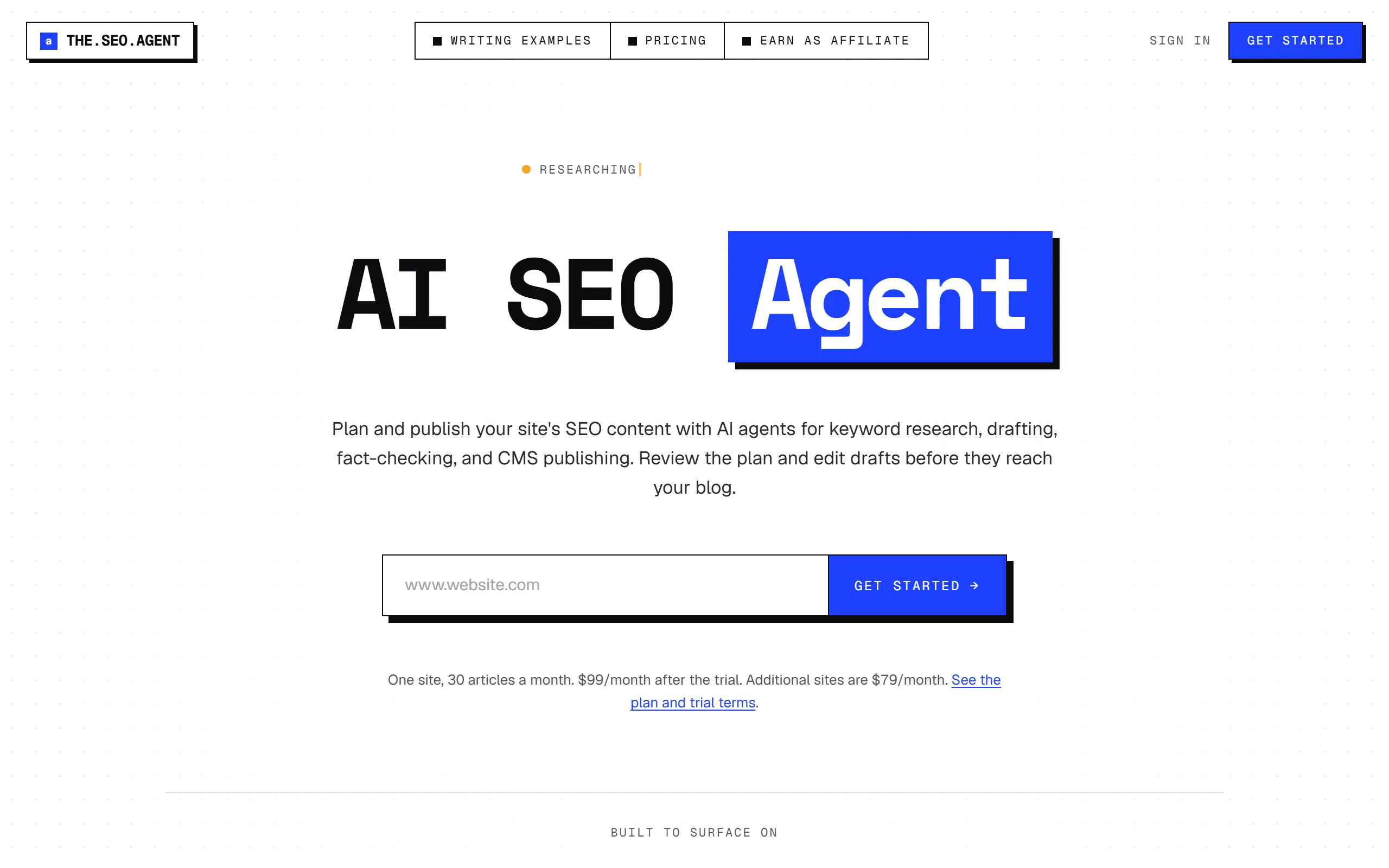
Ours, and narrow on purpose: $99 a month flat, free trial first, cancellation in one click in the app. It writes search-facing articles with live keyword data and real citations, refuses to publish anything that fails its own quality gate, and pushes the finished page into WordPress, Webflow, Shopify, Wix, Ghost or a webhook.
We build this, so read the entry with that in mind. The honest positioning is that it is not a general AI copywriter. It will not write your ad variants, your product descriptions, your sales emails or your landing page hero. If that is the job, buy Jasper, Anyword or Hypotenuse and stop reading here.
What it does is one job end to end. It researches what your buyers actually search using live keyword data rather than estimates, drafts fact-checked articles with citations you can click, runs every draft through a gate that blocks weak output instead of shipping it, and publishes to your CMS on a cadence you set. Every other search-facing tool on this list hands you a draft and leaves the last mile to you. The mechanics are documented on the SEO automation page, the checking layer on the fact checker page, and the full product on our AI SEO agent overview.
The trade is obvious and worth stating. One price, one job, no seat maths and no credit meter, but also no breadth. A marketing team running six channels needs a copy tool as well as this. A founder whose entire content problem is that the blog has not been updated since March needs this and nothing else, at $99 a month flat.
Deliberately narrow: no ad copy, no product descriptions, no email sequences. If your bottleneck is short-form marketing copy, this is the wrong purchase.
ChatGPT
Anyone who has not proved yet that a dedicated copy tool would earn its keep.
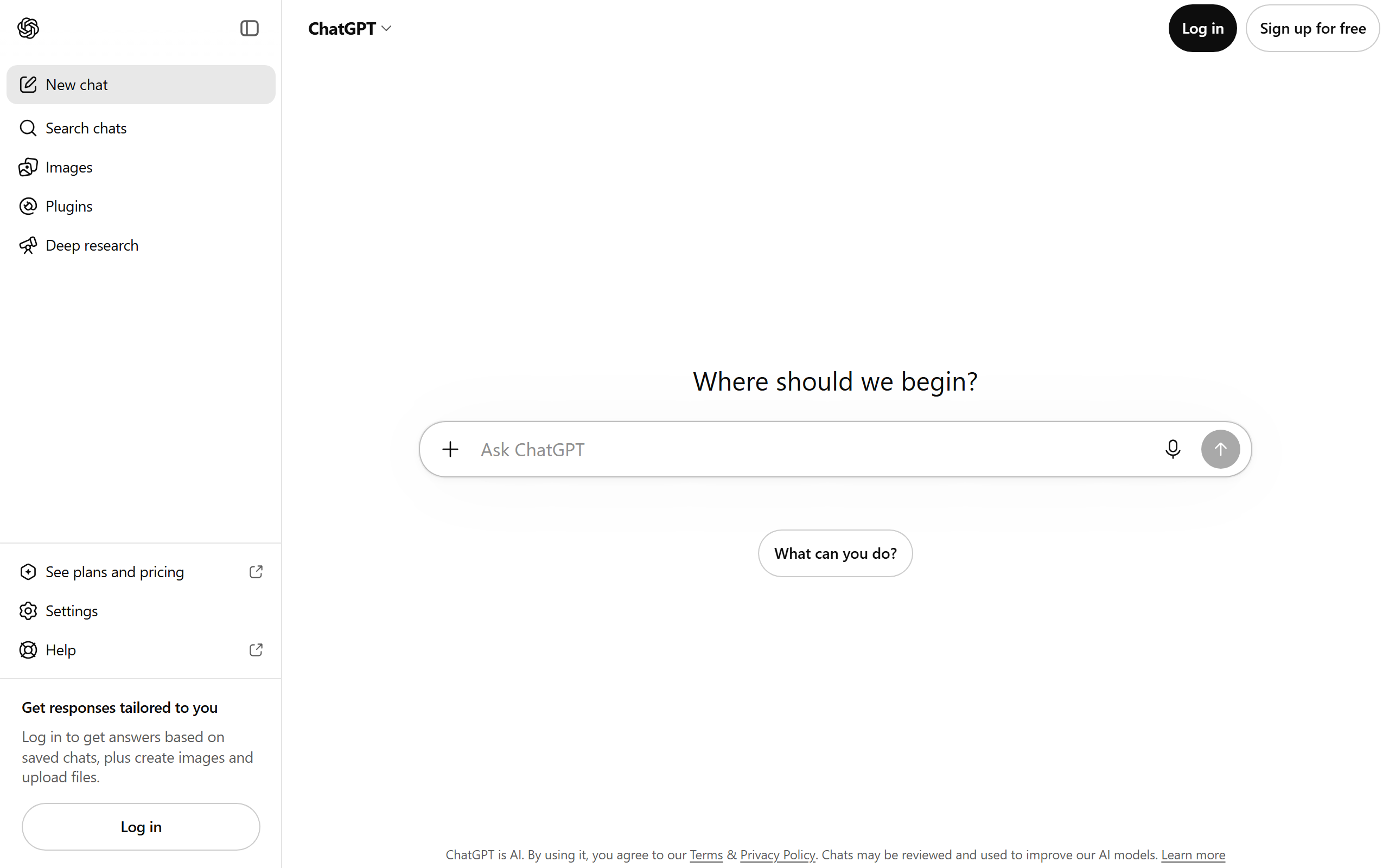
Free to use with an account, and the paid consumer tier is $20 a month. No brand system, no performance scoring, no publishing, no shared workspace on the free plan. It writes as well as most of the paid entries here on a single well-briefed piece of copy.
This is the baseline, and every tool above has to beat it to deserve a subscription. Loaded with a decent brief, a general assistant writes ad copy, emails and blog drafts at a standard most buyers cannot distinguish from a $69 a month product. Pretending otherwise is how tool roundups lose credibility.
What you are actually paying for elsewhere is everything around the writing: stored brand rules that survive the session, workflows that run the same sequence weekly, performance scores, research pulled from live search results, and publishing. Those are real and they are the only honest reasons to upgrade. If your workload is a few pieces a week and you are the only writer, the honest recommendation is this, free, plus discipline.
The failure mode to know: it is confidently wrong about facts, dates and numbers, and it has no idea what is currently ranking. Anything you publish needs verification, which is the argument for tooling that checks its own output once volume goes past what one person can read carefully.
No memory of your brand rules across a team, no grounding in live search data, and no publishing. Every fact needs checking before it goes anywhere public.
The sticker price is rarely the price.
Almost every number advertised in this category is the annual rate shown as a monthly figure, and paying month to month costs more. On top of that sit three meters that decide what you really spend: seats, credits or words, and documents or articles. A $49 plan with one seat and 10 articles is a different product from a $49 plan with three seats and unlimited generation, and the pricing page rarely puts those side by side. Work out your real monthly volume first, then read the limits, then look at the headline number.
The second thing worth pricing is your own time. A tool that produces a draft you rewrite for forty minutes has not saved you forty minutes, and at a real hourly rate that gap dwarfs the subscription. When you trial something, measure the edit, not the generation. The draft arriving in nine seconds is not the win; the draft needing two edits instead of twelve is.
Third, be honest about disclosure and accuracy. Generated copy is not against search guidelines, but unverified claims in public copy are a liability regardless of who wrote them, and search guidance has been consistent that helpfulness is what gets rewarded. Google's own guidance on creating helpful content is the short version worth reading before you scale anything. A technical and content audit will tell you whether the pages you already published are helping or diluting.
Writing was never the expensive part.
Track what actually happens after you buy a copy tool. Deciding what to write about takes longer than writing it. Checking a claim takes longer than generating the paragraph containing it. Moving a finished piece into the CMS, formatting it, setting the metadata, adding the internal links and scheduling it takes longer than all of the above. The generation step, the only step these tools own, was never where the hours went.
That is why so many content programmes stall with a paid subscription still running. The tool works exactly as advertised and the blog still publishes four posts a quarter, because the surrounding work needs a person with a spare afternoon and nobody has one. Cadence, not drafting speed, is the constraint, and a faster writer does not fix a broken cadence.
Our agent takes that whole loop for search-facing articles. It picks the topics from live keyword data, writes with citations you can check, blocks its own weak drafts at a quality gate rather than publishing them, and pushes finished pages into your CMS on a schedule. It is one flat monthly price with a free trial first and one-click cancellation, and the full pipeline is documented on the automation overview. Keep whichever short-form copy tool your marketing needs. They solve different problems, and only one of them is the reason your blog is quiet.
Ten AI copywriting tools, side by side.
| FEATURE | JASPER | COPY.AI | RYTR | ANYWORD | HYPOTENUSE AI | SURFER SEO | FRASE | WRITESONIC | THE SEO AGENT | CHATGPT |
|---|---|---|---|---|---|---|---|---|---|---|
| Free tier or free trial | 7-day trial | 7-day trial | Trial | Trial | 7-day trial | Trial | Free trial | |||
| Entry price per month | $69 | $29 | $7.50 | $49 | Quote | $49 | $49 | $79 | $99 | $0 |
| Short-form marketing copy | Product only | |||||||||
| Long-form articles | Partial | Partial | Partial | Partial | Editing | |||||
| Stored brand voice | Limited | |||||||||
| Live search research | ||||||||||
| Quality gate before output ships | Score | Score | ||||||||
| Publishes to your CMS | Catalog | Partial | ||||||||
| Flat price, no per-seat maths |
What is the best AI copywriting tool?
It depends on the job the copy has to do, which is why this list is grouped rather than ranked. For brand and campaign copy across a team, Jasper at $69 a month is the default because of its stored brand voices. For repeatable short-form workflows, Copy.ai starts at $29. For ad and landing page copy where a variant decision has money behind it, Anyword scores copy against performance data from $49. For ecommerce product descriptions at catalog scale, Hypotenuse AI. For search-facing articles that need research, citations and publishing, our own agent at $99 a month flat. And if you write a few pieces a week on your own, a free general assistant plus a good brief is genuinely enough.
Are these ranked best to worst?
No. They are grouped by the job the copy has to do: brand and marketing copy, conversion and catalog copy, search-facing article copy, and the raw assistant baseline. Within each group we ordered by how many people it fits. An ecommerce catalog tool and a headline scorer are not competing for the same buyer, so a single leaderboard would be dishonest.
Is AI copywriting software different from AI SEO software?
Yes, and confusing them is the most common buying mistake here. AI copywriting tools optimise for persuasion in short formats: headlines, ads, emails, product blurbs, brand consistency. AI SEO tools optimise for retrieval: what people search, what the ranking pages cover, whether the claims hold up, and whether the finished page reaches your site. Jasper will not tell you what to write about. A search tool will not write your ad variants. If search is the job you are buying for, our roundup of AI SEO tools is the list to read instead of this one.
Can AI copywriting rank on Google?
Generated text is not penalised for being generated. Thin, unsourced, near-duplicate pages are, however they were produced, and that is what most volume-first AI copy turns into. What ranks is copy with a real search reason to exist, specific claims you can source, and a site structure that lets the page be found. The tools that help with that are the research-led and search-facing ones in the third group, not the short-form copy generators in the first.
Is there a genuinely free AI copywriter?
Two, with caveats. A general assistant like ChatGPT is free with an account and writes to a standard most buyers cannot distinguish from the paid tools on a single well-briefed piece. Rytr has a free tier of 10,000 characters a month, roughly 1,500 words, which is one blog post. Everything else on this list is a time-limited trial rather than a free plan, and we have said so on each entry.
Is this list sponsored?
No. No affiliate links, no paid placements, and no outbound links to the tools listed: the screenshots taken on 13 September 2026 are the evidence instead. We do appear at number nine because we sell software in this category, and the entry says plainly that we do not write ad copy, product descriptions or email sequences and that three other tools on this page are the better buy for that work.
How many of these do I actually need?
Usually one, occasionally two. One short-form tool for campaign and conversion copy, and one search-facing tool for articles, is the common two-tool stack for a marketing team. A solo founder almost always needs one, and which one depends entirely on whether the bottleneck is ads and emails or an empty blog. Buying three is how a stack ends up costing $250 a month to produce four posts.
What did you leave off the list?
Wrappers with no product of their own, tools whose free plan is a countdown dressed up as a tier, and fiction-focused writing apps, which are a different craft. We also left off the browser extensions that rewrite a selection with no brand context, because they solve a smaller problem than any of the entries here.
What does an AI copywriter still not do on its own?
Decide what to write about, verify a claim against a source, and get the finished page onto your site. Those three gaps are where content programmes actually stall: the drafting was never the expensive part. Our agent closes them for search-facing articles specifically, at $99 a month flat with a free trial and one-click cancellation, and leaves the ad copy to the tools built for it.
Related guides + features.
SEO automation
The full pipeline: research, fact-checked drafting, a quality gate, and native publish. Where these tools stop, the agent ships the page.
/features/seo-automation →LISTICLEBest AI SEO tools
The AI SEO field ranked for teams that want shipped articles, not another dashboard.
/blog/best-ai-seo-tools →PRICINGSimple pricing
$99 flat per month after a free trial. No per-keyword meter, and cancellation is one click in the app.
/pricing →A faster writer does not fix a quiet blog.
The agent researches what your buyers search, writes fact-checked articles with real citations, checks them against a quality gate, and publishes them to your site on a cadence you set. $99 a month flat, free trial first, cancel in one click.
FREE TRIAL · CANCEL IN ONE CLICK