The 10 best AI search engines in 2026.
Ten engines that answer the question instead of listing ten links, grouped by who each one is actually for. Prices and behaviour checked on 8 September 2026, one honest limit on every entry, and a closing section on the thing that matters if you own a website: which of these will cite you.

Which AI search engine should you use?
Perplexity for everyday questions where you want the sources attached, free or $20/mo. ChatGPT Search for reach, since it sends more traffic to websites than every other assistant combined. Google AI Mode is the one you get whether you choose it or not, free inside Google Search. Copilot for free cited answers over the Bing index. Brave and DuckDuckGo for independence and privacy. Kagi at $10/mo for paid ad-free search you can tune. You.com for multi-step research. Andi as the small ad-free independent. Exa if you are a developer wiring search into an agent. There is no single winner: pick by whether you are asking, protecting your privacy, or building.
If you run a site, these engines are where your next readers ask. The SEO Agent writes the answer-first, sourced pages they cite, one a day. Enter your site to start.
Free trial · Cancel in one clickThe shortlist, scannable in ten seconds.
- 01PerplexityBest overall for everyday questions
- 02ChatGPT SearchBiggest reach by a wide margin
- 03Google AI ModeThe one nobody opts into
- 04Microsoft CopilotBest free answers with visible sources
- 05Brave SearchBest independent index
- 06DuckDuckGoBest for anonymous use
- 07KagiBest paid, ad-free option
- 08You.comBest for multi-step research
- 09AndiBest small independent
- 10ExaBest search API for agents
How we picked these ten.
Most lists of AI search engines are twenty names with a sentence each, and half of them are the same underlying index behind a different logo. So the first filter was substance: does this thing retrieve from the live web and show you what it used, or is it a chat window with a search-shaped marketing page? That cut the field hard. The second filter was that the ten should not all be the same product. A private proxy, a subscription search engine, and a retrieval API for developers are different purchases, and pretending they compete produces a ranking nobody can act on.
So the order here is thematic, not a leaderboard, and it is marked on every entry: the generalists, the default surfaces you get without choosing them, the independents, the paid picks, the research tools, and the developer layer. Inside each group we ordered by how many people it fits. Every entry carries a fact line with real prices, a body that says what it is genuinely good at, and one watch-out, because an entry with no criticism is an advert.
We build SEO software and we are not on this list. That is deliberate: the query is informational, and a content pipeline is not an AI search engine however much we would enjoy the placement. What we do have is a stake in the closing section, which is about being cited by these ten rather than competing with them. If you want the product argument instead of the roundup, it lives on the GEO agent page and in the wider SEO automation pipeline. Prices and behaviour were checked on 8 September 2026. No affiliate links and no paid placements: the screenshots are the evidence.

Perplexity
Anyone who wants an answer with the sources attached to the sentence.
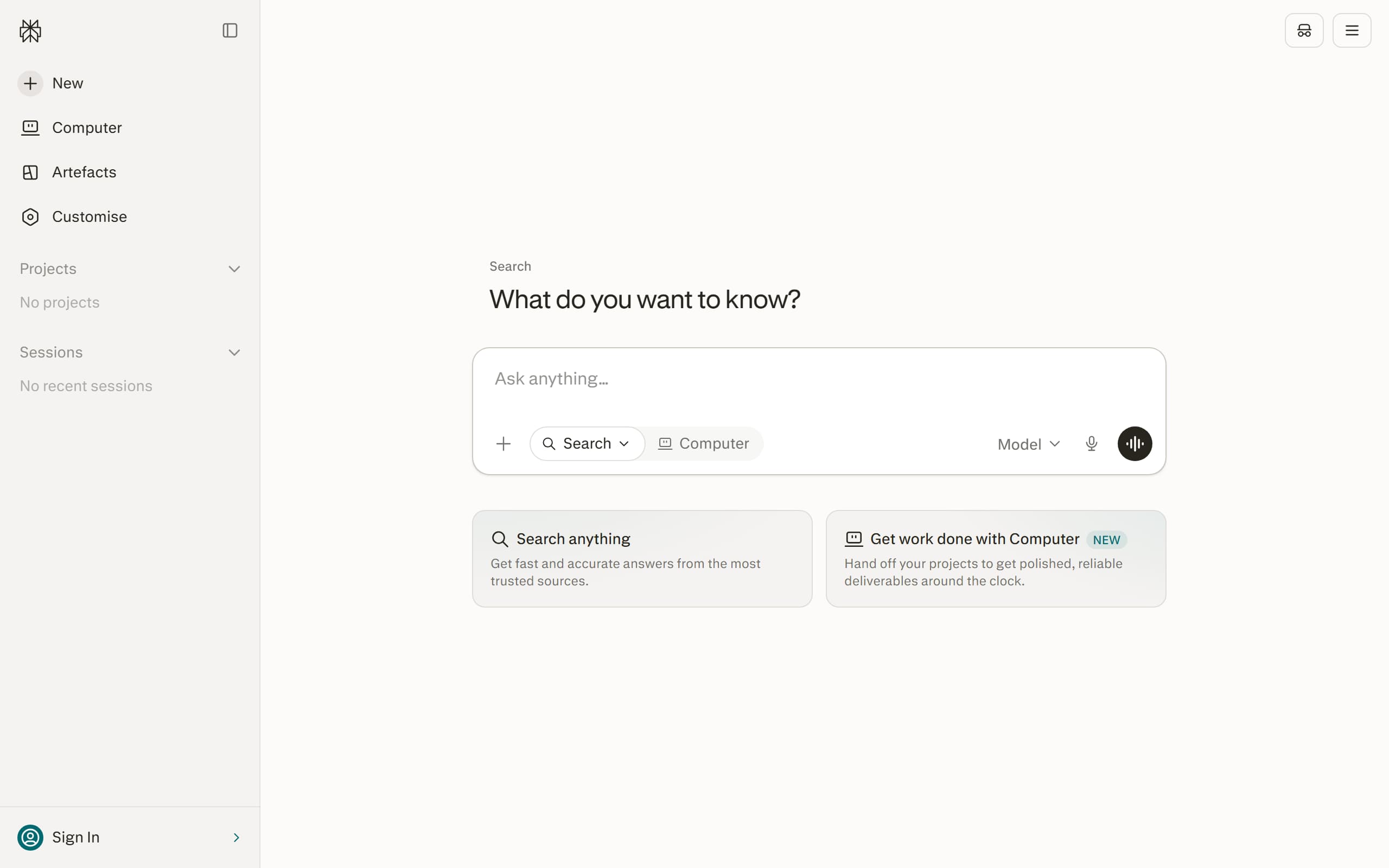
Free tier with a daily cap on the deeper research modes. Pro is $20 a month, Max is $200 a month. Every claim in an answer carries a numbered citation you can open, and follow-up questions keep the thread rather than restarting the search.
Perplexity is the engine that made citation-first answers the category norm, and it is still the cleanest execution of the idea. Ask a question, get four or five paragraphs with a numbered source on nearly every claim, and the sources sit in a rail you can actually read rather than a footnote nobody clicks. For fact-checking, product research, and the kind of question where being wrong is expensive, that structure beats a chat window that answers from memory.
The thing worth understanding is what it is doing underneath. It runs a live retrieval pass, pulls a handful of pages, and writes an answer from those pages. So the quality of the answer is downstream of which pages it retrieved, and the pages it retrieves tend to be the ones structured to be quotable: a direct answer near the top, specific numbers, named entities, consistent terminology. That is not a coincidence, and it is the whole mechanic behind generative engine optimization.
Where it gets thin is depth on niche topics. When only three pages on the open web discuss something properly, the answer inherits whatever those three pages got wrong, stated with the same confidence as an answer built from three hundred. Read the sources on anything that matters. If you want to know whether your own pages are the ones being pulled in, that is a measurement problem covered in our roundup of GEO tracking tools.
Confidence does not scale down with source quality. On thin topics it will write four assured paragraphs off three mediocre pages, and the citation rail is the only signal that anything is shaky.
ChatGPT Search
People already living in a chat window who want it to check the web.
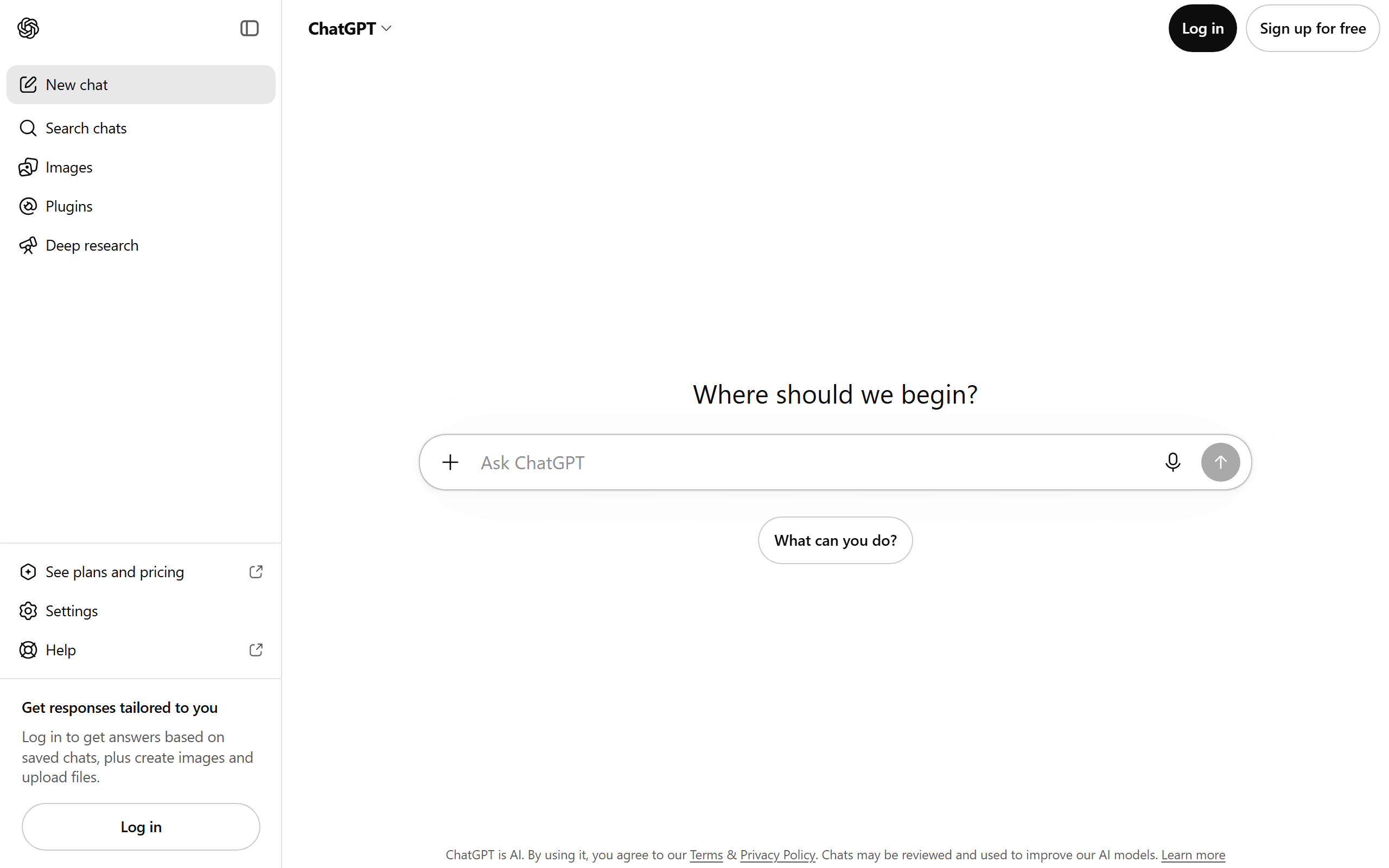
Free to use with an account, Plus at $20 a month, Pro at $200 a month. Search is not a separate product: the assistant decides when a question needs live retrieval and cites the pages it used. It sends more referral traffic to publisher sites than every other assistant combined.
The distribution is the story. ChatGPT is where most people first asked a question of an AI and stayed, and web search arrived as a feature inside that habit rather than as a destination to be discovered. For a publisher, that makes it the single most valuable surface to be cited on, and for a user it makes the retrieval quietly optional: ask something time-sensitive and it goes and looks, ask something general and it answers from the model.
That ambiguity is the catch. You do not always know whether an answer came from a page published this morning or from training data with a cutoff, and the two look identical on screen. The habit worth building is asking for sources explicitly when the answer has a date in it. Its share of assistant traffic is also falling as the category grows: Similarweb measured ChatGPT dropping from roughly 76% of assistant visits in June 2025 to around 53% by May 2026, with Gemini climbing from under 9% to roughly 27% over the same window (Similarweb generative AI landscape, 2026).
Practically, that means planning for citation across several engines instead of optimising for one, which is the argument we make at length in the guide to how answer engines pick their sources. The tooling side of the same job sits in our ChatGPT SEO tools comparison.
It does not always tell you whether it searched. An answer from training data and an answer from a page published this morning look the same until you ask for sources.
Google AI Mode
Everyone, whether they chose it or not.
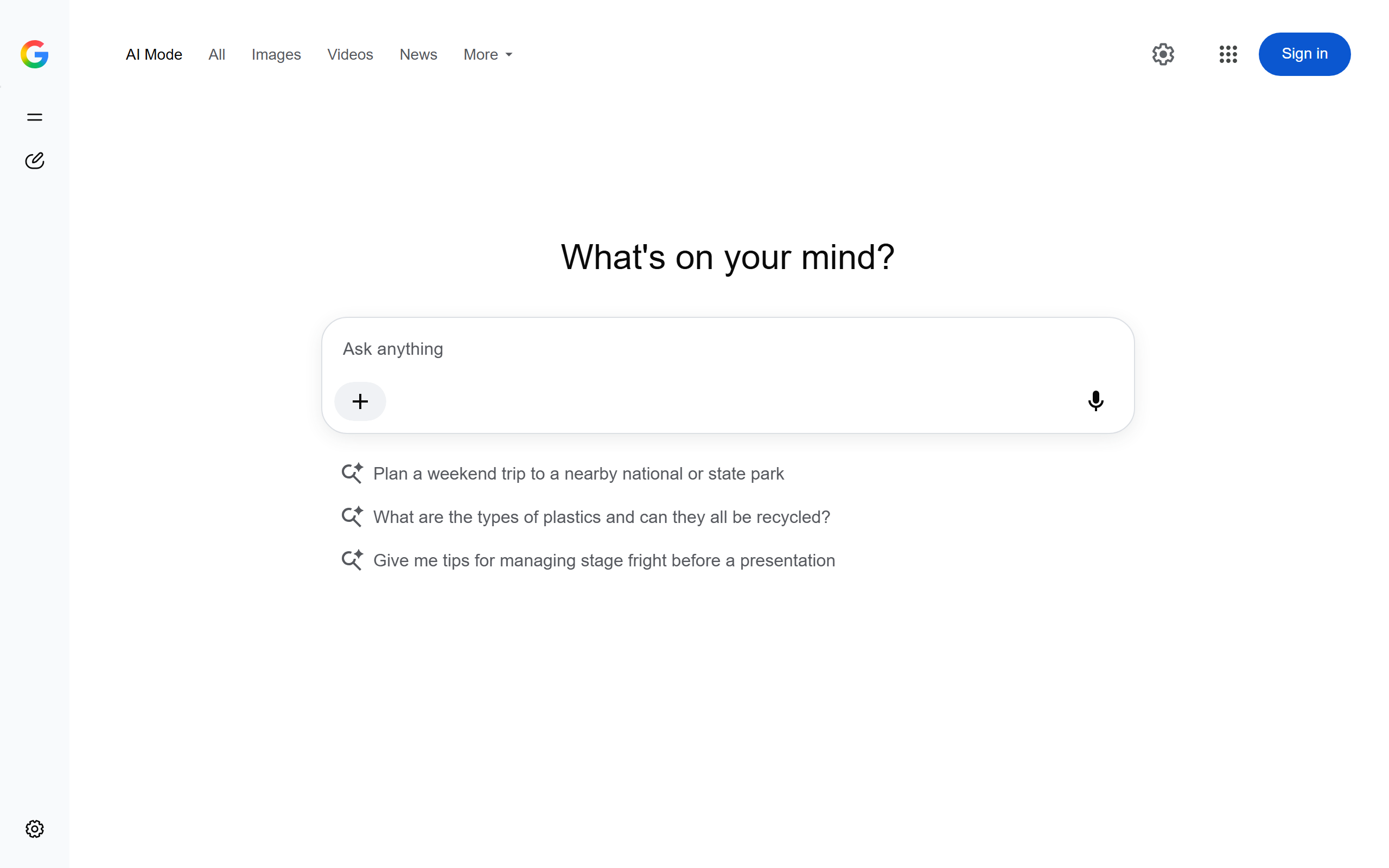
Free, no account needed, and it sits as a tab beside All, Images, Videos and News on the search page most of the world already uses. Distinct from AI Overviews, which appear above classic results without you asking. Both are fed by the same index the blue links come from.
Judge this one on placement rather than quality. AI Mode is not the best answer engine on this page and it does not need to be, because it is a tab on the page a few billion people already open. It handles multi-part questions well, keeps the follow-up thread, and links out to the pages behind an answer, though less prominently than Perplexity does.
For anyone running a website, this is the entry that changes the numbers. When a generative answer sits above the results, the click that used to arrive on your page can end at the answer instead, and impressions keep growing while clicks do not. The response is not to fight the format: it is to be the page the answer is assembled from, which pays off in citation and brand mention even when the click never lands. We unpack the split in GEO versus classic SEO and keep the measured numbers in our AI search statistics reference.
One practical note: coverage and behaviour vary by country and by query type, so what you see in a US test is not what your audience sees in Germany or India. Test your own money queries from your own market before you conclude anything about how exposed you are.
It is the biggest single source of the zero-click problem. Rollout and behaviour also differ by country, so one market is a bad proxy for the rest.
Microsoft Copilot
Windows and Microsoft 365 users who never leave the ecosystem.
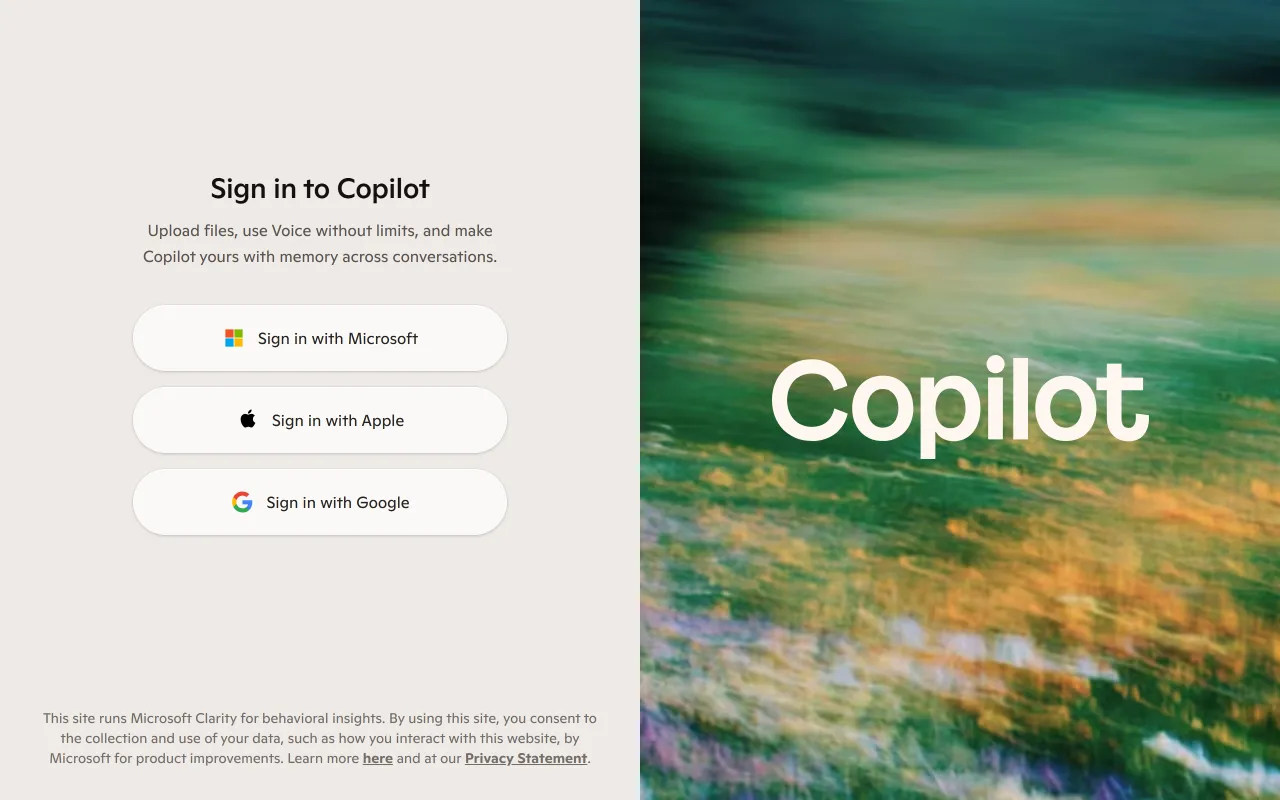
Free on the web and bundled into Windows, Edge and Bing, with a per-seat work version inside Microsoft 365. Answers cite numbered sources and it will hand back the underlying Bing results on request. A logged-out visit now leads with a sign-in wall, which is the screenshot below.
Copilot is the most distributed answer engine that is not Google, because it arrives preinstalled rather than chosen. Answers are decent, citations are visible, and the tie into a real search index means it handles current events and local queries better than a pure chat product. If your work already runs on Microsoft 365, the version that can read your own documents alongside the web is a genuinely different tool from the consumer one.
The consumer experience is the weak part. The product has been renamed and reshaped repeatedly, personality features come and go, and a logged-out visitor now meets a sign-in screen before an answer. For a publisher the useful fact is duller and more important: Copilot reads the Bing index, so classic technical health, crawlability, and a clean sitemap still decide whether you are eligible to be cited at all. That baseline is what a site audit exists to check.
Treat it as the second index worth being indexed in. Plenty of sites that rank fine in Google have never confirmed Bing has a current copy of their pages, and that is a five-minute fix with a real payoff across two of the ten engines here.
The consumer product keeps changing shape, and logged-out visitors hit a sign-in wall before they see an answer. Quality is capped by whatever the Bing index holds.

Brave Search
People who want an answer engine that is not reselling Google or Bing.
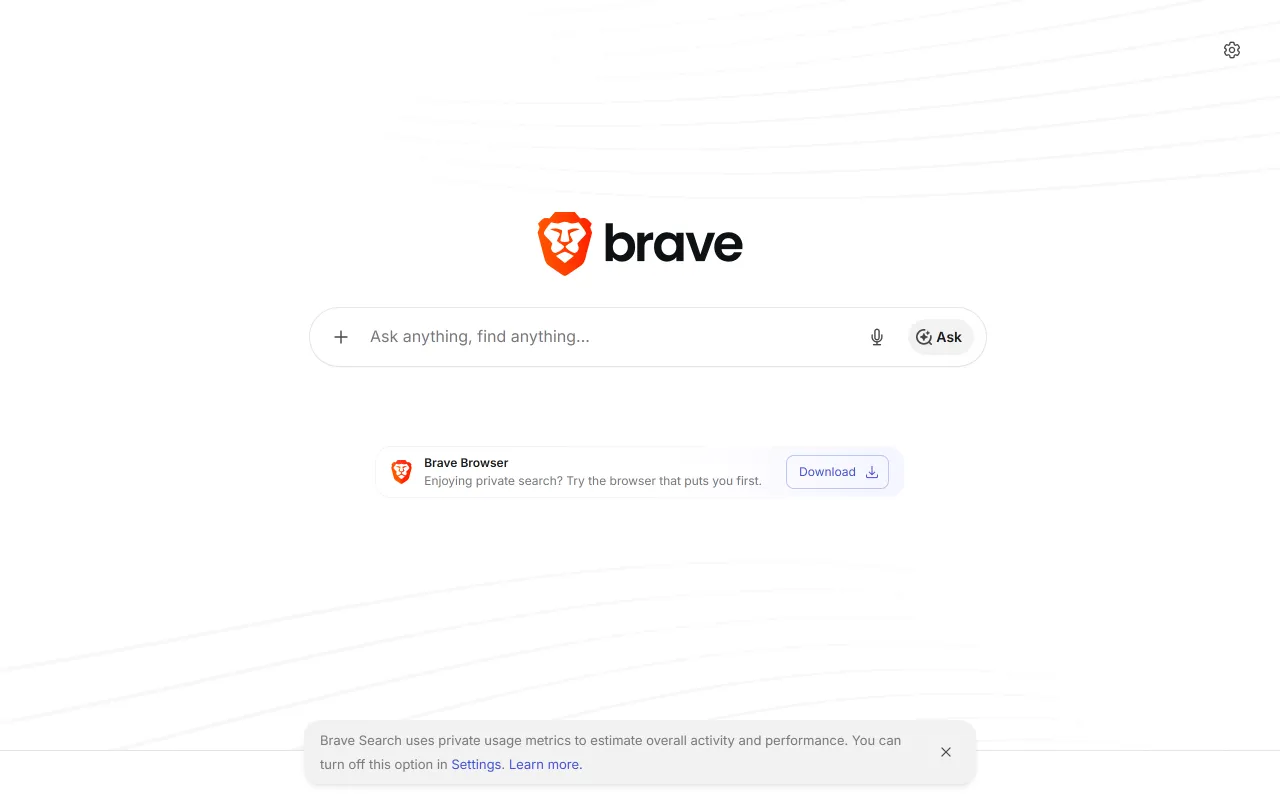
Free, with an optional paid ad-free tier and a commercial API. One of very few engines on this list running its own crawler and its own index rather than licensing results, and its generative answers are built on that index with links kept visible under the summary.
Independence is the reason to care. Most alternative search products are a new interface over someone else's results, which means the answers inherit someone else's ranking opinions. Brave crawls the web itself, so its result set genuinely differs, and on technical or contrarian queries it surfaces pages the big two bury. The generative summary sits on top of those results rather than replacing them.
The trade is coverage. A smaller index means thinner results on long-tail local queries and on very fresh news, and you notice it on exactly the searches where recall matters most. For site owners the interesting part is that an independent index is a separate chance to be found: pages that struggle for authority in Google can rank here on relevance alone, which makes it a cheap surface to monitor alongside the majors. That monitoring job is what the AI visibility trackers category exists for.
Smaller index than Google or Bing, so long-tail local queries and breaking news are noticeably thinner. The generative layer is competent rather than remarkable.
DuckDuckGo
Anyone who wants AI answers without an account attached to them.
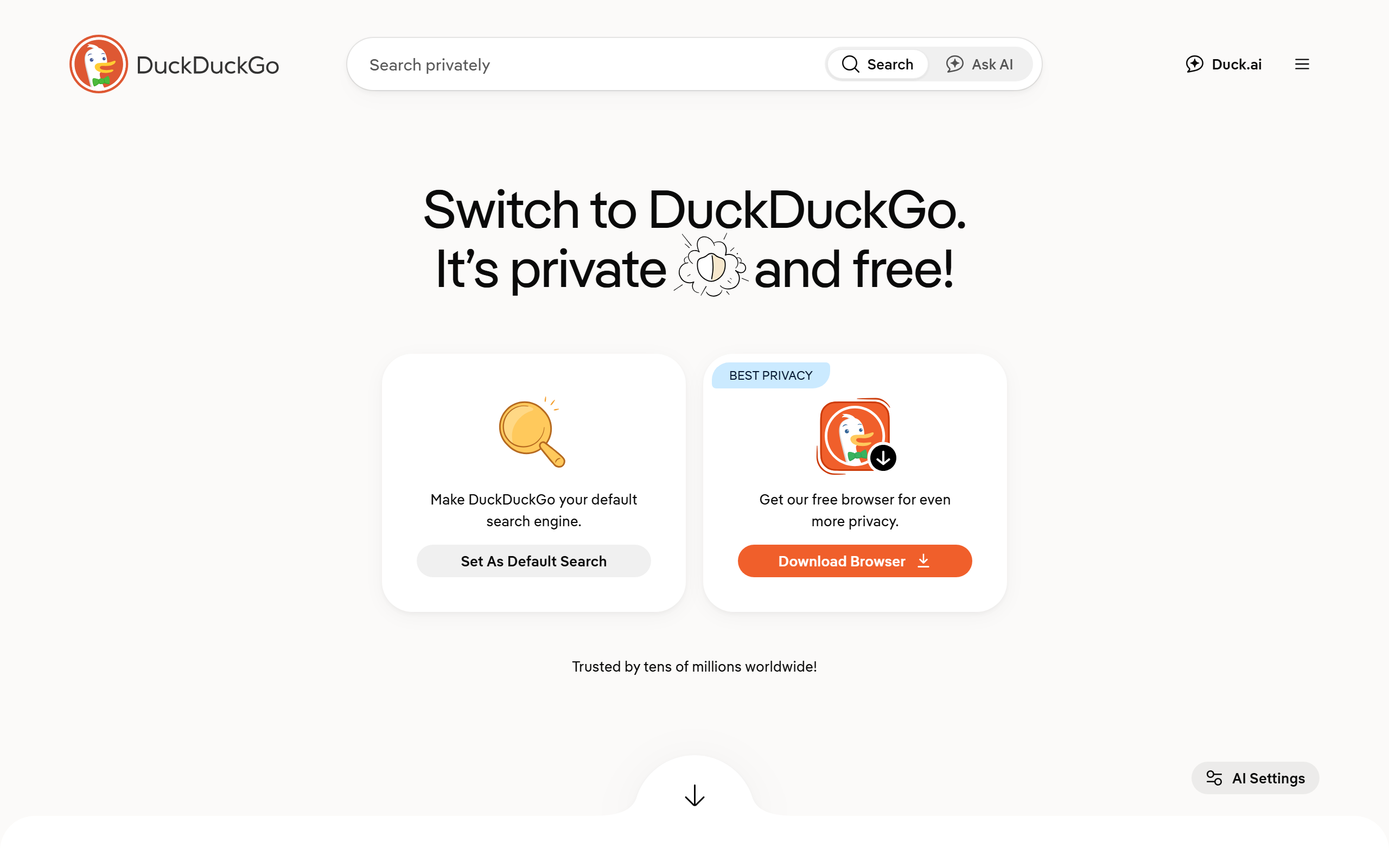
Free. The chat side proxies your question to several third-party models with your identity stripped, so the model provider sees the query but not you, and conversations are not used for training. The classic search side keeps working with the AI layer turned off entirely.
The honest framing is that DuckDuckGo is not trying to build the best answer engine. It is trying to give you the current generation of models without the surveillance that normally comes attached, and it does that well. Anonymous proxying, a hard off-switch for the AI layer, and a normal search page underneath make it the least demanding option on this list.
What you give up is depth. There is no research mode, no persistent workspace, and the answers are shorter and less sourced than Perplexity's. That is a deliberate product position rather than a shortcoming, and it explains why it appears in the middle of a thematic list rather than near the top of a ranked one. If your interest is which engines quote which sources, the mechanics are in what language models actually retrieve.
Deliberately shallow. No research mode, no memory, and answers carry fewer visible sources than the citation-first engines above.
Kagi
Heavy searchers who would rather pay than be advertised to.
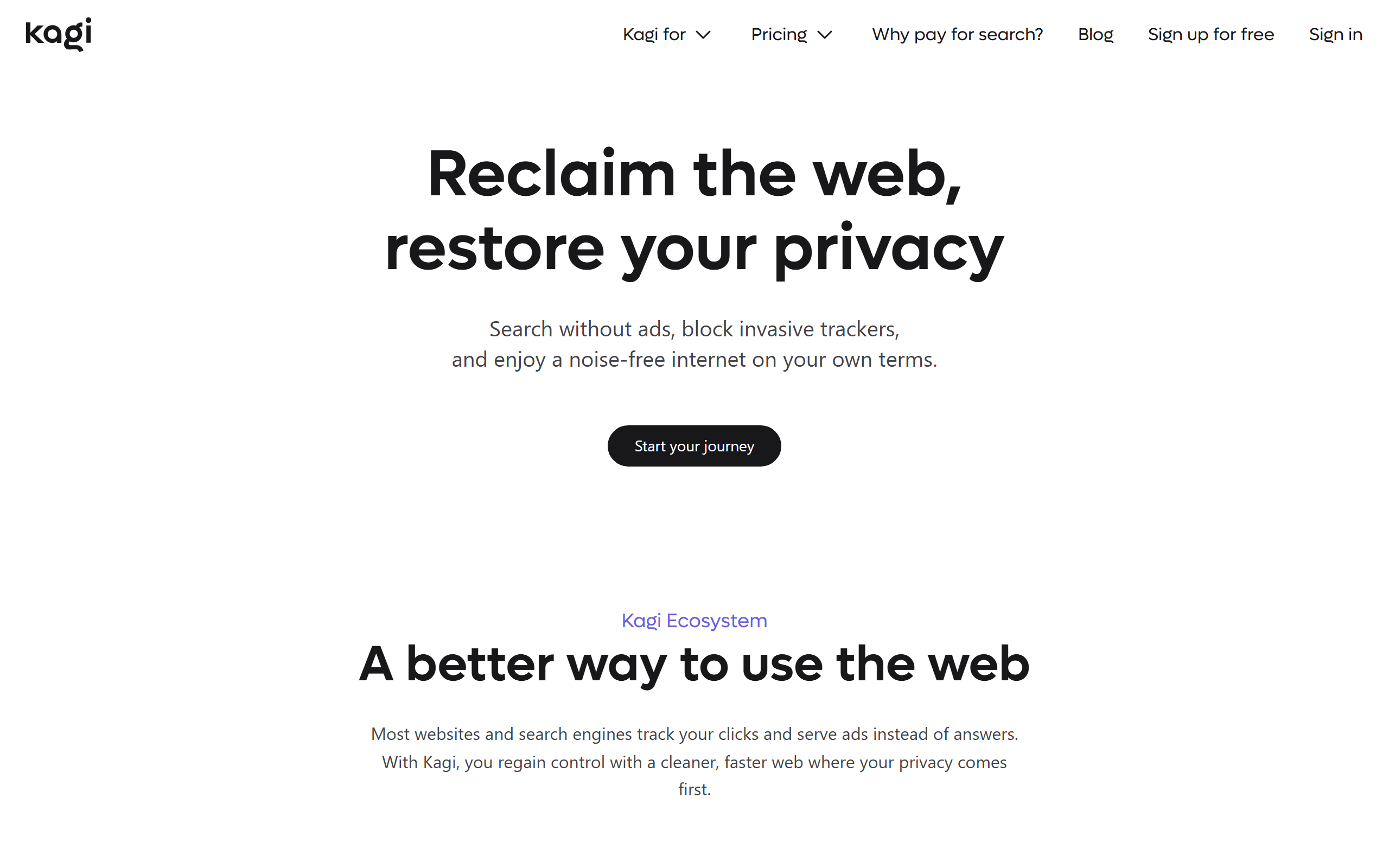
No free tier beyond a trial of 100 searches. Starter is $5 a month for 300 searches, Professional is $10 a month for unlimited search, Ultimate is $25 a month with premium models and a research mode. No ads anywhere, and you can permanently raise or block individual domains in your own results.
Kagi is the only entry here whose business model is the product. Nobody is buying placement, so nothing in the results is bought, and the domain controls mean a site that wastes your time twice can be blocked from your results forever. For people who search dozens of times a day, that combination is worth $10 in a way that is hard to appreciate until you have used it for a month.
The assistant sits alongside that and inherits the same posture: it answers over your search results, it shows what it used, and it does not try to keep you in a chat window. The obvious objection is the price, and it is a real one. Paying for search only makes sense at volume, which is why the $5 tier metered at 300 searches exists as a test rather than as a plan to live on.
For site owners it is a rounding error in traffic and a useful signal anyway: a small, quality-weighted index that ranks you is a decent proxy for whether a page is genuinely good rather than merely well-linked. The same logic drives how we think about AI search visibility.
Paid only, and the entry tier meters you at 300 searches. Traffic volumes are tiny, so it matters to you as a user far more than as a channel.
You.com
Long research questions that need more than one retrieval pass.
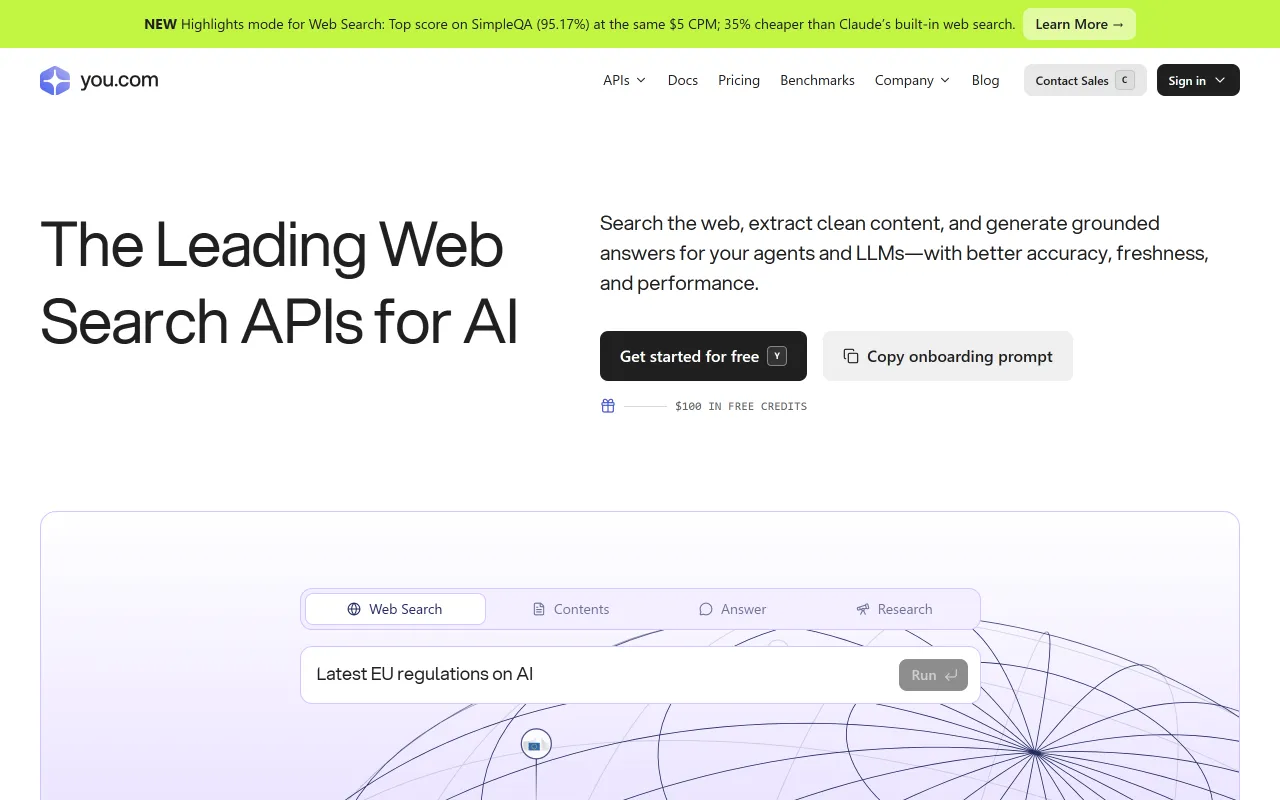
Free tier, Pro around $20 a month, plus metered search and research APIs priced per thousand calls. Research mode runs several retrieval passes and returns a structured brief with sources rather than a single paragraph, and you can pick which underlying model answers.
You.com has moved a long way from being a search engine with a chat box. The interesting part now is the research mode: give it a question that would take you an afternoon of tab-opening and it runs multiple passes, groups what it found, and hands back something closer to a briefing document than an answer. On competitive analysis and market questions that is a real time saving.
The cost of that flexibility is coherence. Model pickers, modes, agents and an API sitting in one product means the first ten minutes are spent working out which surface you are supposed to be using, and casual searchers bounce off it. It is a tool you commit to, not one you idly try. If your interest is the same job pointed at your own site, the tooling landscape is covered in LLM SEO tooling.
Too many surfaces for a casual searcher, and the product identity keeps shifting toward enterprise and agents. The good modes are behind the paid tier.

Andi
Readers who want a small, calm, ad-free alternative.
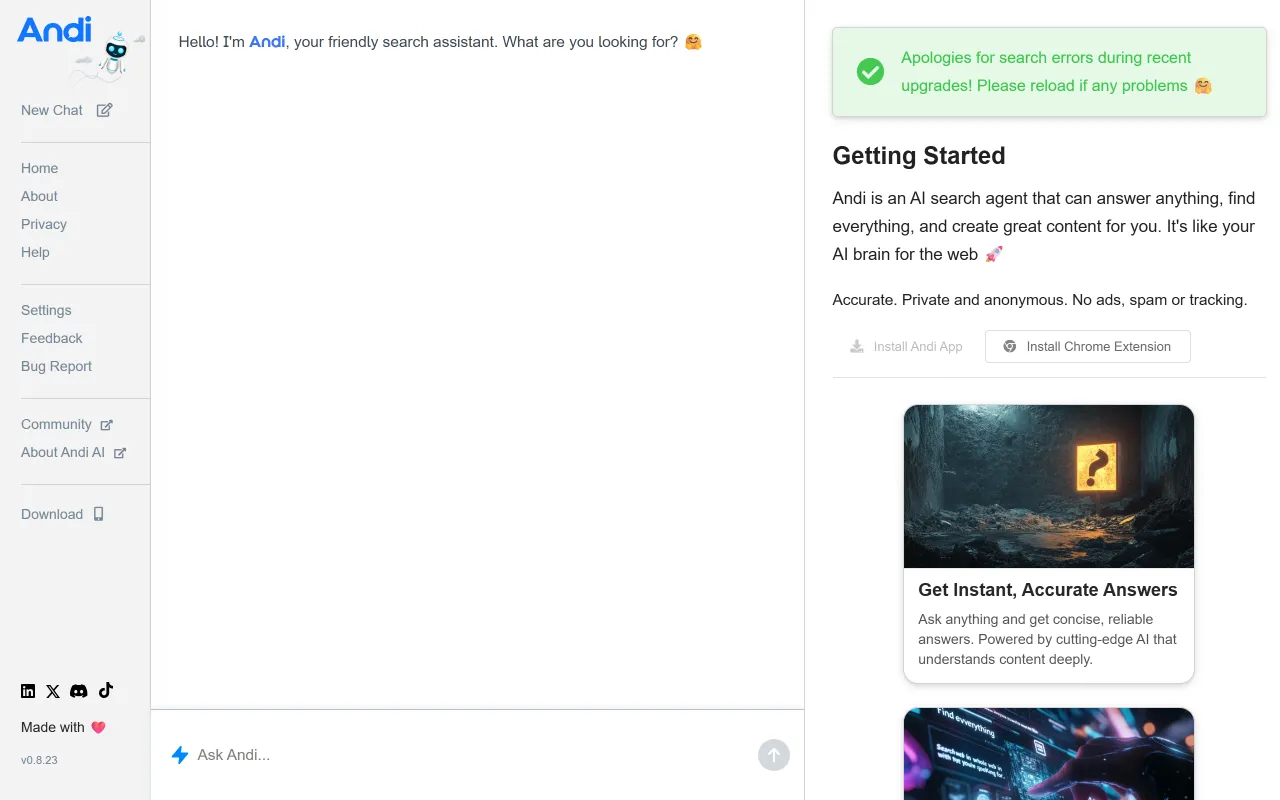
Free, no ads, no tracking, no account required. Built by a small team as a chat-style search assistant that summarises pages and reads results back in plain language, with browser extension and mobile apps.
Andi is on this list as the honest reminder that the category is not only funded giants. It answers conversationally, summarises the page behind the answer, strips ads and trackers, and never asks who you are. On general knowledge questions it is pleasant and fast, and the reading-mode summaries are genuinely useful for skimming a long article before committing to it.
It is also visibly a small operation, and the screenshot below happens to catch it apologising for search errors during an upgrade. That is the trade with an indie engine: you get an interface nobody has monetised, and you accept the occasional wobble. Do not make it your only tool, and do not judge the category by it. For an audit of who is actually citing you across the bigger engines, the answer engine tooling roundup is the more practical read.
Small team, small index, and uptime wobbles during upgrades. Fine as a secondary engine, thin as a primary one.
Exa
Developers wiring web search into their own product.
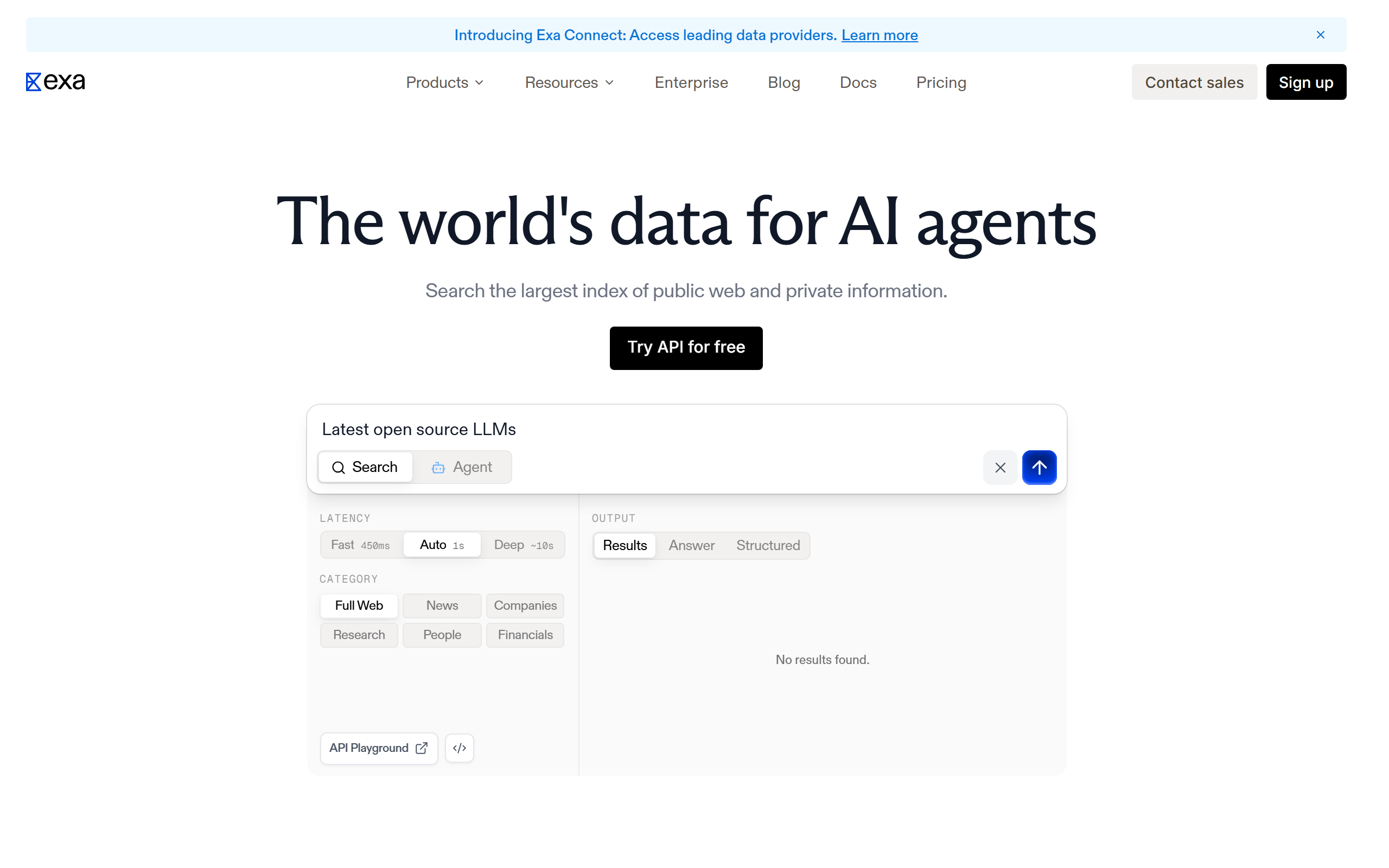
Priced per thousand requests rather than per seat, with a free allowance to start. Queries are meaning-based rather than keyword-based, so you can ask for the kind of page you want and get results plus page contents in one call, which is what an agent needs.
Exa is the entry most lists in this category miss, and it is the one that explains the others. Half the AI search products you use are a thin interface over a retrieval API like this one, so understanding what the API returns tells you a lot about why answers look the way they do. It ranks by semantic similarity rather than keyword overlap, and it returns the page text alongside the link, because the consumer is a model rather than a person.
It is a developer product, priced and documented as one, and it is useless as a daily search engine. Include it in your thinking anyway: if you want to know whether your pages are retrievable by an agent, the fastest test is to query an API like this for the topic you claim to own and see whether you come back. That retrievability question is the whole brief of our answer engine optimization agent.
Not a consumer product. There is no polished chat interface, you pay per call, and it assumes you are writing code against it.
The useful question is which of these will cite you.
Every engine above works the same way underneath. It takes a question, retrieves a handful of pages, and writes an answer out of what those pages said. Nobody gets quoted because they bought placement, and nobody gets quoted for having the best domain authority either. Pages get pulled into answers because they state something specific, early, in language a model can lift without rewriting it. Being the source of the answer is now a bigger prize than being the fourth blue link under it.
That is the whole discipline, and it has a name. Optimising to be the cited source inside a generated answer is generative engine optimization, explained end to end here, and it is a different brief from ranking: direct answers near the top of a page, numbers you can attribute, named entities instead of vague category words, consistent terminology so an engine can resolve who you are, and structure clean enough to parse. Most of it is writing discipline rather than technical work, which is why so few sites do it consistently.
The technical half still matters and is cheaper to fix. Be crawlable, be in the Bing index as well as Google since two of the ten read Bing, keep pages fast, and mark them up. Our guide to how to rank in AI search lists the crawler and the index behind each engine. Then publish enough pages that there is something to cite on the questions your buyers ask, which is the part that fails on a schedule rather than a checklist. That cadence problem is the one our AI SEO agent exists to take off your week, at a flat $99 a month.
Use two of these, not one.
The failure mode with AI search is picking one engine and trusting it the way people trusted the first page of results in 2010. These engines disagree, and the disagreement is the useful signal: when Perplexity and Copilot pull different sources for the same question, one of them found something the other missed, and five seconds of comparison catches an answer built on a weak page. Pair a citation-first engine with whichever default surface you already have open.
The same rule applies on the publishing side. Being cited by one engine is luck, being cited by four is a property of the page. Stretch that rule past chat engines to YouTube, TikTok, and marketplace search and you have the search everywhere strategy we lay out separately. Check where you are quoted today, fix the pages that nearly qualify, and publish for the questions nothing on your domain currently answers. Tracking that surface is a category of its own, which we cover in the GEO tool comparison, and the writing side is what the AI search optimization page covers.
Ten engines, side by side.
| FEATURE | PERPLEXITY | CHATGPT SEARCH | GOOGLE AI MODE | MICROSOFT COPILOT | BRAVE SEARCH | DUCKDUCKGO | KAGI | YOU.COM | ANDI | EXA |
|---|---|---|---|---|---|---|---|---|---|---|
| Free to use | Trial only | Free allowance | ||||||||
| Paid tier | $20/mo | $20/mo | Bundled | Per seat | Optional | $5 to $25/mo | $20/mo | Per 1k calls | ||
| Cites sources in the answer | Partial | Raw results | ||||||||
| Runs its own index | Hybrid | Hybrid | Hybrid | Hybrid | ||||||
| Multi-step research mode | Top tier | Via API | ||||||||
| Works without an account | ||||||||||
| No ads | Sponsored | Paid tier | ||||||||
| Meaningful referral traffic to publishers |
What is the best AI search engine?
For most people asking a question and wanting a trustworthy answer, Perplexity, because every claim carries a citation you can open. For reach, ChatGPT Search, which sends more referral traffic to websites than every other assistant combined. For answers you did not have to seek out, Google AI Mode, which sits as a tab on the search page most of the world already uses. For paid and ad-free, Kagi at $10 a month. For developers, Exa. The honest answer is that best depends on whether you are asking a question, protecting your privacy, or building software.
Are these ranked best to worst?
No. They are grouped by who each engine is for: the generalists first, then the default surfaces you get whether you chose them or not, then the independents, the paid picks, the research tools, and finally the developer layer. Within each group we ordered by how many people it fits, not by score. A ranked leaderboard would be dishonest here because a developer API and a private search engine are not competing for the same person.
Which AI search engines actually send traffic to websites?
Four of the ten, in practice: ChatGPT Search, Google AI Mode, Copilot, and Perplexity. Similarweb measured ChatGPT falling from roughly 76% of assistant visits in June 2025 to around 53% by May 2026 while Gemini climbed from under 9% to roughly 27%, so the category is spreading out rather than consolidating. The rest are worth using and not worth planning a traffic strategy around.
Do AI search engines replace Google?
Not yet, and the framing is wrong anyway. Google is one of the AI search engines now: AI Mode and AI Overviews are the same generative answers the standalone products offer, served on the page people already use. The practical change is not which engine wins but that a large share of questions are now answered on the results surface instead of on your website, whoever serves them.
Are AI search engines accurate?
They are accurate in proportion to the pages they retrieved, which is not the same as being accurate. An engine that pulls five good sources writes a good answer, and one that pulls three thin pages writes a confident bad answer that looks identical. Citation-first engines make that checkable, which is the strongest practical argument for using them over a plain chat window on anything that matters.
Which AI search engine is best for privacy?
DuckDuckGo if you want it free: it proxies your question to the model with your identity stripped and does not let conversations be used for training. Kagi if you are willing to pay: no ads means no advertising profile to build, and the subscription is the business model. Brave sits between the two with its own independent index and an optional ad-free tier.
How do I get my site cited by AI search engines?
Write pages that are easy to quote. A direct answer to the question in the first hundred words, specific numbers instead of vague claims, named entities instead of generic descriptions, consistent terminology, clean structure, and schema. Then be technically retrievable: crawlable, indexed in Bing as well as Google, and fast. Nothing here is a trick, but it is a different writing brief from the one that ranked pages in 2019.
Is this list sponsored?
No. No affiliate links, no paid placements, and no outbound links to the engines listed: the screenshots taken on 8 September 2026 are the evidence instead. We build an SEO product and we deliberately left ourselves off this list, because the query is informational and putting a content pipeline at number one on a list of search engines would be the wrong answer to it.
Related guides + features.
GEO agent
Generative engine optimization run as software: direct-answer articles with sourced claims, checked and published on a cadence instead of retrofitted later.
/features/geo-agent →GUIDE · GEOGenerative engine optimization
How generated answers pick their sources, the page-level levers that decide whether you are quoted, and what to change first.
/blog/generative-engine-optimization →LISTICLEBest GEO tools
The GEO field ranked honestly: which trackers are worth paying for, which tier fits which team, and the one tool that produces citable content instead of measuring it.
/blog/best-geo-tools →Get cited by the engines instead of read by nobody.
The agent researches what your buyers ask, writes direct-answer articles with sourced claims and consistent entity naming, checks every claim against its sources, and publishes them to your site on a cadence. $99 a month flat, free trial first, cancel in one click.
FREE TRIAL · CANCEL IN ONE CLICK