Long Tail Keyword Phrases: 8 Examples and Templates
Long tail keyword phrases explained with 8 real examples, fill-in templates, and tips for crafting and targeting each one with content.
Most long tail keyword phrases fail as content targets because they describe a topic instead of a searcher's situation. That's an editorial diagnosis, not a measured failure rate. The underlying opportunity is real: a historical study of Google Australia search logs found that 74.8% of queries appeared only once during the study month, demonstrating how varied search demand can be (peer-reviewed search-log research).
The useful distinction isn't short versus long alone. It's whether the wording gives you enough information to build a satisfying page. A modifier, audience, and constraint tell you what to include, what to leave out, and what the visitor needs next.
Long-tail terms with weak competition can start drawing impressions in the first month. But impressions aren't guaranteed clicks, and a specific phrase isn't automatically an easy ranking opportunity. You still need to inspect the results and offer something worth visiting.
Practical rule: Treat each phrase as a compact content brief, not a string to repeat throughout an article.
The examples below are reusable templates, not a keyword list to copy blindly. Each pairs a search situation with a suitable page structure and a go/no-go test. The important question is whether your page can solve the stated problem better than a generic article, product category, or existing page on your site.
Table of Contents
- 1. How to fix a leaky kitchen faucet without a plumber
- 2. Project management software for remote teams under 10 people
- 3. Vegan protein powder without artificial sweeteners
- 4. How to set up Shopify abandoned cart emails
- 5. WordPress caching plugin for shared hosting
- 6. Free invoice template for freelance web designers
- 7. Best CRM for bootstrapped SaaS startups
- 8. How to get first 100 users for a B2B SaaS app
- How the 8 long tail keyword phrase types compare
- What to Do Next With Your Keyword Queue
1. How to fix a leaky kitchen faucet without a plumber
The phrase names both the problem and the boundary. The visitor wants to stop a leak, but they don't want professional help unless it's necessary. A general explanation of kitchen plumbing won't satisfy that situation.
Reusable template: How to [solve a specific problem] for [audience or equipment type] without [unavailable resource].
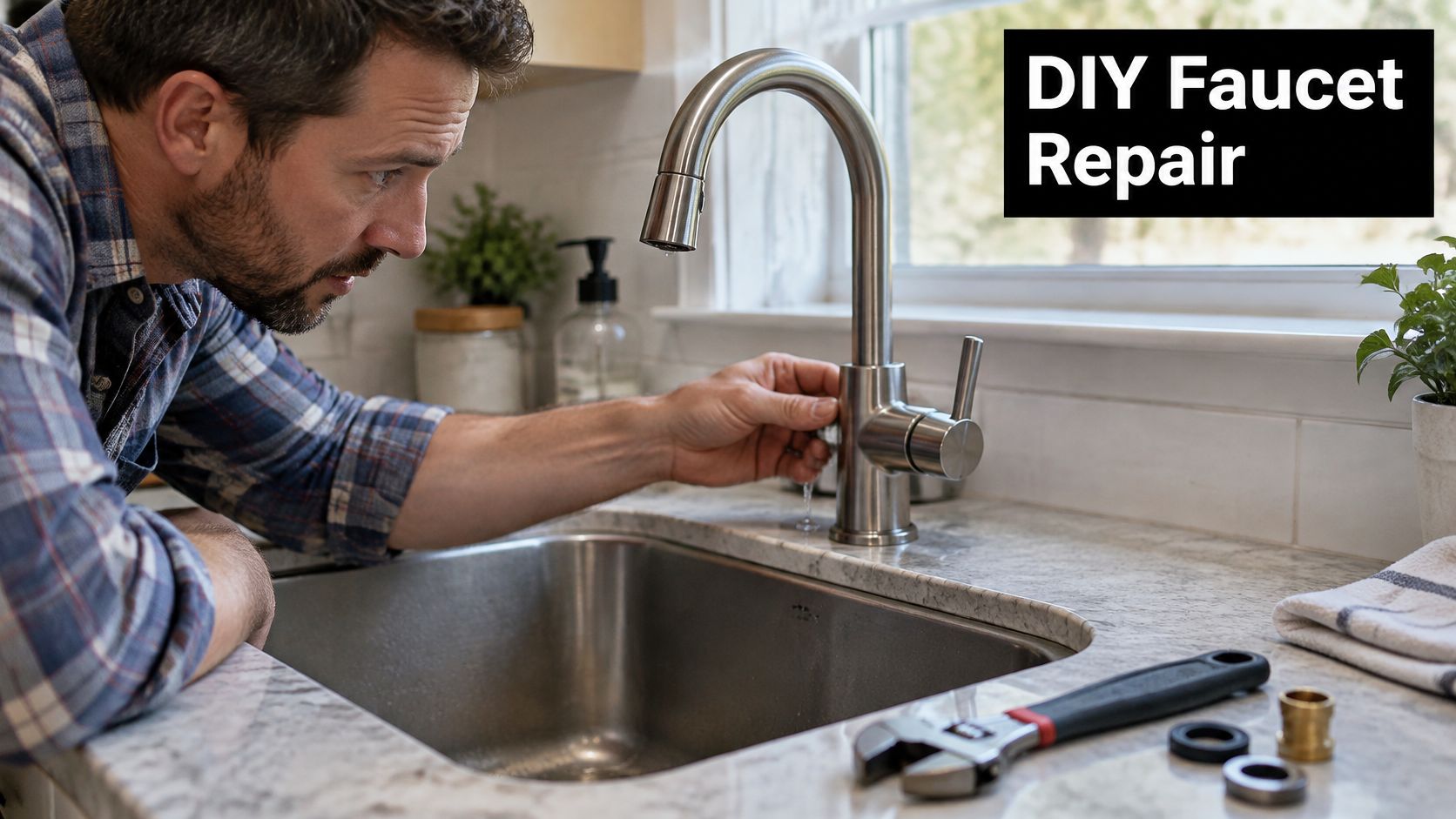
For example, a hardware retailer could build a repair guide around a particular faucet mechanism, then connect the required replacement parts to relevant product pages. A home-improvement publisher could use annotated photos to help readers identify the correct repair path.
Build around diagnosis before repair
Start with identification, not disassembly. Plan sections for locating the leak, identifying the faucet type, gathering parts, following the appropriate repair instructions, and recognizing when to stop.
- Show the equipment: Use original photos or a short demonstration rather than unrelated plumbing imagery.
- Name the limits: Include a clear section on when the reader should call a plumber.
- Connect the next step: Link replacement parts only where you've established compatibility.
Use the question naturally as a heading where it helps navigation. Repeating it throughout the instructions won't make an incomplete repair guide more useful.
Go when you can document a distinct repair process with appropriate expertise and visuals. No-go when you'd merely rewrite a general faucet article and change the brand name.
Separate pages for cartridge, ball, disc, or compression faucets make sense only when the instructions materially differ. Otherwise, keep the diagnostic branches together. That costs less to maintain and avoids making readers choose between nearly identical guides.
2. Project management software for remote teams under 10 people
A tiny remote team doesn't need a comparison built around enterprise procurement. It needs to understand daily coordination, collaboration limits, and what happens when the team grows.
Reusable template: [Product category] for [audience or working model] under [team-size or budget constraint].
A useful scenario is a founder choosing between tools such as Asana, Trello, and ClickUp. Don't declare a winner from feature-page summaries. Define a shared test workflow, try it in each product, and record what you could and couldn't accomplish.

Build the page around a quick recommendation, comparable product summaries, workflow evidence, and upgrade limitations. Include a comparison covering seat pricing, integrations, guest access, and free-tier restrictions, but verify those details directly before publication.
Make the constraint decide the recommendation
The team-size modifier should change your judgment. Explain whether a product suits asynchronous handoffs, client collaboration, or a founder who also manages delivery.
Go when your testing reveals meaningful differences for this audience. No-go when the page would reproduce the same recommendations and reasoning as your broad project-management roundup.
A narrower comparison costs more editorial effort because you must test the actual scenario. It also creates an ongoing maintenance obligation. Set a review cadence, capture first-hand screenshots, and use applicable review or FAQ markup only when the content supports it.
The definition of long tail also matters. An analysis defining it as 1 to 100 monthly searches found those terms represented 91.8% of analyzed keywords but only 3.3% of search volume, which shows why keyword count isn't a traffic forecast (keyword-distribution analysis).
3. Vegan protein powder without artificial sweeteners
An exclusion can matter more than a broad product benefit. This shopper has supplied a dietary category and an ingredient constraint. Your page needs to prove which products meet both.
Reusable template: [Product] for [audience or dietary requirement] without [excluded ingredient or attribute].
Consider a nutrition publisher comparing product labels or a supplement retailer building a filtered collection. Neither should assume that “unsweetened,” “stevia-free,” and “without artificial sweeteners” describe an identical requirement.
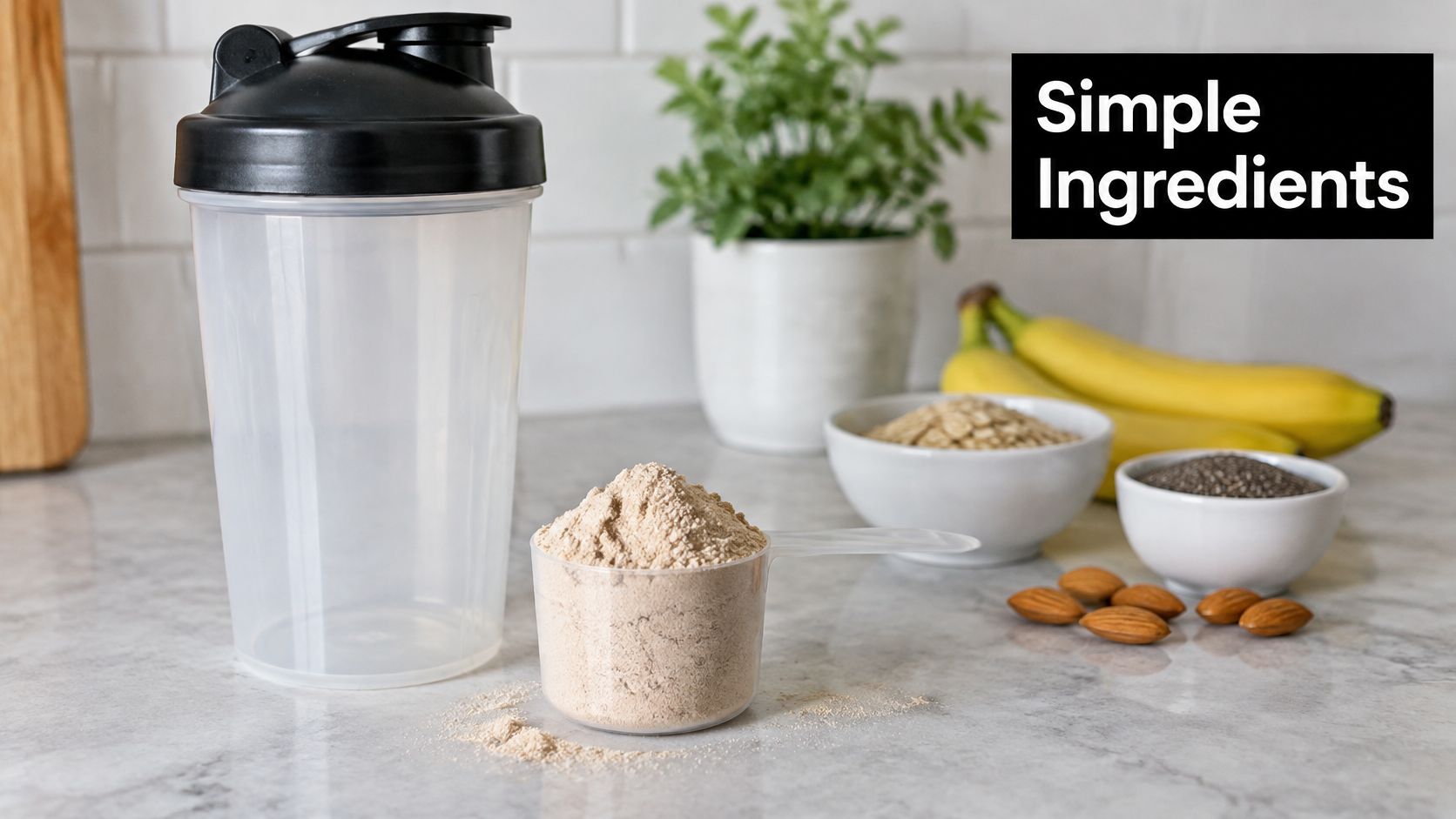
An exclusion phrase creates a verification obligation. If readers can't check why a product qualifies, the page hasn't finished its job.
Put ingredient evidence beside each recommendation
Open with your inclusion criteria. Follow with eligible products, readable label evidence, a sweetener glossary, and practical differences such as taste or mixing experience when you've tested them.
- Document the label: Record the formulation reviewed and distinguish flavors or regional versions.
- Explain the terminology: Cover sucralose, stevia, and monk fruit with appropriate ingredient references rather than treating the names as interchangeable.
- Separate evidence types: Distinguish your own testing from manufacturer claims and independently verified certifications.
A comparison can include protein per serving, sweetener type, and ingredient count, provided each entry comes from the actual product label. Use product or review markup only where it accurately represents the page.
Go when you can verify the exclusion and offer a useful selection. No-go when you lack current labels or would fill the page with unsupported health claims.
The trade-off is upkeep. Formulation changes can invalidate a recommendation, so this page needs review beyond checking whether the purchase links still work.
4. How to set up Shopify abandoned cart emails
This page wins when a merchant can finish the setup before coffee gets cold. Treat the query as a task with account prerequisites, a changing admin interface, and a deliverable: an automation that fires when a checkout is abandoned.
Reusable template: How to set up [feature or workflow] in [platform] for [audience] under [account or implementation constraint].

Match the page to the job
Open with prerequisites: plan access, permission to edit notifications, a sender domain, and the store state used for the walkthrough. Then move through verified menu paths, trigger logic, message timing, discount rules, test orders, and failure checks. Date every screen and name the theme or app only if it changes the steps.
Give a sample sequence as a starting point, and label it that way. Explain what each email should do: remind, answer objections, then close with a clear reason to return. Leave room for merchants to change timing, offer depth, or exclusions for high-margin carts.
- Prove it works: Use a test store, trigger the automation, and show the received email alongside the admin screens.
- Cover deliverability: Explain SPF, DKIM, and sender reputation with current references before promising inbox placement.
- Keep scope tight: Point readers to The SEO Agent's Shopify checklist for collection, product, and technical tasks instead of turning the tutorial into a store audit.
Go when you can reproduce the workflow and state its limits. No-go when your evidence is mixed versions, copied docs, or a promised recovery rate you did not measure.
Google's people-first content guidance rewards pages that let readers complete the task. Here, completion is the ranking asset.
5. WordPress caching plugin for shared hosting
Start with the hosting constraint. A recommendation is incomplete if the reader can't apply its required settings in their environment.
Reusable template: [Tool category] for [platform or audience] on [restricted environment].
A WordPress performance publisher could compare caching plugins on the same shared-hosting setup. A hosting provider could publish a guide specific to its own plans, provided it clearly states which environment the instructions cover.
Compare configurations, not marketing promises
Build the article around hosting prerequisites, the test environment, plugin setup, measured results, compatibility concerns, and rollback instructions. Record the PHP version, theme, relevant plugins, and measurement method so readers can understand the test.
Don't invent a speed improvement or present a single result as a universal outcome. Explain what you tested and what remains uncertain.
- Keep conditions comparable: Use the same site and hosting environment for each candidate.
- Check overlapping features: Identify caching or optimization functions already active before recommending another configuration.
- Document recovery: Explain how you reversed settings if your test caused unexpected behavior.
For adjacent publishing needs, link to SEO plugin options for WordPress publishers without confusing an SEO plugin comparison with the caching decision.
Go when you can run a controlled comparison and explain environmental limits. No-go when the only distinction from your generic plugin roundup is the phrase “shared hosting.”
The cost is reproducibility and maintenance. Major WordPress or plugin releases should trigger a review of affected instructions. If your evidence supports only a particular host, narrow the page accordingly rather than stretching the recommendation.
A narrowly scoped, honest result is more useful than a sweeping “best plugin” claim that your test can't support.
6. Free invoice template for freelance web designers
The searcher wants a file they can use today. If your page buries the download under a long essay or an account signup, they bounce to the next result.
Reusable template: [Free or editable resource] for [professional audience] with [industry-specific requirement].
An accounting-software publisher could ship an editable invoice built around web projects. A design community could publish the same file with notes on milestone billing and revision line items. Either way, the asset carries the ranking. The article around it is supporting material.
Page structure that matches the query
Put the download or copy action near the top, followed by a preview, editing instructions, field explanations, and jurisdiction-dependent caveats. Offer Google Docs, Word, and PDF versions only if you maintain those files.
Every format you publish is a maintenance commitment. A stale Word version with a broken table costs you more trust than offering fewer formats.
Asset-first rule: Let readers preview and use the resource before asking them to consider your software or service.
Make the audience visible in the document
Swapping "designer" into a generic header is not enough. A web-design invoice needs fields a generic template lacks.
- Project work: adaptable fields for discovery, design, development, and revisions.
- Pass-through costs: optional spaces for hosting, domain renewal, and licensing.
- Payment context: clear spots for deposits, payment terms, and professionally reviewed late-payment wording.
Recommend local professional advice for legal or tax requirements. A downloadable document is not valid for every jurisdiction or business arrangement, and saying so openly builds more trust than pretending otherwise.
Readers building a broader administrative workflow can explore no-cost tools for small businesses. Keep this page focused on producing the invoice.
Go when you can deliver a usable, audience-specific asset. No-go when the page offers only advice about making one.
The trade-off is straightforward: fewer barriers make the resource easier to use but weaken immediate lead capture. Choose deliberately. A surprise signup form in front of a promised free template is the fastest way to burn the click you earned.
7. Best CRM for bootstrapped SaaS startups
A bootstrapped CRM page earns the click only if the constraint changes the answer. Cash limits, setup hours, and founder time rule out tools that look fine in a generic roundup.
Reusable template: Best [product category] for [audience or company stage] with [resource constraint].
Take a founder-led SaaS doing outbound from a small list. The useful question is which CRM gets contacts imported, next steps logged, and follow-up visible before the founder loses a deal. Run HubSpot, Pipedrive, and Close through that same scenario. Record where each one stalls.
Recommend by sales motion
Open with conditional picks: self-serve product-led motion, founder-led outbound, or a small sales-assisted team. Then show the workflow you tested: import, dedupe, pipeline stages, activity logging, reporting, and export. Verify free-tier limits directly; an entry plan can look open until automation or reporting sits behind an upgrade.
- Segment the decision: separate self-serve, outbound, and sales-assisted needs.
- Expose the cost: count setup effort and weekly administration beside subscription terms.
- Support migration: map fields, test imports, and define pipeline stages before switching.
Go when “bootstrapped” changes the shortlist or the ranking. No-go when the same order would serve an enterprise buyer.
Google Ads draws a clean line between equivalent wording and a query that adds “best” in its exact-match documentation. That is ad guidance rather than an organic-ranking rule, and it still shows why the modifier deserves intent research.
Keep CRM separate from acquisition planning. Readers weighing automated SEO tools for startups face a related operations decision with a different page job.
8. How to get first 100 users for a B2B SaaS app
This is the hardest query in the list to answer with candor. The modifier promises an outcome, and outcomes resist templates.
Reusable template: How to reach [measurable milestone] for [business model or audience] with [channel or resource constraint].
A solo founder weighing outbound, communities, content, and partnerships needs three things: how to pick a channel, what to do first, and what result would justify a second month of effort.
Separate a playbook from a promise
Define "user" before recommending anything. Signups, activated seats, and paying company accounts are different outcomes, and a page that mixes them loses credibility fast.
Structure the page by channel. Each channel gets one action, one evidence requirement, and one stopping condition. Founder case studies belong only when you can verify the dates, metrics, and context behind them.
- Outbound: Name the target account, the problem hypothesis, and the conversation you want next.
- Communities: Show where contribution fits and which promotional rules apply.
- Content and partnerships: Tie each activity to a specific buyer problem with a measurable next step.
A four-week sprint works as a framing device: interviews in week one, a single channel experiment after that, then review. Label it an example plan and leave out conversion benchmarks you cannot source.
Go when you can add original experience, verified cases, or a real execution framework. No-go when the page would only list familiar marketing channels.
Google reports that AI-assisted search is driving longer and more complex queries. Answer the core question quickly, then give each adjacent decision a section that stands on its own.
Once the audience problem is validated and content becomes the chosen channel, The SEO Agent handles the keyword research against live search data and publishes the articles natively.
How the 8 long tail keyword phrase types compare
| Item | Query Modifier | Searcher Intent | Best Content Format | Main Risk |
|---|---|---|---|---|
| how to fix a leaky kitchen faucet without a plumber | How-to, specific problem, DIY constraint | Fix a leak without hiring a plumber | Step-by-step guide with photos, tools list, and safety notes | Safety and liability; instructions may need faucet-specific details |
| project management software for remote teams under 10 people | Product category, remote work, team-size qualifier | Compare tools for a small remote team | Comparison table or “best for” roundup | Pricing and features change; comparisons need accurate sourcing |
| vegan protein powder without artificial sweeteners | Dietary category, ingredient exclusion | Find and compare products matching ingredient preferences | Buying guide or product comparison with ingredient details | Nutrition claims and product formulations require careful checking |
| how to set up Shopify abandoned cart emails | Platform-specific, feature-specific, how-to | Configure abandoned cart emails | Step-by-step tutorial with screenshots and sample email sequence | Shopify interfaces and plan or app settings change |
| WordPress caching plugin for shared hosting | Platform, tool category, hosting constraint | Choose and configure a suitable caching plugin | Tested comparison with setup guide and benchmarks | Results vary by hosting setup; plugin recommendations change |
| free invoice template for freelance web designers | Free resource, audience-specific | Download or copy a relevant invoice template | Downloadable template with usage and payment-term guidance | Legal and tax requirements vary by location |
| best CRM for bootstrapped SaaS startups | Best-of, company-stage, budget qualifier | Compare affordable CRMs for an early-stage startup | “Best for” roundup with comparison table | Pricing changes; suitability depends on sales model |
| how to get first 100 users for a B2B SaaS app | How-to, measurable milestone, business-model qualifier | Find actionable ways to acquire early users | Tactical playbook with case studies and a milestone plan | Results vary by product and market; claims need evidence |
What to Do Next With Your Keyword Queue
Start with a template before adding another keyword. Take "project management software for remote teams under 10 people" and strip it to slots: [tool category] for [audience] with [constraint]. Now you can generate variants deliberately instead of collecting phrases at random.
Then write one sentence describing what the visitor must be able to do after using the page. If that sentence stays vague, the page isn't ready to brief.
Next, inspect the current results. Check which page types rank, what evidence competing publishers provide, and whether the constraint actually changes the answer. A long phrase can still have strong competition even when a keyword tool reports modest volume.
Decide whether to publish, combine, or pass
Give each candidate a clear disposition. Some deserve dedicated articles, some belong inside existing pages, and some aren't worth maintaining.
- Publish separately: the query requires a distinct workflow, asset, comparison, or body of evidence.
- Combine with an existing page: the answer and next action stay the same despite different wording.
- Pass for now: you can't verify the answer, demonstrate the product, or connect the topic to a useful business outcome.
Run a simple go/no-go test. If swapping the constraint back out produces the same article you already have, combine it. If it produces an article you can't truthfully write, pass on it.
Minor wording differences aren't a sound publishing plan. Google Ads' close-variant guidance explicitly includes equivalent expressions and intent-preserving variations. That system doesn't define organic rankings, but it's a useful reminder to research underlying needs rather than count every rewording as a separate opportunity.
Match the page structure to the task. Tutorials need reproducible instructions. Comparisons need consistent evaluation criteria. Resource queries need an actual resource. Exclusion queries need proof that the recommendations respect the stated boundary.
A dedicated article earns its maintenance cost by giving searchers a distinct answer. A distinct spelling alone doesn't justify one.
After publishing, evaluate the query cluster rather than a single exact phrase. Review impressions, clicks, qualified visits, assisted conversions, and direct conversions where your tracking supports them. Weak results usually mean the page missed the task, so investigate before assuming the fix is more content.
This is the workflow The SEO Agent runs for customers. It builds the queue from live keyword data, lets the customer approve each keyword before any article is drafted, and logs every published post with its target keyword and search performance. The $99 monthly plan covers keyword research, writing, fact-checking, and publishing, with no setup fee, no per-keyword meter, and no minimum term. Visit The SEO Agent, as linked earlier in this article, to review the plan and approve your first keyword queue.
Keep the queue small enough to defend. Approve only the pages you can justify, and let a handful of useful, maintainable articles outperform a long list of interchangeable phrases.