Local SEO Checklist for Small Business in 2026
Boost your visibility with our local SEO checklist for small business in 2026. Simplify your strategy and maximize your impact!

Most small businesses already know they need local SEO. What stops them is the sheer number of tasks competing for attention, with no clear signal about which ones move the needle. This local SEO checklist for small business owners cuts through that noise. We’ve organized it around Google’s actual ranking priorities in 2026, including AI-driven signals, review recency, and profile freshness, so you know exactly where to put your time. Whether you’re starting from scratch or auditing an existing presence, every item here has a direct, measurable impact on visibility and customer trust.
Table of Contents
- Key takeaways
- 1. Understand how Google scores local results
- 2. Claim and fully optimize your Google Business Profile
- 3. Build a consistent review generation process
- 4. Build and audit your local citations
- 5. Optimize your website for local search signals
- 6. Maintain your local SEO presence monthly
- My take on what actually moves the needle
- How Theseoagent helps you stay consistent
- FAQ
Key takeaways
| Point | Details |
|---|---|
| GBP signals dominate rankings | Google Business Profile signals account for 32% of local pack ranking weight, making it your highest-priority asset. |
| Review recency matters more than volume | 74% of consumers only trust reviews from the past three months, so consistent review generation beats a one-time push. |
| Profile freshness is now a ranking signal | Profiles inactive for 30 or more days risk being flagged as stale by Google’s AI moderation system. |
| NAP consistency protects your authority | Mismatched name, address, or phone data across directories confuses both Google and potential customers. |
| Local SEO is an ongoing process | One-time optimization yields diminishing returns. Regular audits, content updates, and review responses compound over time. |
1. Understand how Google scores local results
Before touching a single setting, you need to know what Google is actually measuring. Its local ranking algorithm operates on three pillars: relevance, distance, and prominence. Proximity weighs heavily following the Vicinity update, meaning your physical location relative to the searcher plays a significant role in whether you appear in the local pack at all.

Prominence is where your ongoing effort shows up most clearly. It reflects how well-known and trusted your business appears across the web, measured through reviews, citations, backlinks, and content quality. Relevance ties your profile categories and content to what the searcher actually needs.
One newer factor worth understanding: AI parsing. As of Q1 2026, 45% of consumers use AI for local business recommendations, up from just 6% the previous year. Large language models pull structured, consistent data to answer those queries. If your business information is inconsistent across platforms, AI tools will deprioritize or misrepresent you.
Pro Tip: Before optimizing anything, Google your own business name and check every listing that appears on the first two pages. Any inconsistency in name, address, or phone number is a trust signal problem you need to fix first.
2. Claim and fully optimize your Google Business Profile
Your Google Business Profile (GBP) is the single most influential asset in your local SEO strategy. GBP signals account for 32% of local pack rankings, more than any other factor. Claiming it is step one. Optimizing it is where most businesses stop short.
Here is what a fully optimized GBP looks like:
- Business name: Use your exact legal business name. No keyword stuffing. Google’s AI moderation retroactively flags profiles with stuffed keywords and can trigger automated suspension.
- Categories: Select one precise primary category and relevant secondary categories. This is one of the highest-leverage inputs in your entire profile.
- NAP data: Name, address, and phone number must match exactly what appears on your website and every directory.
- Business hours: Keep these current, including holiday hours. Outdated hours erode consumer trust immediately.
- Photos and videos: Upload real images of your space, team, and products. Real imagery builds trust and improves engagement. Google is actively encouraging removal of stock photos and flags profiles that rely on them.
- Google Posts: Use the Posts feature at least twice a month to announce offers, events, or updates. This signals activity to both users and the algorithm.
- Q&A section: Seed your own frequently asked questions. This shapes how potential customers see your business before they even visit your site.
Pro Tip: Set a recurring 15-minute calendar block every two weeks to add a photo and a Post to your GBP. This one habit addresses profile freshness, which is now a measurable signal in Google’s moderation system.
3. Build a consistent review generation process
Reviews are not a “set it and forget it” element. 74% of consumers only engage with reviews from the past three months, and 31% will not consider a business rated below 4.5 stars. That means a glowing review from 18 months ago carries almost no weight with today’s searcher.
A sustainable review process looks like this:
- Ask at the right moment. Request a review immediately after a completed service or purchase, when satisfaction is highest. Timing matters more than frequency.
- Make it frictionless. Create a short Google review link and include it in post-purchase emails, receipts, or a QR code at your location.
- Respond to every review. Responses signal active management to both Google and prospective customers. Keep replies specific and genuine, not template-driven boilerplate.
- Monitor for fake reviews. 93% of consumers believe businesses are responsible for managing fake reviews. Flag suspicious entries through the GBP dashboard promptly.
- Distribute beyond Google. Encourage reviews on Yelp, Bing Places, and any industry-specific directory relevant to your business. Review diversity strengthens overall prominence.
Pro Tip: When responding to negative reviews, address the specific complaint in one sentence, offer a resolution path in another, and keep the tone matter-of-fact. Generic “We’re sorry for the experience” responses read as automated and reduce trust further.
4. Build and audit your local citations
A citation is any online mention of your business name, address, and phone number, whether or not it links back to your site. Search engines use citation data to verify that your business is legitimate and located where you claim it is.
The priority is consistency across the most authoritative directories. Start with these platforms:
| Directory type | Examples | Priority level |
|---|---|---|
| Universal directories | Google, Bing Places, Apple Maps | Critical |
| Data aggregators | Foursquare, Data Axle, Neustar | High |
| Industry-specific | Healthgrades, Houzz, Avvo | Medium |
| Local/regional | Chamber of Commerce, local news sites | Medium |
Inconsistencies, even minor ones like “St.” versus “Street,” can fragment your authority signals. Run a citation audit through a tool like Moz Local or BrightLocal before building new citations. Cleaning up what exists produces faster results than adding new listings on top of inconsistent data.
For backlinks, quality beats quantity at the local level. Local backlink strategies that work well for small businesses include partnerships with local nonprofits, sponsorships of community events, and guest features in regional publications. A single link from your local Chamber of Commerce website carries more local authority than dozens of low-quality directory links.
You can find a useful starting point for overall local SEO best practices in the SEO community’s documented standards, which align well with what we cover here.
5. Optimize your website for local search signals
Your website reinforces everything your GBP says about you. If the two are misaligned, rankings suffer. On-page SEO accounts for 14% of local pack ranking weight, but it has an outsized impact on the organic listings just below the local pack.
Key on-site elements for local businesses:
- NAP in the footer: Your name, address, and phone number should appear in text (not an image) on every page, most commonly in the footer.
- Location pages: If you serve multiple areas, build dedicated pages for each. A single generic “Service Areas” page is less effective than individual pages with localized content.
- Embedded Google Map: Add a Google Map embed to your contact page. This reinforces your physical location as a trust and relevance signal.
- Schema markup: Add LocalBusiness schema to your homepage. This structured data helps AI and search engines parse your business details accurately.
- Title tags and meta descriptions: Include your city and primary service in page titles. “Plumber in Austin TX” performs better than “Our Services” as a title tag.
- Content that references local context: Blog posts, case studies, or FAQs that mention local neighborhoods, events, or landmarks build topical relevance over time.
Aligning these on-site elements with your GBP data creates a coherent set of local signals. Local SEO success depends on this coherence across your profile, reviews, citations, and website, not on any single optimized element working in isolation.
6. Maintain your local SEO presence monthly
Getting everything set up correctly is roughly 40% of the work. The other 60% is maintenance. Profiles updated regularly see significantly higher visibility, and profiles inactive for 30 or more days risk being treated as stale or closed by Google’s automated moderation system.
A practical monthly maintenance routine includes:
- Add at least one new photo or video to your GBP.
- Publish one or two Google Posts with a current offer, event, or update.
- Respond to any reviews that came in during the month.
- Update business hours for upcoming holidays or schedule changes.
- Check your top three citation sources for accuracy after any business changes.
- Review one competitor’s GBP to track how your local market is shifting.
AI assistance in review responses can save time, but human editing is non-negotiable. An AI-drafted response that sounds generic or impersonal does more damage than a delayed but genuine one. Use AI to draft, then personalize each response before publishing.
Pro Tip: Batch your monthly local SEO tasks into a single 45-minute session. Treating it as a recurring appointment, rather than a reactive task, dramatically increases the consistency that actually drives ranking improvement.
My take on what actually moves the needle
I’ve worked through enough local SEO audits to say this plainly: most small businesses do not have an optimization problem. They have a consistency problem. The setup happened once, two or three years ago, and nothing has changed since.
Google’s local algorithm increasingly values freshness and genuine engagement. A profile that was perfectly optimized in 2023 but hasn’t had a new photo or review response in months will rank below a profile that is slightly less optimized but actively managed.
The other mistake I see often is treating AI tools as a replacement for judgment. AI can accelerate your review responses, your Posts, and your content. It cannot replicate the specific detail that makes a response feel real. A response that mentions the customer’s actual project, or the specific dish they ordered, signals authenticity in a way that no template can.
The businesses that win local search are not the ones that spent the most on an initial setup. They are the ones that made local SEO a regular operating habit. Forty-five minutes a month, done consistently, outperforms a one-time $2,000 audit that sits in a folder.
— Seo
How Theseoagent helps you stay consistent
Running a small business means local SEO competes directly with every other demand on your time. The checklist above is clear, but execution requires showing up every month without fail.
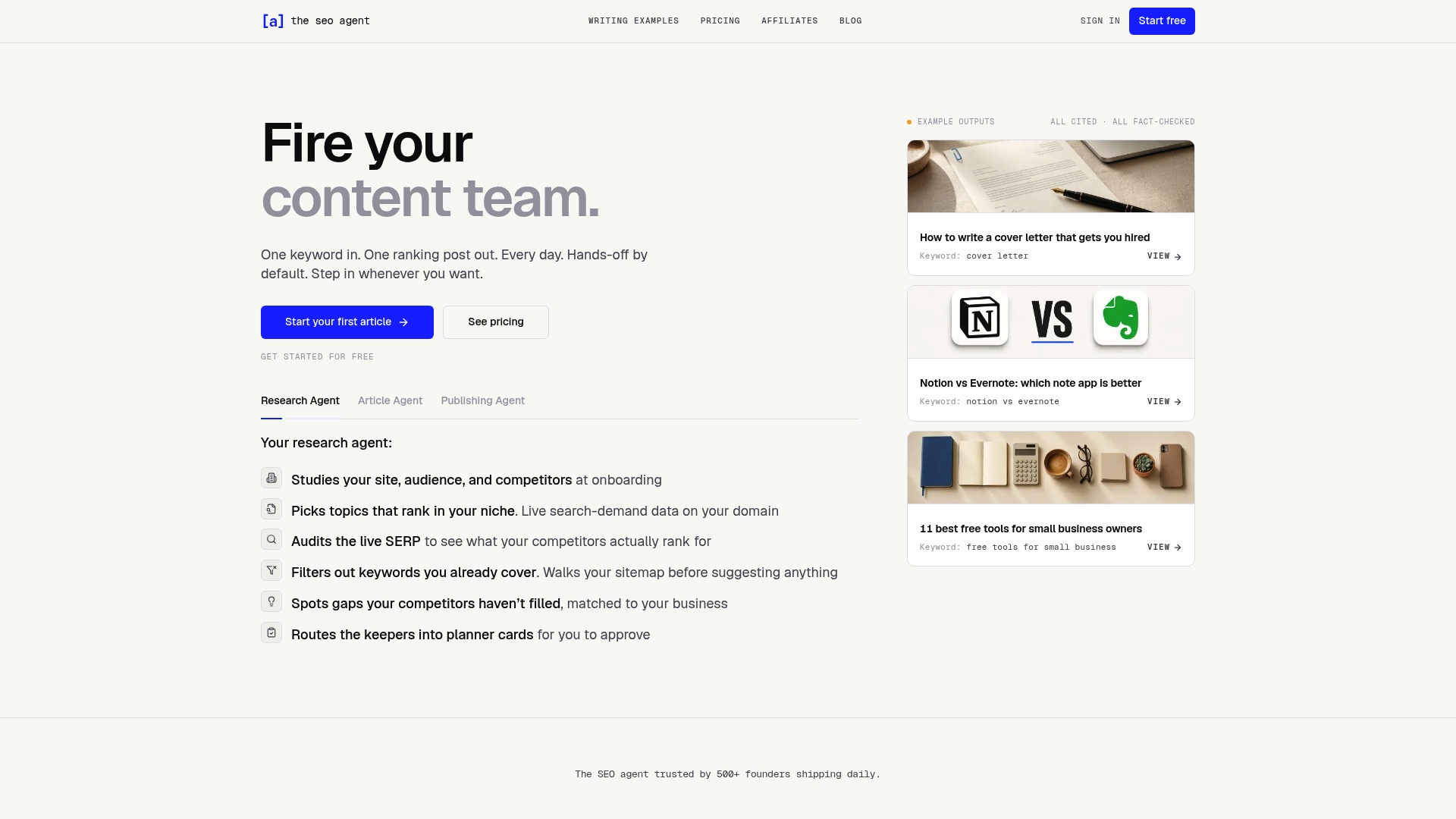
That is where Theseoagent is built to help. The platform’s SEO automation tools handle the content side of your local strategy, from drafting optimized location pages to publishing ongoing blog content that builds local topical authority. If you run an ecommerce operation alongside your local presence, the Shopify SEO app integrates directly into your store to automate product and content optimization. Start by running a free SEO audit to see exactly where your local presence stands and which gaps are costing you the most visibility. No guesswork, just data.
FAQ
What is the most important factor in local SEO?
Google Business Profile signals carry the most weight, accounting for 32% of local pack rankings. Claiming and actively managing your GBP should be your first priority.
How often should I update my Google Business Profile?
At minimum, every 30 days. Profiles that go without updates, new photos, or review responses for more than 30 days risk being deprioritized by Google’s automated moderation as inactive or stale.
How many reviews do I need to rank well locally?
There is no fixed number. Review recency matters more than volume. 74% of consumers only consider reviews from the past three months, so consistent monthly generation outperforms a large, aging review count.
Does NAP consistency really affect rankings?
Yes, directly. Inconsistent business data across directories and your website creates conflicting signals that reduce Google’s confidence in your listing. Fix all NAP inconsistencies before building new citations.
How does AI affect local SEO for small businesses?
AI tools now influence how consumers discover local businesses, with 45% using AI for local recommendations as of 2026. Consistent, structured business data across all platforms increases the accuracy of AI-generated recommendations in your favor.